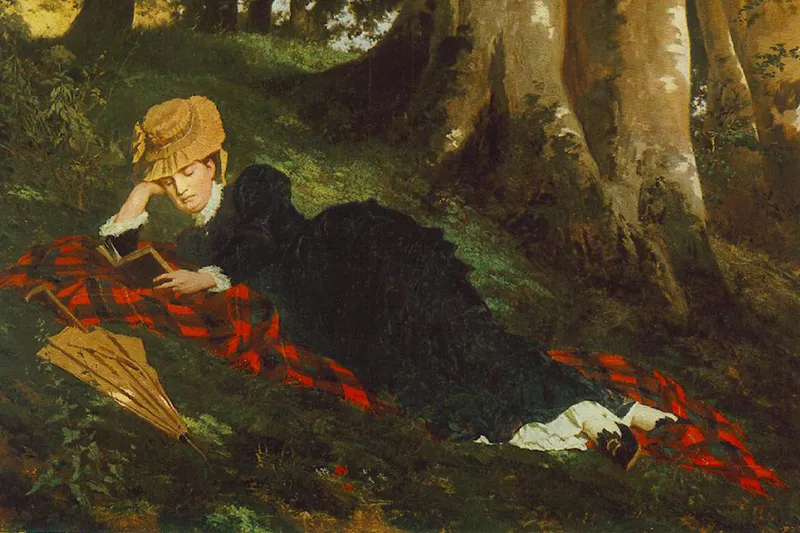
The Great Books Are for Everybody
Naomi Kanakia's new book, What's So Great About the Great Books?, makes a case for reading classic literature, despite concerns that it may be irrelevant or problematic. Kanakia, a novelist and blogger, argues that the classics offer a rich and diverse legacy of human thought and experience, and that they can help develop our taste and moral instinct. By reading these books, we can gain a deeper understanding of fundamental truths about beauty and reality, and engage with a uniquely rigorous and scrutinizing body of work.
- ▪Naomi Kanakia's book is addressed to an audience that may think the Great Books are irrelevant or problematic.
- ▪Kanakia argues that the classics can help develop our taste and moral instinct, and offer a rich and diverse legacy of human thought and experience.
- ▪The book tackles concerns about the problematic nature of the Great Books, including their potential to cause emotional pain in marginalized readers.
The Bulwark files mainly under politics. We currently carry 339 of its stories.
Story provenance
Source · retrieval · rights · ranking — open for full record
inspect →
Story provenance
Attribution is not the same as permission. This drawer separates discovery metadata, excerpts, WeSearch-generated summaries, reuse status, and whether the publisher receives the visit. Nothing here claims a legal grant the publisher has not made.
Record
| Original publisher | The Bulwark |
| Canonical URL | https://www.thebulwark.com/p/the-great-books-are-for-everybody-naomi-kanakia-review |
| Publication time | Fri, 12 Jun 2026 07:21:23 GMT |
| Retrieval time | 2026-06-12T07:46:59.477Z |
| Last seen | 2026-06-12T07:46:59.477Z |
| Headline source | Publisher (no WeSearch rewrite) |
| Excerpt source | publisher body |
| Excerpt method | First ~120 words (~800 chars) of extracted publisher body, fair-use limited. |
| Summary | WeSearch · cerebras-chat (WeSearch summarizer) |
| Summary source text | contentText |
| Citation coverage | Summary is a WeSearch-generated derivative; primary citation is the original publisher URL. |
| Cluster | _CuOgxS8OnAi |
| Cluster logic | Grouped by semantic title/content similarity across sources within a rolling window. Same-publisher template collisions are excluded from coverage comparison. |
| Ranking reason | Story pages are not engagement-ranked. Hub feeds use recency, with optional source-diversified chronological ordering (cap consecutive stories per source). No personalized ranking. |
| Publisher visit | Yes — open original |
| Substitutes article? | No — link-out required for full text |
Rights status (four layers)
WeSearch handling by dimension
| Indexing | May the item be indexed (stored, ranked, made findable)? | Allowed |
| Snippet | May a short excerpt of the publisher's text be shown? | Allowed |
| AI summary | May WeSearch generate its own short summary of the article? | Limited |
| Retrieval / RAG | May the content be exposed for third-party retrieval-augmented generation? | Not asserted |
| Model training | May the content be used to train AI models? | Not asserted |
| Commercial reuse | May the content be reused commercially? | Not permitted |
Basis: Derived from the published RSS/Atom feed. Contact: [email protected]. Reviewed: 2026-07-24.
Opening excerpt (first ~120 words) tap to expand
The Great Books Are for EverybodyAn unlikely champion of the canon urges readers not to think of the books as “belonging” to conservatives.Cathy YoungJun 12, 2026ShareGyula Benczúr’s Reading Woman in the Forest (1875). (Photo via Wikimedia Commons)What’s So Great About the Great Books?Why You Should Read Classic Literature(Even Though It Might Destroy You)by Naomi KanakiaPrinceton, 262 pp., $25.95 (hardcover)AMID ANXIETIES ABOUT artificial intelligence and reports of social media–induced brain rot which some say has left college students unable to finish reading twenty-page articles let alone full-length books, there is also talk about a book resurgence. The young’uns, evidently, are discovering the joys of print.
…
Excerpt limited to ~120 words for fair-use compliance. The full article is at The Bulwark.
Discussion
0 commentsMore from The Bulwark