The Left Wanted the Culture War They’re Now Losing
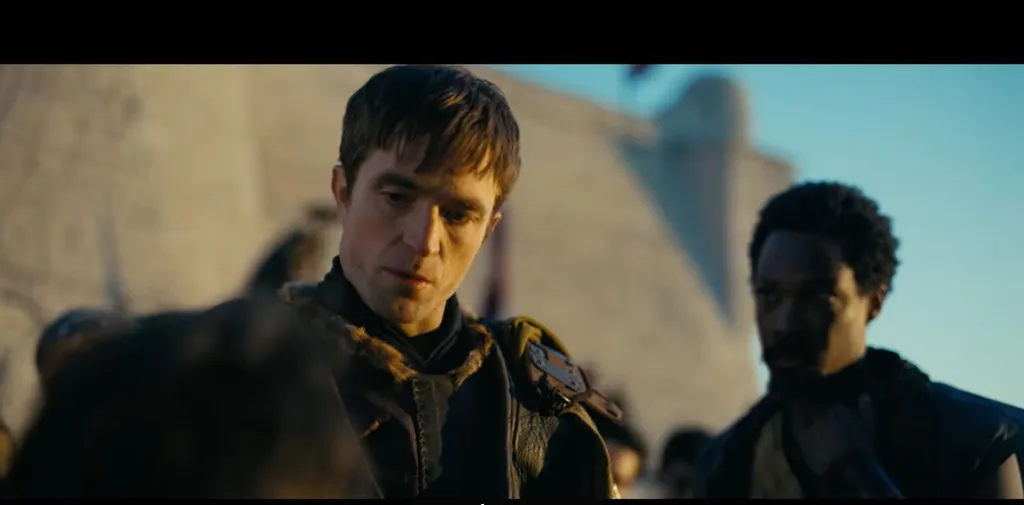
The article discusses the shifting dynamics in Hollywood regarding cultural narratives and representation. It argues that the industry's embrace of progressive ideologies has led to a backlash, resulting in a loss of audience engagement. The author reflects on the consequences of prioritizing identity politics over traditional storytelling.
- ▪Hollywood's current approach to filmmaking is criticized for being influenced by progressive ideologies.
- ▪The author suggests that the industry's focus on identity politics has alienated a significant portion of its audience.
- ▪Recent controversies, such as the backlash against Christopher Nolan's adaptation of The Odyssey, highlight the tensions between traditional narratives and modern interpretations.
The American Spectator files mainly under politics. We currently carry 159 of its stories.
Story provenance
Source · retrieval · rights · ranking — open for full record
inspect →
Story provenance
Attribution is not the same as permission. This drawer separates discovery metadata, excerpts, WeSearch-generated summaries, reuse status, and whether the publisher receives the visit. Nothing here claims a legal grant the publisher has not made.
Record
| Original publisher | The American Spectator | USA News and Politics |
| Canonical URL | https://spectator.org/the-left-wanted-the-culture-war-theyre-now-losing/ |
| Publication time | Mon, 18 May 2026 02:19:51 +0000 |
| Retrieval time | 2026-05-18T02:23:21.243Z |
| Last seen | 2026-05-18T02:23:21.243Z |
| Headline source | Publisher (no WeSearch rewrite) |
| Excerpt source | publisher body |
| Excerpt method | First ~120 words (~800 chars) of extracted publisher body, fair-use limited. |
| Summary | WeSearch · cerebras-chat (WeSearch summarizer) |
| Summary source text | contentText |
| Citation coverage | Summary is a WeSearch-generated derivative; primary citation is the original publisher URL. |
| Cluster | Qc1ctdxTRx5x |
| Cluster logic | Grouped by semantic title/content similarity across sources within a rolling window. Same-publisher template collisions are excluded from coverage comparison. |
| Ranking reason | Story pages are not engagement-ranked. Hub feeds use recency, with optional source-diversified chronological ordering (cap consecutive stories per source). No personalized ranking. |
| Publisher visit | Yes — open original |
| Substitutes article? | No — link-out required for full text |
Rights status (four layers)
WeSearch handling by dimension
| Indexing | May the item be indexed (stored, ranked, made findable)? | Allowed |
| Snippet | May a short excerpt of the publisher's text be shown? | Allowed |
| AI summary | May WeSearch generate its own short summary of the article? | Limited |
| Retrieval / RAG | May the content be exposed for third-party retrieval-augmented generation? | Not asserted |
| Model training | May the content be used to train AI models? | Not asserted |
| Commercial reuse | May the content be reused commercially? | Not permitted |
Basis: Derived from the published RSS/Atom feed. Contact: [email protected]. Reviewed: 2026-07-24.
Opening excerpt (first ~120 words) tap to expand
A long time ago, the 20th Century, Hollywood knew how to make movies that entertained and enlightened. Their writers weren’t young saps indoctrinated by academia-boosted French Theory with disdain for more than half the audience, or DEI hires filling a quota. They were artists who respected the world they lived in and the history they inherited, whether they liked it or not. Any criticism of either came through in their storytelling, rather than sermonizing to people who know better than they.As both a fiction writer and journalist in the first camp, I could see the coming victory in the Culture War years ago, and its reshaping of the entire geopolitical structure of the West, and by extension the world.
…
Excerpt limited to ~120 words for fair-use compliance. The full article is at The American Spectator | USA News and Politics.
Discussion
0 comments