The rich aren't your role models
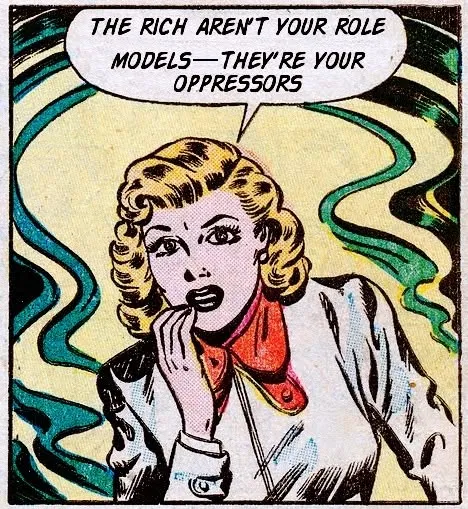
The concept of wealth as a measure of contribution to society is a founding myth of capitalism, but it is argued that this notion is flawed. The existence of a trillionaire, such as Elon Musk, demonstrates a historic failure of human society and reveals the absurdity of a system that allows one person to accumulate wealth beyond any conceivable personal use. The concentration of wealth in the hands of a few individuals is a result of the labour of countless workers and exposes the centralisation of economic power.
- ▪The richer a person becomes, the more they must have given to society is a myth that is often repeated without thinking.
- ▪A trillionaire does not represent the triumph of human potential, but rather a historic failure of human society.
- ▪The existence of a trillionaire demonstrates the centralisation of economic power and the concentration of wealth in the hands of a few individuals.
Hacker News (Front Page) files mainly under programming. We currently carry 845 of its stories. Top-voted stories on Hacker News.
Story provenance
Source · retrieval · rights · ranking — open for full record
inspect →
Story provenance
Attribution is not the same as permission. This drawer separates discovery metadata, excerpts, WeSearch-generated summaries, reuse status, and whether the publisher receives the visit. Nothing here claims a legal grant the publisher has not made.
Record
| Original publisher | The Slow Burning Fuse |
| Canonical URL | https://theslowburningfuse.wordpress.com/2026/06/14/the-rich-arent-your-role-models-theyre-your-oppressors/ |
| Publication time | Mon, 15 Jun 2026 00:54:50 +0000 |
| Retrieval time | 2026-06-15T01:07:34.804Z |
| Last seen | 2026-06-15T01:38:09.727Z |
| Headline source | Publisher (no WeSearch rewrite) |
| Excerpt source | publisher body |
| Excerpt method | First ~120 words (~800 chars) of extracted publisher body, fair-use limited. |
| Summary | WeSearch · cerebras-chat (WeSearch summarizer) |
| Summary source text | contentText |
| Citation coverage | Summary is a WeSearch-generated derivative; primary citation is the original publisher URL. |
| Cluster | du5TIHeOed5A |
| Cluster logic | Grouped by semantic title/content similarity across sources within a rolling window. Same-publisher template collisions are excluded from coverage comparison. |
| Ranking reason | Story pages are not engagement-ranked. Hub feeds use recency, with optional source-diversified chronological ordering (cap consecutive stories per source). No personalized ranking. |
| Publisher visit | Yes — open original |
| Substitutes article? | No — link-out required for full text |
Rights status (four layers)
WeSearch handling by dimension
| Indexing | May the item be indexed (stored, ranked, made findable)? | Allowed |
| Snippet | May a short excerpt of the publisher's text be shown? | Allowed |
| AI summary | May WeSearch generate its own short summary of the article? | Limited |
| Retrieval / RAG | May the content be exposed for third-party retrieval-augmented generation? | Not asserted |
| Model training | May the content be used to train AI models? | Not asserted |
| Commercial reuse | May the content be reused commercially? | Not permitted |
Basis: Derived from the published RSS/Atom feed. Contact: [email protected]. Reviewed: 2026-07-24.
Opening excerpt (first ~120 words) tap to expand
June 14, 2026 Wyatt E Jones The rich aren’t your role models – they’re your oppressors We are told that wealth is a measure of contribution. The richer a person becomes, the more they must have given to society. This is one of the founding myths of capitalism. It is repeated so often that many people accept it without thinking. Schoolchildren are taught that great fortunes are the reward for hard work, intelligence, innovation, and risk. Newspapers celebrate billionaires as visionaries. Politicians praise entrepreneurs as wealth creators. Business commentators speak of fortunes as though they emerged from the mind of a single genius rather than from the labour of millions.
…
Excerpt limited to ~120 words for fair-use compliance. The full article is at The Slow Burning Fuse.
Discussion
0 commentsMore from The Slow Burning Fuse