The Weekend Spectator Ep. 59: Could Caitlin Clark Play in the NBA?
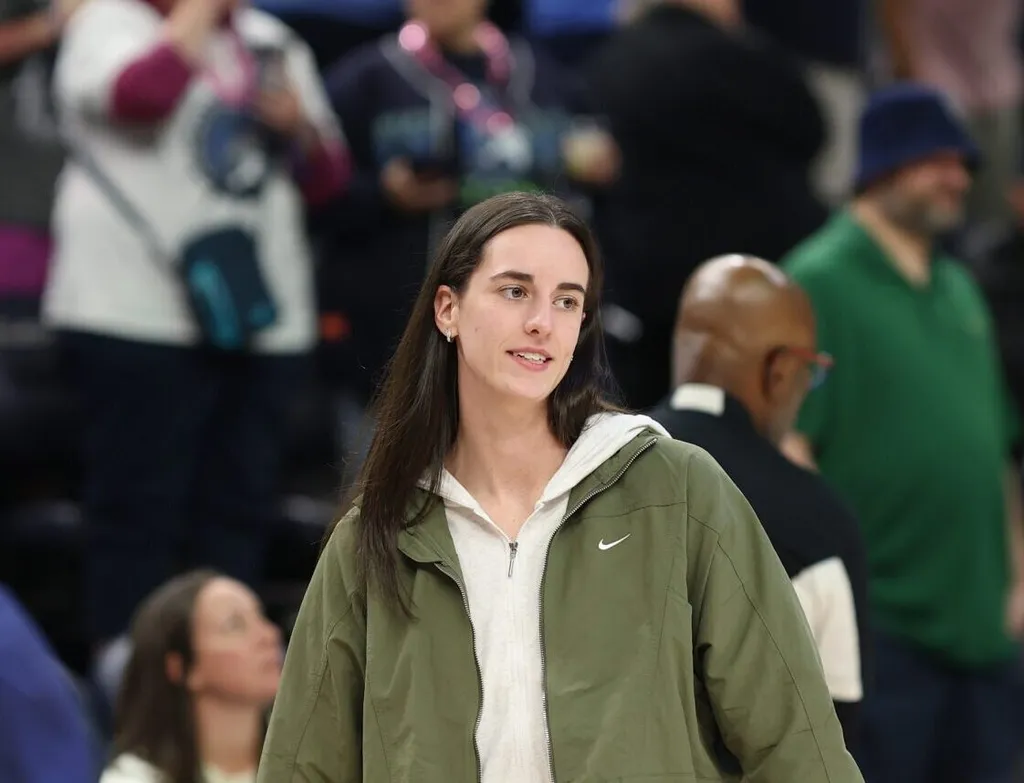
The article discusses the ongoing debate about gender and transgender participation in sports, highlighted by a recent event where a women's soccer team lost to a group of boys. It raises the question of whether a talented female athlete, like Caitlin Clark, could compete successfully in the NBA. The discussion reflects broader societal issues regarding athletic advantages and gender equality in sports.
- ▪The University of Washington women's soccer team was defeated by a group of 14-year-old boys.
- ▪The article explores the debate on gender and transgender sports participation.
- ▪Paul Kengor questions whether Caitlin Clark could succeed in the NBA due to her skill and talent.
The American Spectator files mainly under politics. We currently carry 159 of its stories.
Story provenance
Source · retrieval · rights · ranking — open for full record
inspect →
Attribution is not the same as permission. This drawer separates discovery metadata, excerpts, WeSearch-generated summaries, reuse status, and whether the publisher receives the visit. Nothing here claims a legal grant the publisher has not made.
Record
| Original publisher | The American Spectator | USA News and Politics |
| Canonical URL | https://spectator.org/the-weekend-spectator-ep-59-could-caitlin-clark-play-in-the-nba/ |
| Publication time | Thu, 21 May 2026 02:31:40 +0000 |
| Retrieval time | 2026-05-21T02:35:03.339Z |
| Last seen | 2026-05-21T02:35:03.339Z |
| Headline source | Publisher (no WeSearch rewrite) |
| Excerpt source | publisher body |
| Excerpt method | First ~120 words (~800 chars) of extracted publisher body, fair-use limited. |
| Summary | WeSearch · cerebras-chat (WeSearch summarizer) |
| Summary source text | contentText |
| Citation coverage | Summary is a WeSearch-generated derivative; primary citation is the original publisher URL. |
| Cluster | N9olF6Zrqli8 |
| Cluster logic | Grouped by semantic title/content similarity across sources within a rolling window. Same-publisher template collisions are excluded from coverage comparison. |
| Ranking reason | Story pages are not engagement-ranked. Hub feeds use recency, with optional source-diversified chronological ordering (cap consecutive stories per source). No personalized ranking. |
| Publisher visit | Yes — open original |
| Substitutes article? | No — link-out required for full text |
Rights status (four layers)
WeSearch handling by dimension
| Indexing | May the item be indexed (stored, ranked, made findable)? | Allowed |
| Snippet | May a short excerpt of the publisher's text be shown? | Allowed |
| AI summary | May WeSearch generate its own short summary of the article? | Limited |
| Retrieval / RAG | May the content be exposed for third-party retrieval-augmented generation? | Not asserted |
| Model training | May the content be used to train AI models? | Not asserted |
| Commercial reuse | May the content be reused commercially? | Not permitted |
Basis: Derived from the published RSS/Atom feed. Contact: [email protected]. Reviewed: 2026-07-24.
Opening excerpt (first ~120 words) tap to expand
If you had any doubt that men have an athletic advantage over women, look no further than the defeat of the Division I University of Washington women’s soccer team by a group of 14-year-old boys. The evidence of the difference between men and women, beyond the obvious yet recently controversial scientific reality, grows whenever it is put to the test.Paul Kengor and Grace Reilly provide analysis on the significant takeaways from this story as they consider the national debate on the topic of gender and transgender sports. Typically, problems have arisen as men have entered women’s sports and dominated. Paul recalls debating some of his students on what would happen if it went the other way.
…
Excerpt limited to ~120 words for fair-use compliance. The full article is at The American Spectator | USA News and Politics.
Discussion
0 comments