The world may or may not be entering ‘Beijing time’
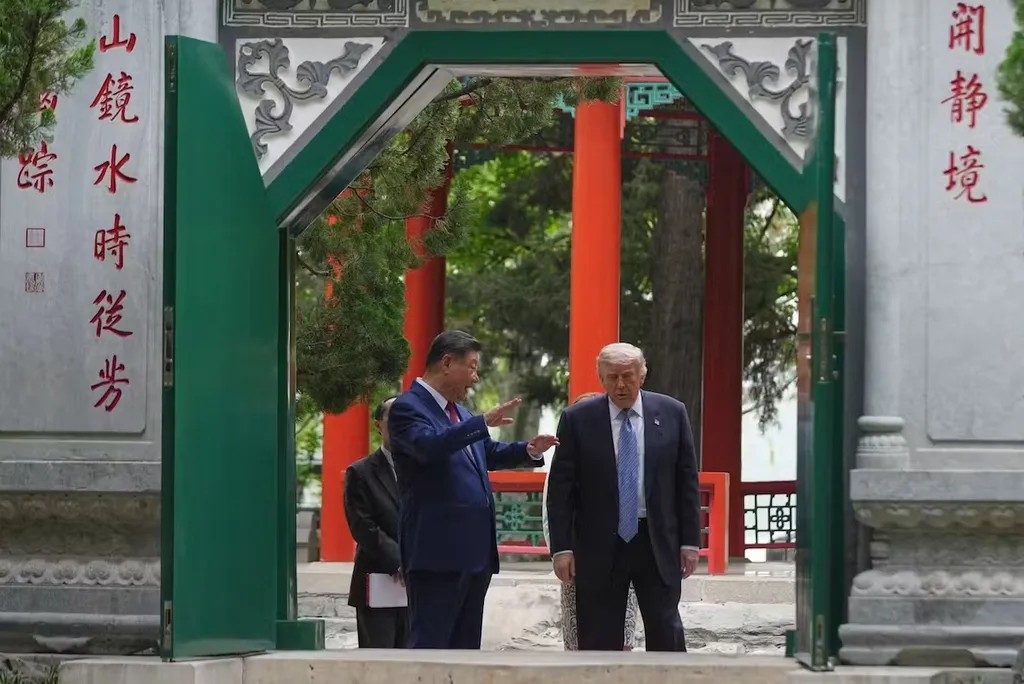
Recent state visits by world leaders to Beijing have positioned China as a potential stabilizing force in global politics. Analysts are divided on whether these visits reflect China's proactive diplomacy or are strategic moves by leaders seeking leverage against the US. Despite the influx of international visitors, China's core foreign policy positions remain unchanged, indicating that visibility does not equate to influence.
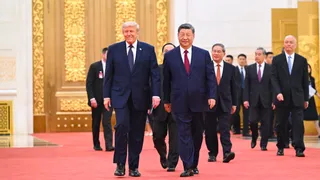
- ▪Russian President Vladimir Putin and US President Donald Trump recently visited Beijing, highlighting China's role on the global stage.
- ▪Chinese media described Beijing as an international 'living room' amid these high-profile visits.
- ▪Despite the visits, China's foreign policy positions, such as support for Russia and trade surplus with the EU, have not shifted significantly.
Asia Times files mainly under world. We currently carry 156 of its stories.
Story provenance
Source · retrieval · rights · ranking — open for full record
inspect →
Story provenance
Attribution is not the same as permission. This drawer separates discovery metadata, excerpts, WeSearch-generated summaries, reuse status, and whether the publisher receives the visit. Nothing here claims a legal grant the publisher has not made.
Record
| Original publisher | Asia Times |
| Canonical URL | https://asiatimes.com/2026/05/the-world-may-or-may-not-be-entering-beijing-time/ |
| Publication time | Tue, 26 May 2026 09:46:09 +0000 |
| Retrieval time | 2026-05-26T09:47:47.733Z |
| Last seen | 2026-05-26T09:47:47.733Z |
| Headline source | Publisher (no WeSearch rewrite) |
| Excerpt source | publisher body |
| Excerpt method | First ~120 words (~800 chars) of extracted publisher body, fair-use limited. |
| Summary | WeSearch · cerebras-chat (WeSearch summarizer) |
| Summary source text | contentText |
| Citation coverage | Summary is a WeSearch-generated derivative; primary citation is the original publisher URL. |
| Cluster | If6QAP2JE_Et |
| Cluster logic | Grouped by semantic title/content similarity across sources within a rolling window. Same-publisher template collisions are excluded from coverage comparison. |
| Ranking reason | Story pages are not engagement-ranked. Hub feeds use recency, with optional source-diversified chronological ordering (cap consecutive stories per source). No personalized ranking. |
| Publisher visit | Yes — open original |
| Substitutes article? | No — link-out required for full text |
Rights status (four layers)
WeSearch handling by dimension
| Indexing | May the item be indexed (stored, ranked, made findable)? | Allowed |
| Snippet | May a short excerpt of the publisher's text be shown? | Allowed |
| AI summary | May WeSearch generate its own short summary of the article? | Limited |
| Retrieval / RAG | May the content be exposed for third-party retrieval-augmented generation? | Not asserted |
| Model training | May the content be used to train AI models? | Not asserted |
| Commercial reuse | May the content be reused commercially? | Not permitted |
Basis: Derived from the published RSS/Atom feed. Contact: [email protected]. Reviewed: 2026-07-24.
Opening excerpt (first ~120 words) tap to expand
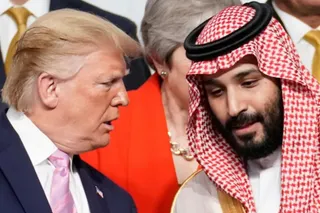
In recent weeks, the back-to-back state visits to Beijing by Russian President Vladimir Putin and US President Donald Trump have put China in the global spotlight. For some international analysts, the summits showcased China as a “stabilising force capable of hosting two major rivals within days”, a “broker between the big powers” and a “pillar of global stability.” To others, the visits highlighted how China is becoming an “indispensable global power” and President Xi Jinping a “world leader to be reckoned with and courted.” Chinese analysts, meanwhile, noted that over the past six months, numerous other world leaders have visited Beijing, including those from France, Britain, Canada, South Korea and Germany. Crucially, some leaders returned after long gaps.
…
Excerpt limited to ~120 words for fair-use compliance. The full article is at Asia Times.
Discussion
0 commentsMore from Asia Times