
These California wildflowers could save other plants
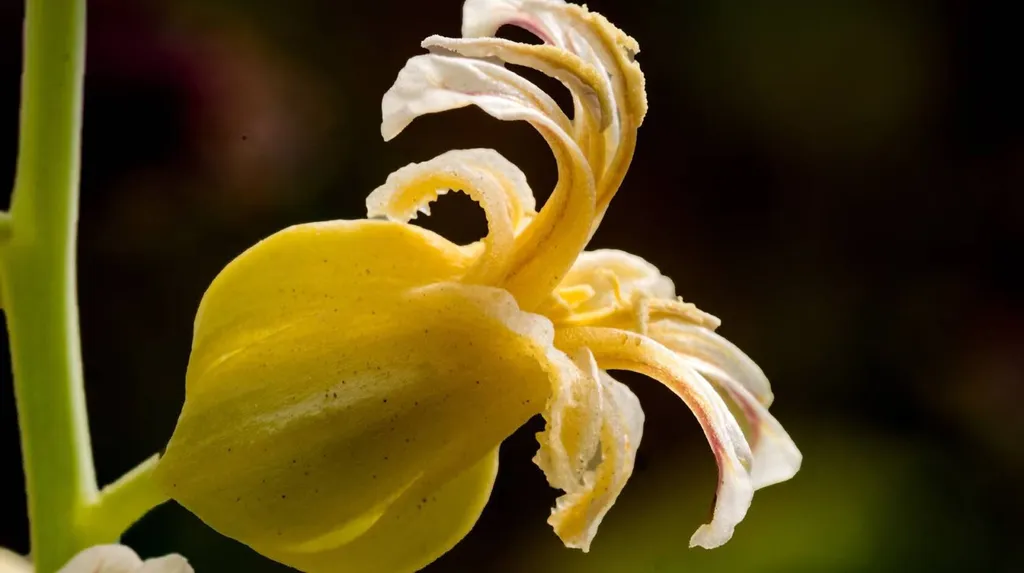
The mountain jewelflower, a widespread California wildflower, is increasingly vulnerable due to shifting rainfall patterns caused by climate change. Researchers at UC Davis have studied the species' seed dormancy and germination strategies to understand how it and related jewelflowers may cope with unpredictable climates. Their findings aim to inform broader conservation efforts for other native plants facing similar environmental pressures.
- ▪The mountain jewelflower (Streptanthus tortuosus) occupies diverse habitats across California but is threatened by later onset of the wet season and erratic precipitation.
- ▪Scientists have shown that desert annuals use seed banks with varied dormancy periods to hedge against drought, a strategy they are investigating in jewelflowers.
- ▪By analyzing seed germination and subsequent seed production in jewelflowers, researchers hope to develop insights that can be applied to protect many other native plant species.
- ▪The study builds on a decade of collaborative work among plant biologists and ecologists to model climate‑adaptation mechanisms across multiple species.
Phys.org files mainly under science. We currently carry 1,272 of its stories.
Story provenance
Source · retrieval · rights · ranking — open for full record
inspect →
Attribution is not the same as permission. This drawer separates discovery metadata, excerpts, WeSearch-generated summaries, reuse status, and whether the publisher receives the visit. Nothing here claims a legal grant the publisher has not made.
Record
| Original publisher | Phys.org |
| Canonical URL | https://phys.org/news/2026-05-california-wildflowers.html |
| Publication time | Sat, 30 May 2026 09:30:03 EDT |
| Retrieval time | 2026-05-30T13:34:38.117Z |
| Last seen | 2026-05-30T13:34:39.679Z |
| Headline source | Publisher (no WeSearch rewrite) |
| Excerpt source | publisher body |
| Excerpt method | First ~120 words (~800 chars) of extracted publisher body, fair-use limited. |
| Summary | WeSearch · cerebras-chat (WeSearch summarizer) |
| Summary source text | contentText |
| Citation coverage | Summary is a WeSearch-generated derivative; primary citation is the original publisher URL. |
| Cluster | 9zsgOLBvNn5q |
| Cluster logic | Grouped by semantic title/content similarity across sources within a rolling window. Same-publisher template collisions are excluded from coverage comparison. |
| Ranking reason | Story pages are not engagement-ranked. Hub feeds use recency, with optional source-diversified chronological ordering (cap consecutive stories per source). No personalized ranking. |
| Publisher visit | Yes — open original |
| Substitutes article? | No — link-out required for full text |
Rights status (four layers)
WeSearch handling by dimension
| Indexing | May the item be indexed (stored, ranked, made findable)? | Allowed |
| Snippet | May a short excerpt of the publisher's text be shown? | Allowed |
| AI summary | May WeSearch generate its own short summary of the article? | Limited |
| Retrieval / RAG | May the content be exposed for third-party retrieval-augmented generation? | Not asserted |
| Model training | May the content be used to train AI models? | Not asserted |
| Commercial reuse | May the content be reused commercially? | Not permitted |
Basis: Derived from the published RSS/Atom feed. Contact: [email protected]. Reviewed: 2026-07-24.
Opening excerpt (first ~120 words) tap to expand
May 30, 2026 These California wildflowers could save other plants by Douglas Fox, UC Davis edited by Lisa Lock, reviewed by Andrew Zinin Lisa Lock Scientific Editor Meet our editorial team Behind our editorial process Andrew Zinin Lead Editor Meet our editorial team Behind our editorial process Editors' notes This article has been reviewed according to Science X's editorial process and policies. Editors have highlighted the following attributes while ensuring the content's credibility: fact-checked trusted source proofread The GIST Add as preferred source The mountain jewelflower (Streptanthus tortuosus) Credit: Julin Maloof As wildflowers go, the mountain jewelflower is demure, clever and quietly unbreakable.
…
Excerpt limited to ~120 words for fair-use compliance. The full article is at Phys.org.