This Is How the Iran War Ends
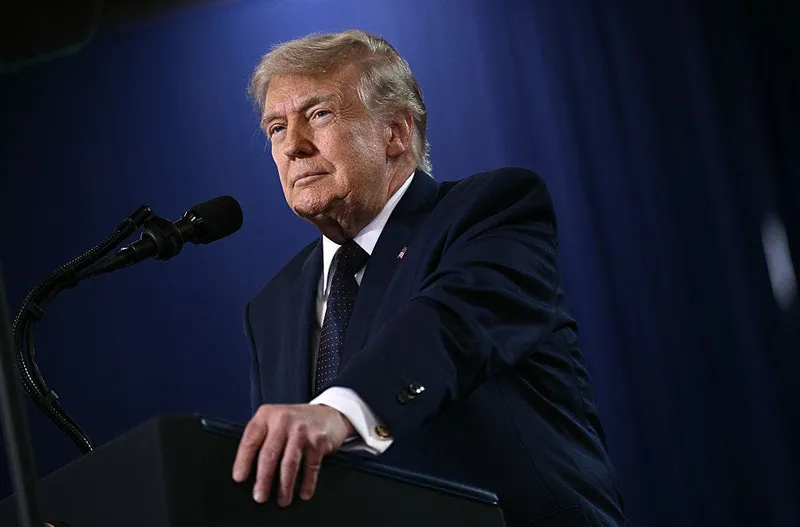
President Trump is navigating a complex political landscape as he announces a largely negotiated ceasefire deal regarding the Iran conflict. He faces criticism from both Republican allies and Democratic opponents, each interpreting the move in contrasting ways. Despite the challenges, some experts highlight the significant achievements of the war, particularly in limiting Iran's nuclear capabilities.
- ▪Trump announced that an agreement to reopen the Strait of Hormuz is now largely negotiated.
- ▪Republican Senator Lindsey Graham expressed concerns that a deal could be perceived as a retreat, potentially empowering Iran.
- ▪Democratic Senator Chris Van Hollen criticized the move towards diplomacy as a return to the prewar status quo.
2 outlets in our directory ran this story, first to last over 15 hours. All of the coverage we found sits in one bucket: centre. That one-sidedness is itself worth noticing.
- ▪ Explainer-What needs to be agreed to end the Iran war? — Investing.com — News
The Free Press files mainly under politics. We currently carry 167 of its stories.
Story provenance
Source · retrieval · rights · ranking — open for full record
inspect →
Story provenance
Attribution is not the same as permission. This drawer separates discovery metadata, excerpts, WeSearch-generated summaries, reuse status, and whether the publisher receives the visit. Nothing here claims a legal grant the publisher has not made.
Record
| Original publisher | The Free Press |
| Canonical URL | https://www.thefp.com/p/iran-war-end-trump-peace-deal-israel |
| Publication time | Tue, 26 May 2026 01:38:09 GMT |
| Retrieval time | 2026-05-26T01:42:41.632Z |
| Last seen | 2026-05-26T02:23:26.756Z |
| Headline source | Publisher (no WeSearch rewrite) |
| Excerpt source | publisher body |
| Excerpt method | First ~120 words (~800 chars) of extracted publisher body, fair-use limited. |
| Summary | WeSearch · cerebras-chat (WeSearch summarizer) |
| Summary source text | contentText |
| Citation coverage | Summary is a WeSearch-generated derivative; primary citation is the original publisher URL. |
| Cluster | F7B4WgFBNtKc · 3 stories |
| Cluster logic | Grouped by semantic title/content similarity across sources within a rolling window. Same-publisher template collisions are excluded from coverage comparison. |
| Ranking reason | Story pages are not engagement-ranked. Hub feeds use recency, with optional source-diversified chronological ordering (cap consecutive stories per source). No personalized ranking. |
| Publisher visit | Yes — open original |
| Substitutes article? | No — link-out required for full text |
Rights status (four layers)
WeSearch handling by dimension
| Indexing | May the item be indexed (stored, ranked, made findable)? | Allowed |
| Snippet | May a short excerpt of the publisher's text be shown? | Allowed |
| AI summary | May WeSearch generate its own short summary of the article? | Limited |
| Retrieval / RAG | May the content be exposed for third-party retrieval-augmented generation? | Not asserted |
| Model training | May the content be used to train AI models? | Not asserted |
| Commercial reuse | May the content be reused commercially? | Not permitted |
Basis: Derived from the published RSS/Atom feed. Contact: [email protected]. Reviewed: 2026-07-24.
Opening excerpt (first ~120 words) tap to expand
This Is How the Iran War EndsPresident Donald Trump delivers a speech about the economy at Rockland Community College Fieldhouse in Suffern, New York, on May 22, 2026. (Brendan Smialowski/AFP via Getty Images)With a ceasefire deal ‘largely negotiated,’ Mike Doran talks to a senior administration official who lays out Trump’s two-step plan for peace. By Michael Doran05.26.26 — InternationalNo description available.FOLLOW TOPIC --:----:--Upgrade to ListenProduced by ElevenLabs using AI narrationDonald Trump now governs between enemies who want him to fail, and allies who demand impossible victories. He confronts that predicament as he announces that an agreement reopening the Strait of Hormuz is now “largely negotiated.”Trump faces attacks from both directions at once.
…
Excerpt limited to ~120 words for fair-use compliance. The full article is at The Free Press.
Discussion
0 commentsMore from The Free Press