Trump’s $1.5 trillion military splurge destined to backfire
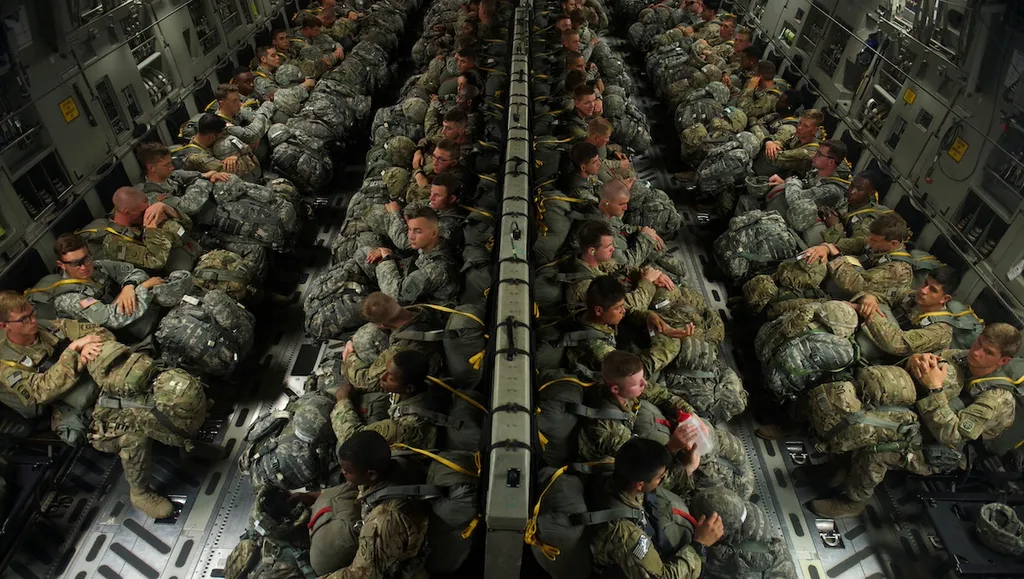
The Trump administration has proposed a record-breaking $1.5 trillion military budget for FY2027, which aims to enhance the US military's capabilities. However, the proposal faces significant challenges in Congress, with divisions among Republicans and potential opposition from Democrats. Critics argue that this military buildup could negatively impact the US's financial health and exacerbate existing issues within the Pentagon's procurement processes.
- ▪The proposed military budget represents a 66% increase year-over-year and aims to counter threats from China and Russia.
- ▪Funding for the budget request will be challenging, as Congress previously rejected many of the government's demands.
- ▪Critics warn that the budget could add up to $6.9 trillion to the federal debt and may not translate into effective combat capabilities.
Asia Times files mainly under world. We currently carry 156 of its stories.
Story provenance
Source · retrieval · rights · ranking — open for full record
inspect →
Story provenance
Attribution is not the same as permission. This drawer separates discovery metadata, excerpts, WeSearch-generated summaries, reuse status, and whether the publisher receives the visit. Nothing here claims a legal grant the publisher has not made.
Record
| Original publisher | Asia Times |
| Canonical URL | https://asiatimes.com/2026/05/trumps-1-5-trillion-military-splurge-destined-to-backfire/ |
| Publication time | Wed, 27 May 2026 04:31:33 +0000 |
| Retrieval time | 2026-05-27T04:32:56.779Z |
| Last seen | 2026-05-27T04:32:56.779Z |
| Headline source | Publisher (no WeSearch rewrite) |
| Excerpt source | publisher body |
| Excerpt method | First ~120 words (~800 chars) of extracted publisher body, fair-use limited. |
| Summary | WeSearch · cerebras-chat (WeSearch summarizer) |
| Summary source text | contentText |
| Citation coverage | Summary is a WeSearch-generated derivative; primary citation is the original publisher URL. |
| Cluster | LPl9uGz5RDdK |
| Cluster logic | Grouped by semantic title/content similarity across sources within a rolling window. Same-publisher template collisions are excluded from coverage comparison. |
| Ranking reason | Story pages are not engagement-ranked. Hub feeds use recency, with optional source-diversified chronological ordering (cap consecutive stories per source). No personalized ranking. |
| Publisher visit | Yes — open original |
| Substitutes article? | No — link-out required for full text |
Rights status (four layers)
WeSearch handling by dimension
| Indexing | May the item be indexed (stored, ranked, made findable)? | Allowed |
| Snippet | May a short excerpt of the publisher's text be shown? | Allowed |
| AI summary | May WeSearch generate its own short summary of the article? | Limited |
| Retrieval / RAG | May the content be exposed for third-party retrieval-augmented generation? | Not asserted |
| Model training | May the content be used to train AI models? | Not asserted |
| Commercial reuse | May the content be reused commercially? | Not permitted |
Basis: Derived from the published RSS/Atom feed. Contact: [email protected]. Reviewed: 2026-07-24.
Opening excerpt (first ~120 words) tap to expand
Earlier this month, US Defense Secretary Pete Hegseth stood in front of the House and Senate Appropriations Committees to defend the Trump administration’s record-breaking US$1.5 trillion military budget proposal for FY2027. According to the White House, this 66% year-over-year increase signals a renewed commitment to “defeating any adversary” and will deliver what President Trump has referred to as a “Dream Military.” This blueprint will not pass Congress unscathed. However, the larger problem is that the Trump administration’s budget request reflects Washington’s aimless and self-defeating grand strategy.
…
Excerpt limited to ~120 words for fair-use compliance. The full article is at Asia Times.
Discussion
0 commentsMore from Asia Times