UAE will leave OPEC in blow to oil cartel
The United Arab Emirates announced it will leave OPEC effective May 1, marking a significant change for the oil cartel. This decision comes as the UAE seeks to increase its oil production capacity, which it believes has been limited by OPEC's production quotas. The UAE's departure is expected to weaken OPEC's influence over global oil supplies and prices.
- ▪The UAE is OPEC's third-largest producer, and its exit will reduce the cartel's leverage in the oil market.
- ▪The UAE plans to increase its oil production capacity, which it feels has been restricted by OPEC quotas.
- ▪Tensions between the UAE and Saudi Arabia have been rising, impacting their cooperation within OPEC.
6 outlets in our directory ran this story, first to last over 20 hours. Coverage spans 2 points on the political spectrum — 2 lean left, 3 centre.
- ▪ UAE quits OPEC as oil cartel takes blow during war on Iran — Al Jazeera English
- ▪ UAE set to will leave OPEC in blow to oil cartel — The Globe and Mail
- ▪ UAE leaves OPEC in a blow to oil cartel — France 24 (EN)
- ▪ UAE leaves OPEC in blow to oil cartel amid war on Iran — Al Jazeera – Breaking News, World News and Video from Al Jazeera
- ▪ The UAE is leaving OPEC after nearly 60 years as the Iran war reshapes Gulf alliances — Quartz
Korea Times publishes from South Korea and files mainly under world. We currently carry 375 of its stories.
Story provenance
Source · retrieval · rights · ranking — open for full record
inspect →
Story provenance
Attribution is not the same as permission. This drawer separates discovery metadata, excerpts, WeSearch-generated summaries, reuse status, and whether the publisher receives the visit. Nothing here claims a legal grant the publisher has not made.
Record
| Original publisher | Korea Times |
| Canonical URL | https://www.koreatimes.co.kr/world/20260429/uae-will-leave-opec-in-blow-to-oil-cartel?utm_source=rss |
| Publication time | Wed, 29 Apr 2026 09:02:04 GMT |
| Retrieval time | 2026-04-29T09:06:54.500Z |
| Last seen | 2026-04-29T09:06:54.500Z |
| Headline source | Publisher (no WeSearch rewrite) |
| Excerpt source | publisher body |
| Excerpt method | First ~120 words (~800 chars) of extracted publisher body, fair-use limited. |
| Summary | WeSearch · cerebras-chat (WeSearch summarizer) |
| Summary source text | contentText |
| Citation coverage | Summary is a WeSearch-generated derivative; primary citation is the original publisher URL. |
| Cluster | oJ4AgQLILW3e · 6 stories |
| Cluster logic | Grouped by semantic title/content similarity across sources within a rolling window. Same-publisher template collisions are excluded from coverage comparison. |
| Ranking reason | Story pages are not engagement-ranked. Hub feeds use recency, with optional source-diversified chronological ordering (cap consecutive stories per source). No personalized ranking. |
| Publisher visit | Yes — open original |
| Substitutes article? | No — link-out required for full text |
Rights status (four layers)
WeSearch handling by dimension
| Indexing | May the item be indexed (stored, ranked, made findable)? | Allowed |
| Snippet | May a short excerpt of the publisher's text be shown? | Allowed |
| AI summary | May WeSearch generate its own short summary of the article? | Limited |
| Retrieval / RAG | May the content be exposed for third-party retrieval-augmented generation? | Not asserted |
| Model training | May the content be used to train AI models? | Not asserted |
| Commercial reuse | May the content be reused commercially? | Not permitted |
Basis: Derived from the published RSS/Atom feed. Contact: [email protected]. Reviewed: 2026-07-24.
Opening excerpt (first ~120 words) tap to expand
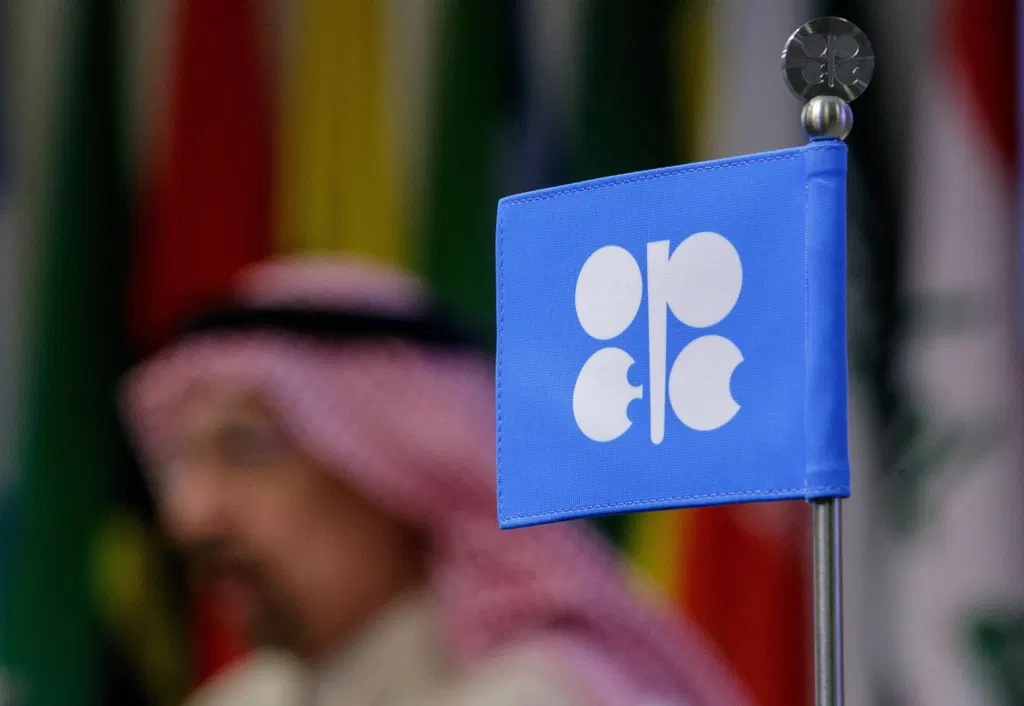
Khalid Al-Falih, then president of the the Organization of Petroleum Exporting Countries (OPEC) conference and Saudi Arabia's energy minister, is seen behind a OPEC logo during news conference at the headquarters of the OPEC in Vienna, Austria, Nov. 30 2017. EPA-YonhapDUBAI — The United Arab Emirates said Tuesday it will leave OPEC effective May 1, stripping the oil cartel of its third-largest producer and further weakening its leverage over global oil supplies and prices.The UAE's decision had been rumored as a possibility for some time, as it pushed back in recent years against OPEC production quotas it felt had been too low — meaning it wasn't able to sell as much oil to the world as it had wanted.“Having invested heavily in expanding energy production capacity in recent years, the…
Excerpt limited to ~120 words for fair-use compliance. The full article is at Korea Times.
Discussion
0 commentsMore from Korea Times