Unhealthy code makes AI agents consume 35-50% more tokens
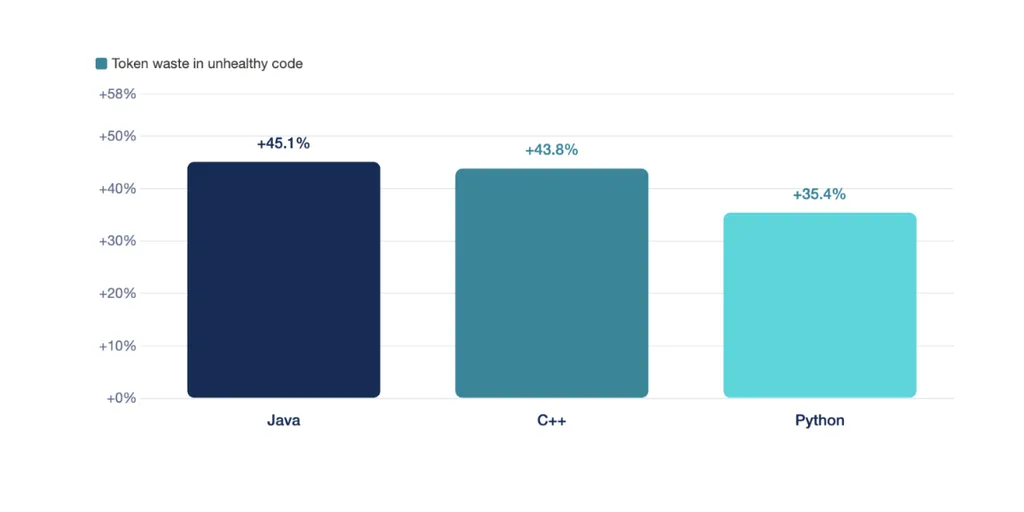
Research indicates that AI agents working with unhealthy codebases consume 35-50% more tokens to complete tasks compared to healthier code. This increased token consumption is accompanied by a higher risk of defects and poorer output quality. The findings highlight the importance of maintaining code health to reduce costs and improve AI performance.
- ▪Agents working on unhealthy codebases consume up to 50% more tokens for the same tasks.
- ▪The research analyzed C++, Java, and Python codebases, revealing that less healthy code leads to higher token consumption.
- ▪Healthy code reduces error-generation risk and allows AI to operate more predictably, resulting in lower token costs.
Opening excerpt (first ~120 words) tap to expand
Our research across C++, Java, and Python shows that agents working on unhealthy codebases consume up to 50% more tokens to complete the same tasks. That’s in addition to the increased defect risk covered in earlier research. You're not just getting worse output. You're paying significantly more for it. Knowing that your unhealthy code burns excess tokens is useful. Having a workflow that prevents it from getting worse with every agent commit is what changes the outcome. What the data reveals on token consumption To benchmark token consumption, CodeScene's research team analyzed two tasks: single-prompt test case generation and agentic refactoring. The studies covered Python, Java, and C++ codebases.
…
Excerpt limited to ~120 words for fair-use compliance. The full article is at Codescene.
Discussion
0 commentsMore from Codescene