United Arab Emirates says it will leave OPEC effective May 1
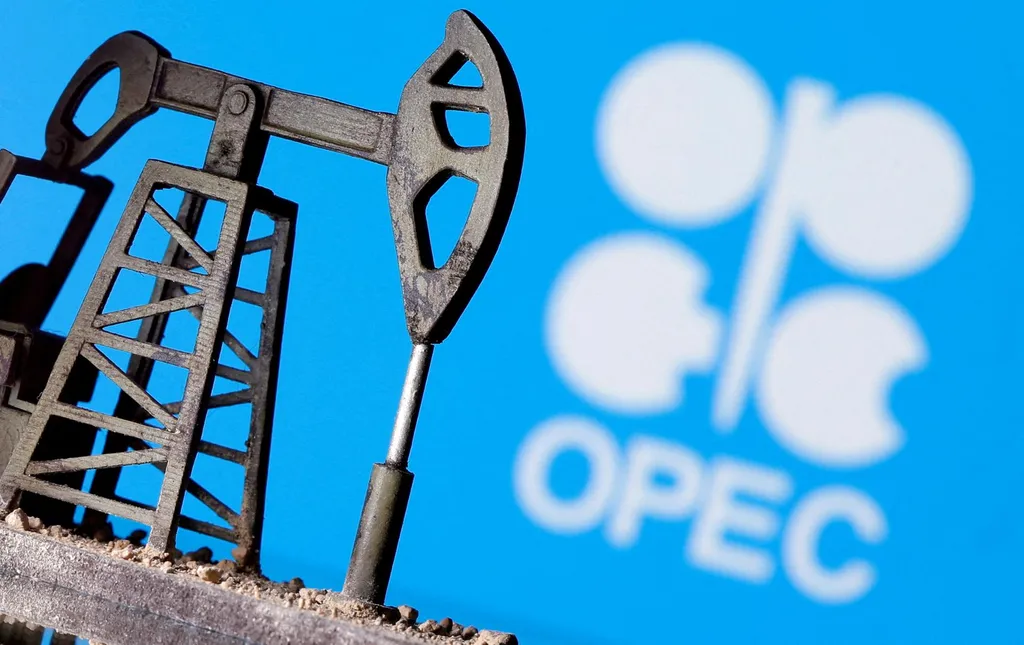
The United Arab Emirates (UAE) has announced its decision to leave OPEC and the OPEC+ group effective May 1. This move comes amid growing tensions with Saudi Arabia and a desire for greater autonomy in its energy policies. The UAE aims to enhance its domestic energy production while maintaining a responsible role in global energy markets.
- ▪The UAE will exit OPEC effective May 1, a decision that has been anticipated for some time.
- ▪The UAE has been trying to assert its foreign policy, which has sometimes conflicted with Saudi Arabia's positions.
- ▪The UAE's announcement reflects its strategic vision for energy production and market participation.
6 outlets in our directory ran this story, first to last over 1 hour. All of the coverage we found sits in one bucket: centre. That one-sidedness is itself worth noticing.
- ▪ United Arab Emirates says it will leave OPEC — ABC News: Top Stories
- ▪ United Arab Emirates says it will leave OPEC effective May 1 - AP News — Google News
- ▪ United Arab Emirates leaving OPEC, effective May 1 — wallstreetbets
- ▪ United Arab Emirates Says It Will Leave OPEC in Major Move — NYT > Top Stories
- ▪ United Arab Emirates leaving OPEC, effective May 1 — CNBC
Korea Times publishes from South Korea and files mainly under world. We currently carry 375 of its stories.
Story provenance
Source · retrieval · rights · ranking — open for full record
inspect →
Story provenance
Attribution is not the same as permission. This drawer separates discovery metadata, excerpts, WeSearch-generated summaries, reuse status, and whether the publisher receives the visit. Nothing here claims a legal grant the publisher has not made.
Record
| Original publisher | Korea Times |
| Canonical URL | https://www.koreatimes.co.kr/world/20260428/united-arab-emirates-says-it-will-leave-opec-effective-may-1?utm_source=rss |
| Publication time | Tue, 28 Apr 2026 13:22:03 GMT |
| Retrieval time | 2026-04-28T13:24:31.953Z |
| Last seen | 2026-04-28T13:24:31.953Z |
| Headline source | Publisher (no WeSearch rewrite) |
| Excerpt source | publisher body |
| Excerpt method | First ~120 words (~800 chars) of extracted publisher body, fair-use limited. |
| Summary | WeSearch · cerebras-chat (WeSearch summarizer) |
| Summary source text | contentText |
| Citation coverage | Summary is a WeSearch-generated derivative; primary citation is the original publisher URL. |
| Cluster | riY0jx2JjSWI · 6 stories |
| Cluster logic | Grouped by semantic title/content similarity across sources within a rolling window. Same-publisher template collisions are excluded from coverage comparison. |
| Ranking reason | Story pages are not engagement-ranked. Hub feeds use recency, with optional source-diversified chronological ordering (cap consecutive stories per source). No personalized ranking. |
| Publisher visit | Yes — open original |
| Substitutes article? | No — link-out required for full text |
Rights status (four layers)
WeSearch handling by dimension
| Indexing | May the item be indexed (stored, ranked, made findable)? | Allowed |
| Snippet | May a short excerpt of the publisher's text be shown? | Allowed |
| AI summary | May WeSearch generate its own short summary of the article? | Limited |
| Retrieval / RAG | May the content be exposed for third-party retrieval-augmented generation? | Not asserted |
| Model training | May the content be used to train AI models? | Not asserted |
| Commercial reuse | May the content be reused commercially? | Not permitted |
Basis: Derived from the published RSS/Atom feed. Contact: [email protected]. Reviewed: 2026-07-24.
Opening excerpt (first ~120 words) tap to expand
An illustration image of the Organization of the Petroleum Exporting Countries (OPEC) / Reuters-YonhapDUBAI, United Arab Emirates — The United Arab Emirates (UAE) announced Tuesday that it will leave the oil cartel OPEC and its wider OPEC+ group effective May 1, a move rumored for some time as the Emirates chaffed under production restrictions and increasingly had frostier relations with neighboring Saudi Arabia.The UAE had been a longtime member of OPEC, first through its emirate of Abu Dhabi in 1967 and later when the UAE became its own country in 1971.But the UAE has been increasingly trying to leverage its own foreign policy in the Middle East that has contradicted some positions of Riyadh over time — particularly as Saudi Arabia began to directly challenge the Emirates in trying to…
Excerpt limited to ~120 words for fair-use compliance. The full article is at Korea Times.
Discussion
0 commentsMore from Korea Times