We Still Haven’t Answered the Basic Questions of the Iran War
The article argues that understanding the Iran conflict requires moving beyond simple military metrics and focusing on strategic concepts like 'center of gravity' and 'decisive points.' Iran's true strength lies in its institutions, particularly the IRGC and clerical leadership, rather than its military hardware. The U.S., meanwhile, may be vulnerable not militarily but through political and economic pressures that Iran seeks to exploit.
- ▪Carl von Clausewitz's concept of the 'center of gravity' is presented as essential for understanding Iran's sources of strength.
- ▪Iran's center of gravity is identified as its institutions, especially the Islamic Revolutionary Guard Corps and the clerical establishment.
- ▪The article suggests that Iran views the U.S. political and economic sensitivity—such as to gas prices and market fluctuations—as America's center of gravity.
- ▪Antoine-Henri Jomini's theory of 'decisive points' is used to explain where and how strategic pressure can be applied in conflict.
- ▪Unlike conventional wars, decisive points in the Iran conflict include not only physical locations but also institutional, economic, and psychological factors.
The Bulwark files mainly under politics. We currently carry 344 of its stories.
Story provenance
Source · retrieval · rights · ranking — open for full record
inspect →
Story provenance
Attribution is not the same as permission. This drawer separates discovery metadata, excerpts, WeSearch-generated summaries, reuse status, and whether the publisher receives the visit. Nothing here claims a legal grant the publisher has not made.
Record
| Original publisher | The Bulwark |
| Canonical URL | https://www.thebulwark.com/p/we-still-havent-answered-the-basic-questions-iran-war-strategy-strength-weakness |
| Publication time | Wed, 29 Apr 2026 07:19:15 GMT |
| Retrieval time | 2026-04-29T07:28:32.507Z |
| Last seen | 2026-04-29T07:36:06.268Z |
| Headline source | Publisher (no WeSearch rewrite) |
| Excerpt source | publisher body |
| Excerpt method | First ~120 words (~800 chars) of extracted publisher body, fair-use limited. |
| Summary | WeSearch · cerebras-chat (WeSearch summarizer) |
| Summary source text | contentText |
| Citation coverage | Summary is a WeSearch-generated derivative; primary citation is the original publisher URL. |
| Cluster | FcEsujAckL9c |
| Cluster logic | Grouped by semantic title/content similarity across sources within a rolling window. Same-publisher template collisions are excluded from coverage comparison. |
| Ranking reason | Story pages are not engagement-ranked. Hub feeds use recency, with optional source-diversified chronological ordering (cap consecutive stories per source). No personalized ranking. |
| Publisher visit | Yes — open original |
| Substitutes article? | No — link-out required for full text |
Rights status (four layers)
WeSearch handling by dimension
| Indexing | May the item be indexed (stored, ranked, made findable)? | Allowed |
| Snippet | May a short excerpt of the publisher's text be shown? | Allowed |
| AI summary | May WeSearch generate its own short summary of the article? | Limited |
| Retrieval / RAG | May the content be exposed for third-party retrieval-augmented generation? | Not asserted |
| Model training | May the content be used to train AI models? | Not asserted |
| Commercial reuse | May the content be reused commercially? | Not permitted |
Basis: Derived from the published RSS/Atom feed. Contact: [email protected]. Reviewed: 2026-07-24.
Opening excerpt (first ~120 words) tap to expand
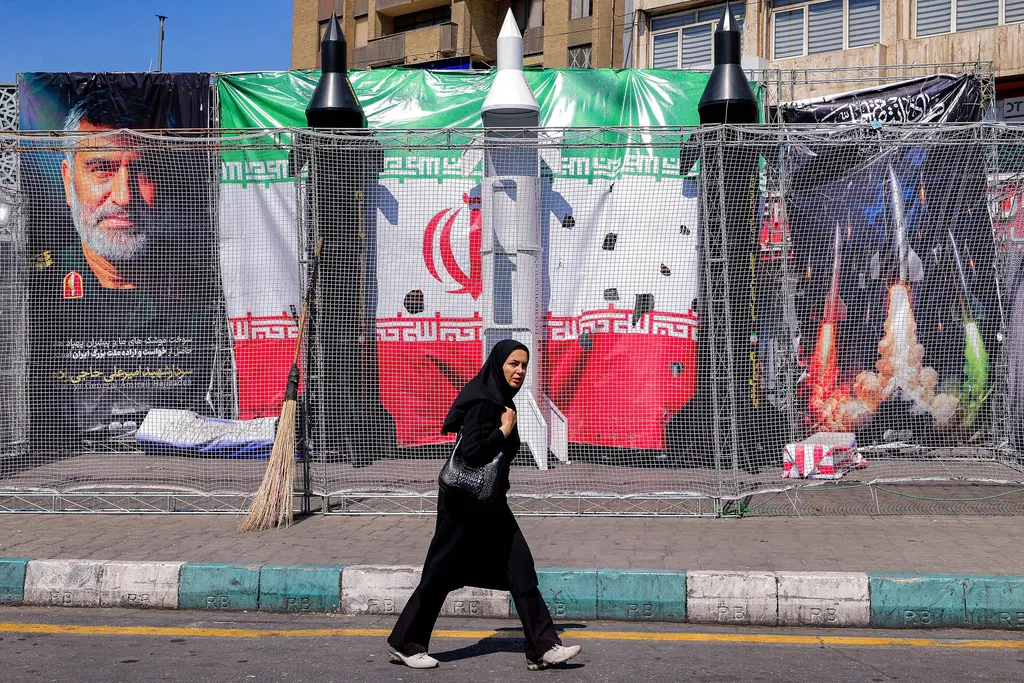
We Still Haven’t Answered the Basic Questions of the Iran WarThe old lessons still apply to modern war.Mark HertlingApr 29, 202630739ShareA woman walks past mockups of Iranian missiles along Valiasr Square in Tehran on April 6, 2026. (Photo by Atta Kenare / AFP via Getty Images)OCCASIONALLY, WHEN THINGS START to look a little too neat, a little too measurable, a little too certain, I like to return to an old friend for guidance. Carl von Clausewitz, the nineteenth-century Prussian officer, might be a questionable choice for insight into a twenty-first-century fight. But he wrote one of the most enduring works on military theory in the history of the world, and there’s a reason military professionals around the globe turn to him for understanding—especially about our own limits.
…
Excerpt limited to ~120 words for fair-use compliance. The full article is at The Bulwark.
Discussion
0 commentsMore from The Bulwark