Wearable robot boosts strength of children with spinal muscular atrophy
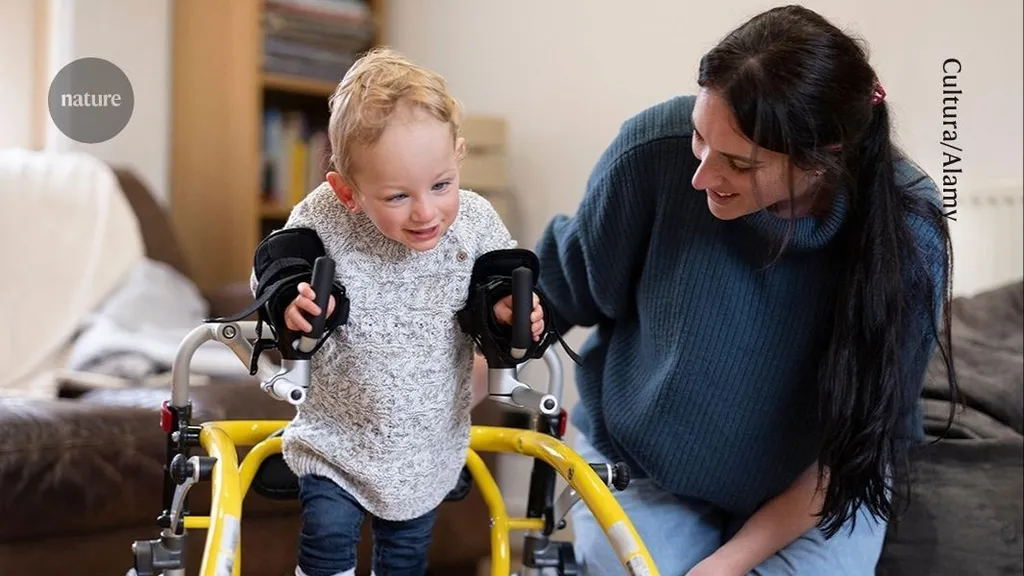
A wearable robot has been developed to enhance the strength of children with spinal muscular atrophy (SMA) undergoing gene therapy. The device provides tailored resistance training, leading to significant improvements in knee function and muscle strength. Researchers observed marked gains in physical capabilities after six weeks of use, indicating potential for better rehabilitation outcomes.
- ▪The wearable robot weighs just under one kilogram and improves knee function in children with SMA.
- ▪After six weeks of using the robot, participants showed a 20% increase in quadriceps size and doubled their knee force.
- ▪The device is designed for home use and gamifies the training process to engage children effectively.
Hacker News (Newest) files mainly under programming. We currently carry 5,306 of its stories.
Story provenance
Source · retrieval · rights · ranking — open for full record
inspect →
Story provenance
Attribution is not the same as permission. This drawer separates discovery metadata, excerpts, WeSearch-generated summaries, reuse status, and whether the publisher receives the visit. Nothing here claims a legal grant the publisher has not made.
Record
| Original publisher | Nature |
| Canonical URL | https://www.nature.com/articles/d41586-026-01573-x |
| Publication time | Thu, 21 May 2026 12:39:11 +0000 |
| Retrieval time | 2026-05-21T12:51:11.071Z |
| Last seen | 2026-05-21T12:51:11.071Z |
| Headline source | Publisher (no WeSearch rewrite) |
| Excerpt source | publisher body |
| Excerpt method | First ~120 words (~800 chars) of extracted publisher body, fair-use limited. |
| Summary | WeSearch · cerebras-chat (WeSearch summarizer) |
| Summary source text | contentText |
| Citation coverage | Summary is a WeSearch-generated derivative; primary citation is the original publisher URL. |
| Cluster | 8iUXfFM7ArgK |
| Cluster logic | Grouped by semantic title/content similarity across sources within a rolling window. Same-publisher template collisions are excluded from coverage comparison. |
| Ranking reason | Story pages are not engagement-ranked. Hub feeds use recency, with optional source-diversified chronological ordering (cap consecutive stories per source). No personalized ranking. |
| Publisher visit | Yes — open original |
| Substitutes article? | No — link-out required for full text |
Rights status (four layers)
WeSearch handling by dimension
| Indexing | May the item be indexed (stored, ranked, made findable)? | Allowed |
| Snippet | May a short excerpt of the publisher's text be shown? | Allowed |
| AI summary | May WeSearch generate its own short summary of the article? | Limited |
| Retrieval / RAG | May the content be exposed for third-party retrieval-augmented generation? | Not asserted |
| Model training | May the content be used to train AI models? | Not asserted |
| Commercial reuse | May the content be reused commercially? | Not permitted |
Basis: Derived from the published RSS/Atom feed. Contact: [email protected]. Reviewed: 2026-07-24.
Opening excerpt (first ~120 words) tap to expand
NEWS 20 May 2026 Wearable robot boosts strength of children with spinal muscular atrophy The device helps muscle recovery in those receiving gene therapy for the rare neuromuscular condition. By Liam Drew0 Liam Drew Liam Drew is a freelance science journalist based near London. View author publications Search author on: PubMed Google Scholar Email Bluesky Facebook LinkedIn Reddit Whatsapp X Conventional physiotherapy is often a part of neuromuscular rehabilitation in children.Credit: Cultura/AlamyA wearable robot weighing just under one kilogram improves knee function in children living with spinal muscular atrophy (SMA), according to research published in Nature today1.The device provides resistance training, tailored to the individual, for children who are unable to walk because of SMA.
…
Excerpt limited to ~120 words for fair-use compliance. The full article is at Nature.