
What is protein design? A Beginner's Guide to the Future of Biology
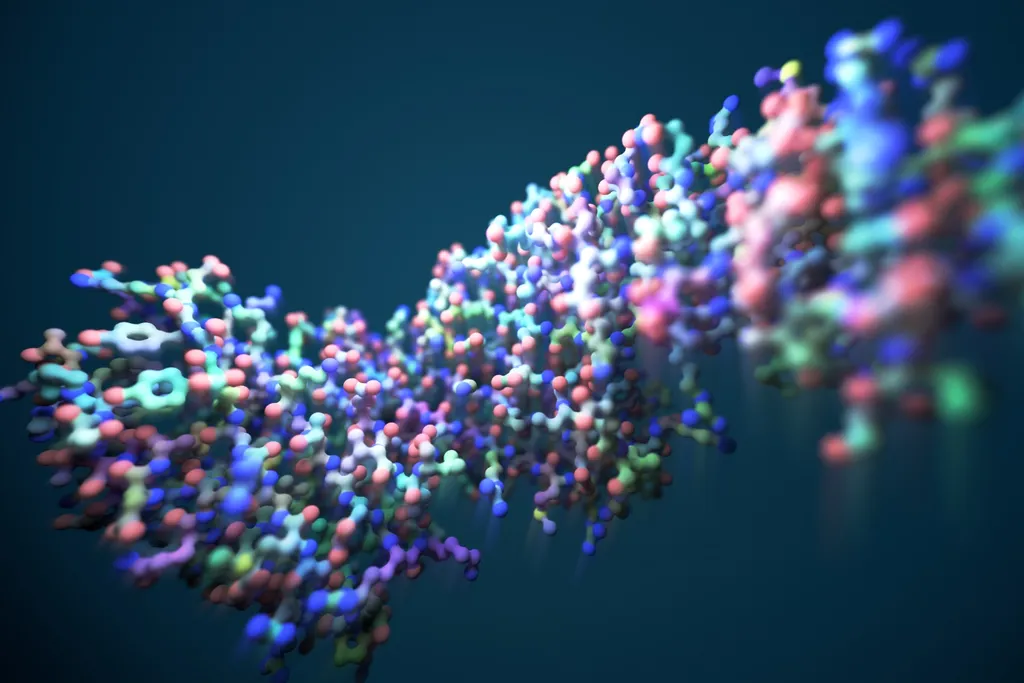
Protein design is an evolving field with significant implications for medicine, technology, and environmental sustainability. It involves creating new proteins by manipulating amino acid sequences, utilizing computational modeling and interdisciplinary knowledge. The applications of protein design are extensive, particularly in medicine and vaccine development.
- ▪Protein design aims to create proteins with specific properties by altering amino acid sequences.
- ▪Computational modeling is a key tool in predicting protein structures and interactions.
- ▪The field has potential applications in developing therapeutics and vaccines.
Hacker News (Newest) files mainly under programming. We currently carry 5,306 of its stories.
Story provenance
Source · retrieval · rights · ranking — open for full record
inspect →
Attribution is not the same as permission. This drawer separates discovery metadata, excerpts, WeSearch-generated summaries, reuse status, and whether the publisher receives the visit. Nothing here claims a legal grant the publisher has not made.
Record
| Original publisher | Institute for Protein Design – Designing tomorrow |
| Canonical URL | https://www.ipd.uw.edu/what-is-protein-design/ |
| Publication time | Wed, 20 May 2026 21:53:36 +0000 |
| Retrieval time | 2026-05-20T22:05:03.081Z |
| Last seen | 2026-05-20T22:05:03.081Z |
| Headline source | Publisher (no WeSearch rewrite) |
| Excerpt source | publisher body |
| Excerpt method | First ~120 words (~800 chars) of extracted publisher body, fair-use limited. |
| Summary | WeSearch · cerebras-chat (WeSearch summarizer) |
| Summary source text | contentText |
| Citation coverage | Summary is a WeSearch-generated derivative; primary citation is the original publisher URL. |
| Cluster | MPDyi-YwFcJI |
| Cluster logic | Grouped by semantic title/content similarity across sources within a rolling window. Same-publisher template collisions are excluded from coverage comparison. |
| Ranking reason | Story pages are not engagement-ranked. Hub feeds use recency, with optional source-diversified chronological ordering (cap consecutive stories per source). No personalized ranking. |
| Publisher visit | Yes — open original |
| Substitutes article? | No — link-out required for full text |
Rights status (four layers)
WeSearch handling by dimension
| Indexing | May the item be indexed (stored, ranked, made findable)? | Allowed |
| Snippet | May a short excerpt of the publisher's text be shown? | Allowed |
| AI summary | May WeSearch generate its own short summary of the article? | Limited |
| Retrieval / RAG | May the content be exposed for third-party retrieval-augmented generation? | Not asserted |
| Model training | May the content be used to train AI models? | Not asserted |
| Commercial reuse | May the content be reused commercially? | Not permitted |
Basis: Derived from the published RSS/Atom feed. Contact: [email protected]. Reviewed: 2026-07-24.
Opening excerpt (first ~120 words) tap to expand
Protein design is a rapidly changing field at the forefront of science with the potential to revolutionize medicine, technology, and environmental sustainability. But what is protein design, and how does it work? In this post, we will delve into the basics of protein design, explore its real-world applications, and learn about the interdisciplinary nature of this fascinating field. The Building Blocks of Life Proteins are tiny molecules that play an enormous role in biology. They are found inside every living thing and act as structural components, transporters, signaling molecules, and much more. For example, collagen, the most abundant protein in the human body, provides structural integrity to our skin, bones, and connective tissues.
…
Excerpt limited to ~120 words for fair-use compliance. The full article is at Institute for Protein Design – Designing tomorrow.
Discussion
0 comments


