What It Means to Go From School Drop Out to Writing Tutor
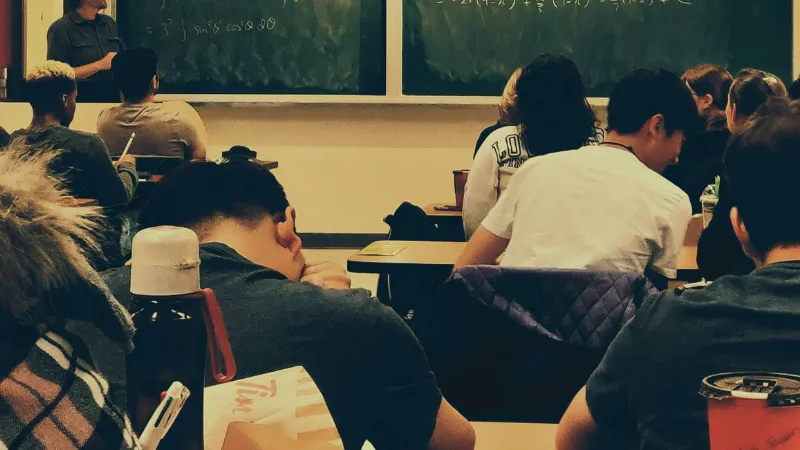
The article discusses the author's journey from dropping out of school to becoming a writing tutor. It highlights the pressures faced by students and the stigma associated with leaving the education system early. Ultimately, the author found purpose and direction through a creative writing program that helped reshape their perspective on education and personal growth.
- ▪The author dropped out of school at seventeen, feeling overwhelmed by academic pressures and personal struggles.
- ▪After leaving school, they joined a program called Fighting Words, which offers creative writing workshops for students.
- ▪The program provided the author with a new perspective on writing and education, leading to opportunities for further study.
Literary Hub (LitHub) files mainly under books. We currently carry 79 of its stories.
Story provenance
Source · retrieval · rights · ranking — open for full record
inspect →
Attribution is not the same as permission. This drawer separates discovery metadata, excerpts, WeSearch-generated summaries, reuse status, and whether the publisher receives the visit. Nothing here claims a legal grant the publisher has not made.
Record
| Original publisher | Literary Hub |
| Canonical URL | https://lithub.com/what-it-means-to-go-from-school-drop-out-to-writing-tutor/ |
| Publication time | Tue, 19 May 2026 08:58:07 +0000 |
| Retrieval time | 2026-05-19T09:04:57.469Z |
| Last seen | 2026-05-19T09:04:57.469Z |
| Headline source | Publisher (no WeSearch rewrite) |
| Excerpt source | publisher body |
| Excerpt method | First ~120 words (~800 chars) of extracted publisher body, fair-use limited. |
| Summary | WeSearch · cerebras-chat (WeSearch summarizer) |
| Summary source text | contentText |
| Citation coverage | Summary is a WeSearch-generated derivative; primary citation is the original publisher URL. |
| Cluster | 83wrtmJ0xdtC |
| Cluster logic | Grouped by semantic title/content similarity across sources within a rolling window. Same-publisher template collisions are excluded from coverage comparison. |
| Ranking reason | Story pages are not engagement-ranked. Hub feeds use recency, with optional source-diversified chronological ordering (cap consecutive stories per source). No personalized ranking. |
| Publisher visit | Yes — open original |
| Substitutes article? | No — link-out required for full text |
Rights status (four layers)
WeSearch handling by dimension
| Indexing | May the item be indexed (stored, ranked, made findable)? | Allowed |
| Snippet | May a short excerpt of the publisher's text be shown? | Allowed |
| AI summary | May WeSearch generate its own short summary of the article? | Limited |
| Retrieval / RAG | May the content be exposed for third-party retrieval-augmented generation? | Not asserted |
| Model training | May the content be used to train AI models? | Not asserted |
| Commercial reuse | May the content be reused commercially? | Not permitted |
Basis: Derived from the published RSS/Atom feed. Contact: [email protected]. Reviewed: 2026-07-24.
Opening excerpt (first ~120 words) tap to expand
When I was seventeen I dropped out of school. I was about six months out from my Leaving Cert, which in Ireland is the final set of exams that determine whether or not you’ll get to go to study the course you want to in college. The alternatives are few and far between, and they aren’t signposted. If anything, they feel deliberately hidden. The conventional view on dropping out of secondary school is that you’re throwing your life away. There’s an entire future riding on a set of exams at the end of your final year, and you can quickly start to determine your value to society based on your projected performance.Article continues after advertisement Never mind that you’re a teenager. That you’re the full spectrum of sad, horny, angry, potentially on drugs, potentially depressed, anxious.
…
Excerpt limited to ~120 words for fair-use compliance. The full article is at Literary Hub.
Discussion
0 commentsMore from Literary Hub