What tech bros learned from ESPN
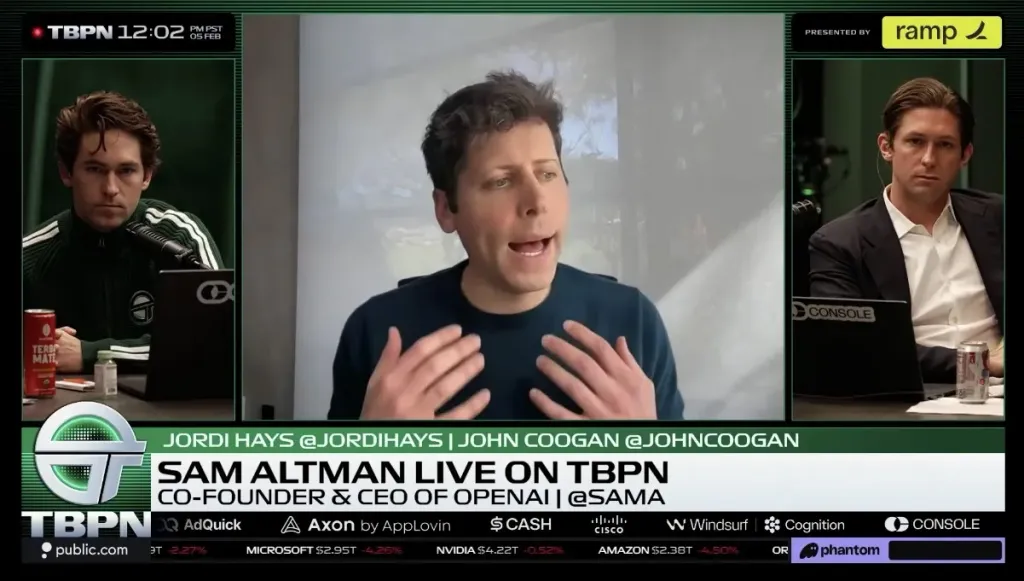
The article discusses the rise of the Technology Business Programming Network (TBPN) and its acquisition by OpenAI. TBPN, likened to ESPN for tech enthusiasts, has successfully carved out a niche audience of around 70,000 viewers per episode. The acquisition is seen as a strategic move by OpenAI to engage with the tech community and foster discussions about AI's impact.
- ▪TBPN launched in late 2024 and quickly became the leading show in its niche of techno-capitalism.
- ▪OpenAI acquired TBPN for a sum in the low hundreds of millions to help facilitate conversations about AI.
- ▪The show's hosts, Jordi Hays and John Coogan, have significant credibility in the tech industry due to their entrepreneurial backgrounds.
UnHerd publishes from United Kingdom and files mainly under culture. We currently carry 40 of its stories.
Story provenance
Source · retrieval · rights · ranking — open for full record
inspect →
Story provenance
Attribution is not the same as permission. This drawer separates discovery metadata, excerpts, WeSearch-generated summaries, reuse status, and whether the publisher receives the visit. Nothing here claims a legal grant the publisher has not made.
Record
| Original publisher | UnHerd |
| Canonical URL | https://unherd.com/2026/05/what-tech-bros-leant-from-media/?edition=us |
| Publication time | Tue, 19 May 2026 23:01:14 +0000 |
| Retrieval time | 2026-05-19T23:04:58.373Z |
| Last seen | 2026-05-19T23:04:58.373Z |
| Headline source | Publisher (no WeSearch rewrite) |
| Excerpt source | publisher body |
| Excerpt method | First ~120 words (~800 chars) of extracted publisher body, fair-use limited. |
| Summary | WeSearch · cerebras-chat (WeSearch summarizer) |
| Summary source text | contentText |
| Citation coverage | Summary is a WeSearch-generated derivative; primary citation is the original publisher URL. |
| Cluster | QJKYf1-CGP7D |
| Cluster logic | Grouped by semantic title/content similarity across sources within a rolling window. Same-publisher template collisions are excluded from coverage comparison. |
| Ranking reason | Story pages are not engagement-ranked. Hub feeds use recency, with optional source-diversified chronological ordering (cap consecutive stories per source). No personalized ranking. |
| Publisher visit | Yes — open original |
| Substitutes article? | No — link-out required for full text |
Rights status (four layers)
WeSearch handling by dimension
| Indexing | May the item be indexed (stored, ranked, made findable)? | Allowed |
| Snippet | May a short excerpt of the publisher's text be shown? | Allowed |
| AI summary | May WeSearch generate its own short summary of the article? | Limited |
| Retrieval / RAG | May the content be exposed for third-party retrieval-augmented generation? | Not asserted |
| Model training | May the content be used to train AI models? | Not asserted |
| Commercial reuse | May the content be reused commercially? | Not permitted |
Basis: Derived from the published RSS/Atom feed. Contact: [email protected]. Reviewed: 2026-07-24.
Opening excerpt (first ~120 words) tap to expand
What tech bros learned from ESPN True fans always want more espnMTSOpenAISam AltmanSilicon ValleysportsTBPN Alys Key May 20 2026 - 12:01am 5 mins When ESPN launched, in 1979, skeptics questioned the wisdom of a 24-hour sports channel. “Nobody’s going to want to watch that many sports,” they repeatedly told its founder, Bill Rasmussen. But Rasmussen, who had worked both in sports coverage and as a communications director for a hockey team, knew something about the audience that outsiders didn’t: true fans always want more.
…
Excerpt limited to ~120 words for fair-use compliance. The full article is at UnHerd.