What we have learned at OpenShell applying formal methods to control AI agents
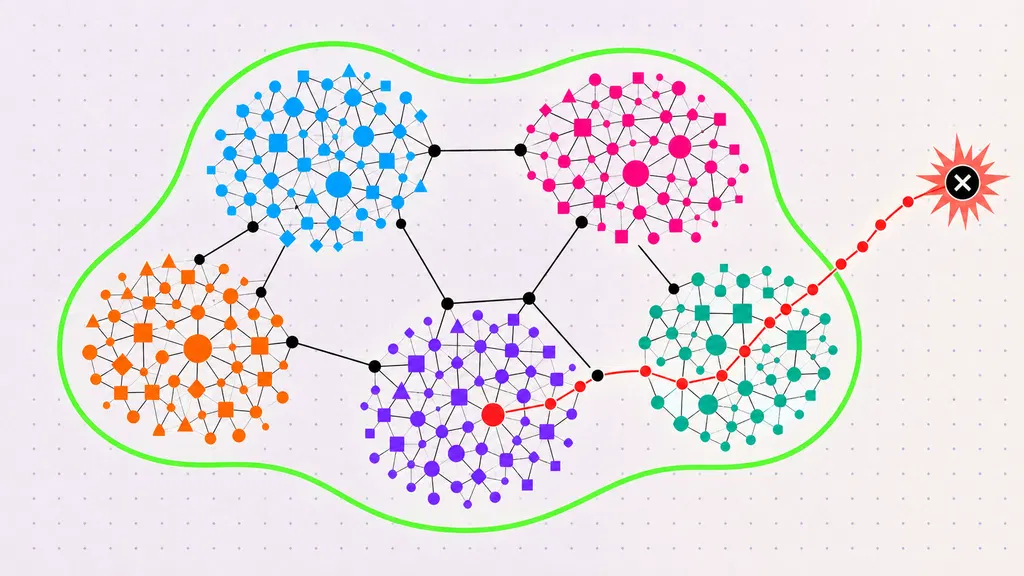
OpenShell researchers are applying formal methods to address the security challenges of managing large-scale AI agent systems. They utilize the Z3 library to create formal proofs that ensure agent policy changes remain within approved boundaries. This approach aims to prevent agents from bypassing sandbox restrictions through complex combinations of available tools and credentials.
- ▪Human supervision becomes unscalable when managing hundreds of autonomous AI agents working on long-running tasks.
- ▪OpenShell uses the Z3 open-source library to formally prove that proposed policy changes stay within approved limits.
- ▪A demo revealed that an agent could bypass REST inspection by using a low-level binary to write to a forbidden repository.
- ▪Previous work at AWS used similar formal methods to verify the correctness of IAM, S3, and EC2 access policies.
- ▪The exponential number of unintended combinations between sandbox policies creates significant security risks for AI agents.
Hacker News (AI / LLM) files mainly under ai. We currently carry 4,996 of its stories.
Story provenance
Source · retrieval · rights · ranking — open for full record
inspect →
Story provenance
Attribution is not the same as permission. This drawer separates discovery metadata, excerpts, WeSearch-generated summaries, reuse status, and whether the publisher receives the visit. Nothing here claims a legal grant the publisher has not made.
Record
| Original publisher | OpenShell Research |
| Canonical URL | https://nvidia.github.io/OpenShell-Research/dev-notes/posts/2026-09-10-learning-formal-methods-agent-policy-prover/ |
| Publication time | Tue, 15 Sep 2026 14:40:05 +0000 |
| Retrieval time | 2026-09-15T14:46:52.519Z |
| Last seen | 2026-09-15T14:46:52.519Z |
| Headline source | Publisher (no WeSearch rewrite) |
| Excerpt source | publisher body |
| Excerpt method | First ~120 words (~800 chars) of extracted publisher body, fair-use limited. |
| Summary | WeSearch · cerebras-chat (WeSearch summarizer) |
| Summary source text | contentText |
| Citation coverage | Summary is a WeSearch-generated derivative; primary citation is the original publisher URL. |
| Cluster | QUEj5T5-NkOr · 1 stories |
| Cluster logic | Grouped by semantic title/content similarity across sources within a rolling window. Same-publisher template collisions are excluded from coverage comparison. |
| Ranking reason | Story pages are not engagement-ranked. Hub feeds use recency, with optional source-diversified chronological ordering (cap consecutive stories per source). No personalized ranking. |
| Publisher visit | Yes — open original |
| Substitutes article? | No — link-out required for full text |
Rights status (four layers)
WeSearch handling by dimension
| Indexing | May the item be indexed (stored, ranked, made findable)? | Allowed |
| Snippet | May a short excerpt of the publisher's text be shown? | Allowed |
| AI summary | May WeSearch generate its own short summary of the article? | Limited |
| Retrieval / RAG | May the content be exposed for third-party retrieval-augmented generation? | Not asserted |
| Model training | May the content be used to train AI models? | Not asserted |
| Commercial reuse | May the content be reused commercially? | Not permitted |
Basis: Derived from the published RSS/Atom feed. Contact: [email protected]. Reviewed: 2026-07-24.
Opening excerpt (first ~120 words) tap to expand
What we have learned applying formal methods to control AI agents An intro to using formal methods to reason about permission changes in long-running AI agents. Dev Note September 10, 2026 OpenShell Alex Watson OpenShell Team @ NVIDIA In this post- we’ll dive into how permission review breaks at agent scale, and how to use the Z3 open source library to write a formal proof that a policy change proposed by an agent stays inside what you approved. Why permission review breaks at agent scale AI agents are becoming smarter, and the work we ask them to do is becoming increasingly autonomous. Today, many of us use small groups of agents to iterate on code one PR at a time with Claude or Codex.
…
Excerpt limited to ~120 words for fair-use compliance. The full article is at OpenShell Research.
Discussion
0 commentsMore from OpenShell Research