What’s Next For Nation-States? On the Past, Present and Future of the World As We Know It
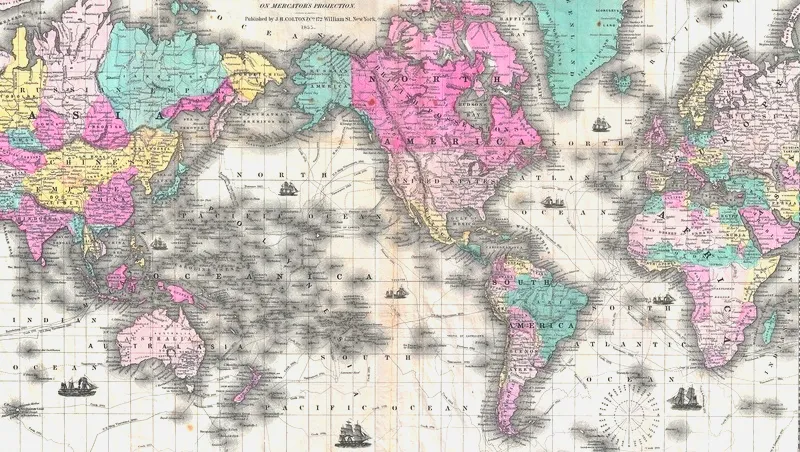
The article discusses the evolution of nation-states and their impact on global politics. It highlights how the concept of the nation-state has become dominant in the last century, overshadowing various political forms that existed previously. The author reflects on the historical context and emotional ties individuals have to their nation-states, suggesting a complex relationship between identity and governance.
- ▪In 1900, only about 25 percent of the world's population lived in a nation-state, compared to nearly two hundred today.
- ▪The twentieth century saw the standardization of political systems, leading to the decline of empires and other political forms.
- ▪The nation-state has not only shaped contemporary politics but has also influenced how individuals perceive their historical and cultural identities.
Literary Hub (LitHub) files mainly under books. We currently carry 79 of its stories.
Story provenance
Source · retrieval · rights · ranking — open for full record
inspect →
Attribution is not the same as permission. This drawer separates discovery metadata, excerpts, WeSearch-generated summaries, reuse status, and whether the publisher receives the visit. Nothing here claims a legal grant the publisher has not made.
Record
| Original publisher | Literary Hub |
| Canonical URL | https://lithub.com/whats-next-for-nation-states-on-the-past-present-and-future-of-the-world-as-we-know-it/ |
| Publication time | Mon, 18 May 2026 08:58:11 +0000 |
| Retrieval time | 2026-05-18T09:04:56.153Z |
| Last seen | 2026-05-18T09:04:56.153Z |
| Headline source | Publisher (no WeSearch rewrite) |
| Excerpt source | publisher body |
| Excerpt method | First ~120 words (~800 chars) of extracted publisher body, fair-use limited. |
| Summary | WeSearch · cerebras-chat (WeSearch summarizer) |
| Summary source text | contentText |
| Citation coverage | Summary is a WeSearch-generated derivative; primary citation is the original publisher URL. |
| Cluster | S8fcTJ9xRsZ1 |
| Cluster logic | Grouped by semantic title/content similarity across sources within a rolling window. Same-publisher template collisions are excluded from coverage comparison. |
| Ranking reason | Story pages are not engagement-ranked. Hub feeds use recency, with optional source-diversified chronological ordering (cap consecutive stories per source). No personalized ranking. |
| Publisher visit | Yes — open original |
| Substitutes article? | No — link-out required for full text |
Rights status (four layers)
WeSearch handling by dimension
| Indexing | May the item be indexed (stored, ranked, made findable)? | Allowed |
| Snippet | May a short excerpt of the publisher's text be shown? | Allowed |
| AI summary | May WeSearch generate its own short summary of the article? | Limited |
| Retrieval / RAG | May the content be exposed for third-party retrieval-augmented generation? | Not asserted |
| Model training | May the content be used to train AI models? | Not asserted |
| Commercial reuse | May the content be reused commercially? | Not permitted |
Basis: Derived from the published RSS/Atom feed. Contact: [email protected]. Reviewed: 2026-07-24.
Opening excerpt (first ~120 words) tap to expand
“[Revolutionary tracts tend] to become mere annals of complaints about existing conditions…I thought, on the contrary, that a revolutionary paper must be…a record of those symptoms which everywhere announce the coming of a new era, the germination of new forms of social life, the growing revolt against antiquated institutions…To make one feel sympathy with the throbbing of the human heart all over the world, with its revolt against age-long injustice, with its attempts at working out new forms of life… It is hope, not despair, that makes successful revolutions.” –Pyotr Kropotkin, 1899 *Article continues after advertisement You almost certainly live in a nation-state. Like 99.75 per cent of our species. This is recent.
…
Excerpt limited to ~120 words for fair-use compliance. The full article is at Literary Hub.
Discussion
0 commentsMore from Literary Hub