
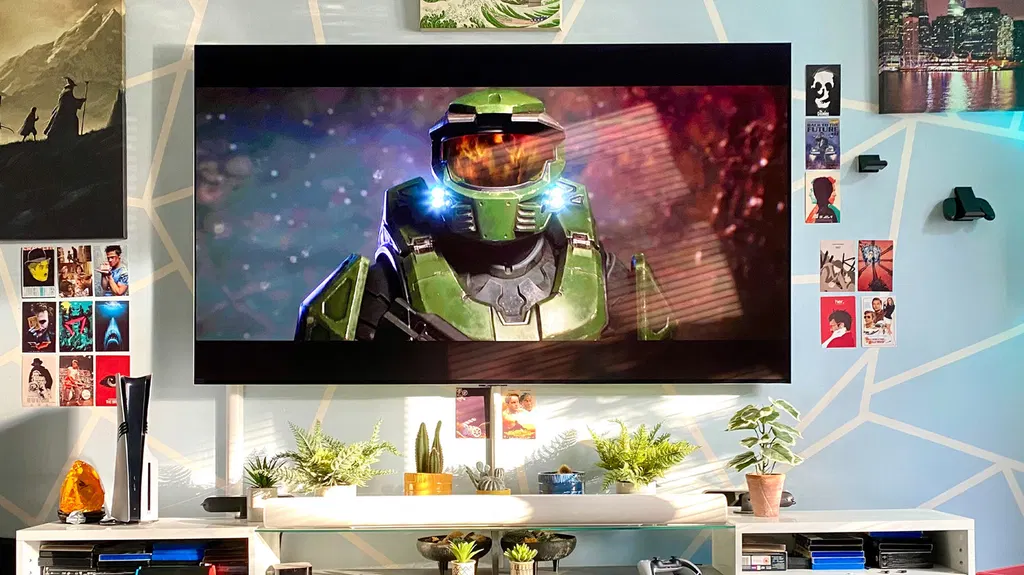
What's the 30-degree rule for TVs?
Entertainment TV & Movies What's the 30-degree rule for TVs? 20, 2026 12:30 pm EST Dave Meikleham for Engadget Add Engadget on Google: Preferred Source Google Discover Have you ever worried you're sitting too close to your TV? If you have, we're here to give you some guidance on ideal viewing distances based on the size of your television.
- ▪Entertainment TV & Movies What's the 30-degree rule for TVs?
- ▪20, 2026 12:30 pm EST Dave Meikleham for Engadget Add Engadget on Google: Preferred Source Google Discover Have you ever worried you're sitting too close to your TV?
- ▪If you have, we're here to give you some guidance on ideal viewing distances based on the size of your television.
Engadget files mainly under tech. We currently carry 792 of its stories.
Story provenance
Source · retrieval · rights · ranking — open for full record
inspect →
Story provenance
Attribution is not the same as permission. This drawer separates discovery metadata, excerpts, WeSearch-generated summaries, reuse status, and whether the publisher receives the visit. Nothing here claims a legal grant the publisher has not made.
Record
| Original publisher | Engadget |
| Canonical URL | https://www.engadget.com/2256385/whats-the-30-degree-rule-for-tvs/ |
| Publication time | Sun, 20 Sep 2026 16:30:00 +0000 |
| Retrieval time | 2026-09-20T16:38:47.261Z |
| Last seen | 2026-09-20T16:38:47.261Z |
| Headline source | Publisher (no WeSearch rewrite) |
| Excerpt source | publisher body |
| Excerpt method | First ~120 words (~800 chars) of extracted publisher body, fair-use limited. |
| Summary | WeSearch · cerebras-chat (WeSearch summarizer) |
| Summary source text | contentText |
| Citation coverage | Summary is a WeSearch-generated derivative; primary citation is the original publisher URL. |
| Cluster | W2SCMU_qZo8t · 1 stories |
| Cluster logic | Grouped by semantic title/content similarity across sources within a rolling window. Same-publisher template collisions are excluded from coverage comparison. |
| Ranking reason | Story pages are not engagement-ranked. Hub feeds use recency, with optional source-diversified chronological ordering (cap consecutive stories per source). No personalized ranking. |
| Publisher visit | Yes — open original |
| Substitutes article? | No — link-out required for full text |
Rights status (four layers)
WeSearch handling by dimension
| Indexing | May the item be indexed (stored, ranked, made findable)? | Allowed |
| Snippet | May a short excerpt of the publisher's text be shown? | Allowed |
| AI summary | May WeSearch generate its own short summary of the article? | Limited |
| Retrieval / RAG | May the content be exposed for third-party retrieval-augmented generation? | Not asserted |
| Model training | May the content be used to train AI models? | Not asserted |
| Commercial reuse | May the content be reused commercially? | Not permitted |
Basis: Derived from the published RSS/Atom feed. Contact: [email protected]. Reviewed: 2026-07-24.
Opening excerpt (first ~120 words) tap to expand
Entertainment TV & Movies What's the 30-degree rule for TVs? Math can show you the way. By Dave Meikleham Sept. 20, 2026 12:30 pm EST Dave Meikleham for Engadget Add Engadget on Google: Preferred Source Google Discover Have you ever worried you're sitting too close to your TV? If you have, we're here to give you some guidance on ideal viewing distances based on the size of your television. It might surprise you, but a lot of research has actually gone into this topic, with even the Society of Motion Picture and Television Engineers weighing in. A good way to judge the perfect viewing distance for the best budget TVs (or their high-end alternatives) is to follow the 30-degree rule. Follow this relatively straightforward advice and you should ensure you're never straining at your TV again.
…
Excerpt limited to ~120 words for fair-use compliance. The full article is at Engadget.
Discussion
0 commentsMore from Engadget


