While Mapping a Camping Trip, Man Spots Previously Unknown 390-Million-Year-Old Meteorite Impact Crater in Quebec
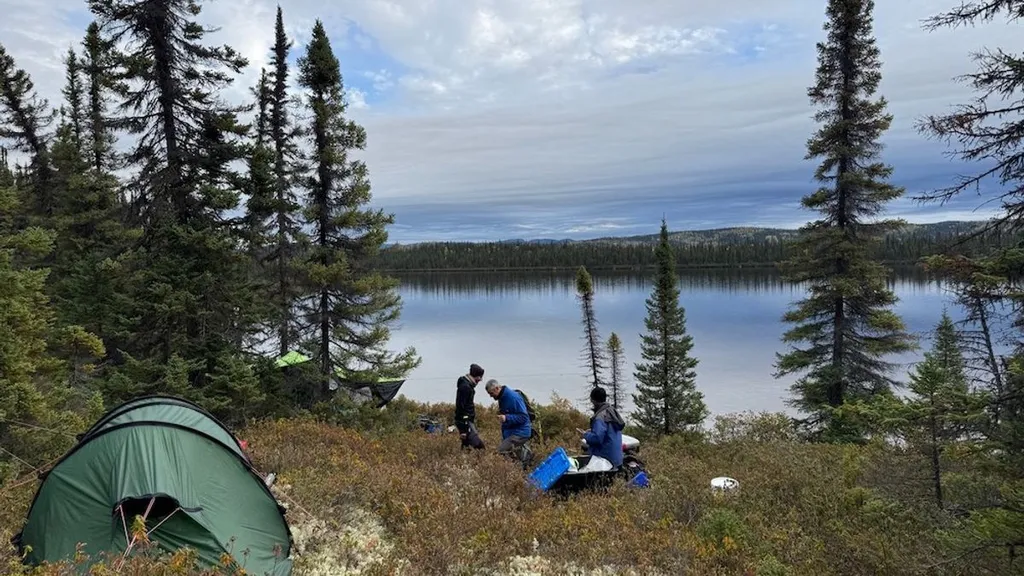
A camping trip often begins with a map, some hiking routes, and a few promising places to pitch a tent. Spanning approximately 15.5 miles, the ring stood out against the surrounding landscape. To Lapointe, it looked suspiciously like a meteorite impact crater.His hunch eventually reached planetary geologists, who made the difficult journey to investigate the site themselves.
- ▪A camping trip often begins with a map, some hiking routes, and a few promising places to pitch a tent.
- ▪Spanning approximately 15.5 miles, the ring stood out against the surrounding landscape.
- ▪To Lapointe, it looked suspiciously like a meteorite impact crater.His hunch eventually reached planetary geologists, who made the difficult journey to investigate the site themselves.
Discover Magazine files mainly under science. We currently carry 78 of its stories.
Opening excerpt (first ~120 words) tap to expand
A camping trip often begins with a map, some hiking routes, and a few promising places to pitch a tent. For amateur astronomer Joël Lapointe, however, planning a 2024 trip through northeastern Canada led to something far stranger — the discovery of a cosmic collision that occurred roughly 390 million years ago.According to CBC News, while examining the Côte-Nord region of Quebec on Google Maps, Lapointe noticed an enormous circular indentation surrounding Lake Marsal. Spanning approximately 15.5 miles, the ring stood out against the surrounding landscape. To Lapointe, it looked suspiciously like a meteorite impact crater.His hunch eventually reached planetary geologists, who made the difficult journey to investigate the site themselves.
…
Excerpt limited to ~120 words for fair-use compliance. The full article is at Discover Magazine.
Discussion
0 commentsMore from Discover Magazine