Why AI has brought nothing more than the conceit of wisdom
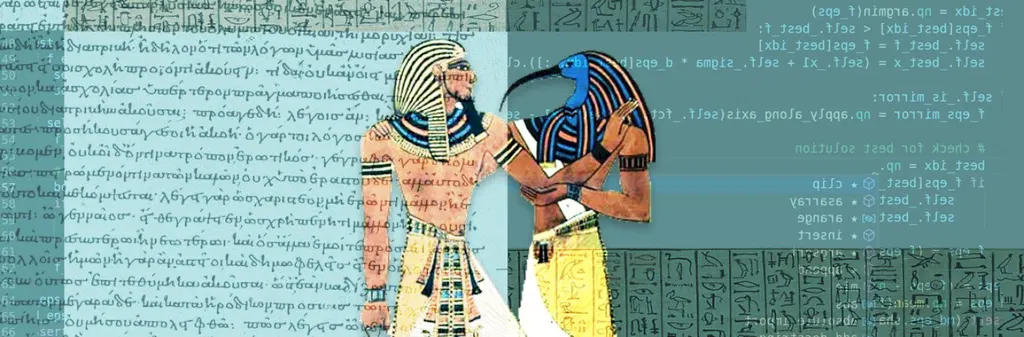
The article draws a parallel between Plato’s ancient warning about writing fostering a false sense of wisdom and the modern rise of artificial intelligence, suggesting AI fulfills that prophecy. It argues that large language models merely manipulate grammatical rules mathematically rather than embody genuine human language or understanding. Consequently, the piece warns that this illusion of knowledge threatens authentic wisdom and the way we interpret reality.
- ▪Plato warned that the invention of writing would create a conceit of wisdom, causing people to appear knowledgeable while remaining ignorant.
- ▪The author contends that AI, particularly large language models, actualizes this warning by generating language-like output without true comprehension.
- ▪The article explains that AI’s output is a probabilistic manipulation of grammatical rules rather than authentic words rooted in human intelligence.
- ▪Historical advances such as the printing press facilitated the codification of language, which eventually enabled the development of AI prediction machines.
- ▪The author warns that treating AI-generated text as genuine language may erode genuine grammatical understanding and distort reality.
Hacker News (AI / LLM) files mainly under ai. We currently carry 4,068 of its stories.
Story provenance
Source · retrieval · rights · ranking — open for full record
inspect →
Story provenance
Attribution is not the same as permission. This drawer separates discovery metadata, excerpts, WeSearch-generated summaries, reuse status, and whether the publisher receives the visit. Nothing here claims a legal grant the publisher has not made.
Record
| Original publisher | THR Web Features |
| Canonical URL | https://hedgehogreview.com/web-features/thr/posts/platos-warning-has-been-vindicated |
| Publication time | Sat, 08 Aug 2026 11:39:00 +0000 |
| Retrieval time | 2026-08-08T11:50:42.815Z |
| Last seen | 2026-08-08T11:50:42.815Z |
| Headline source | Publisher (no WeSearch rewrite) |
| Excerpt source | publisher body |
| Excerpt method | First ~120 words (~800 chars) of extracted publisher body, fair-use limited. |
| Summary | WeSearch · cerebras-chat (WeSearch summarizer) |
| Summary source text | contentText |
| Citation coverage | Summary is a WeSearch-generated derivative; primary citation is the original publisher URL. |
| Cluster | E0jxHamGkahA · 1 stories |
| Cluster logic | Grouped by semantic title/content similarity across sources within a rolling window. Same-publisher template collisions are excluded from coverage comparison. |
| Ranking reason | Story pages are not engagement-ranked. Hub feeds use recency, with optional source-diversified chronological ordering (cap consecutive stories per source). No personalized ranking. |
| Publisher visit | Yes — open original |
| Substitutes article? | No — link-out required for full text |
Rights status (four layers)
WeSearch handling by dimension
| Indexing | May the item be indexed (stored, ranked, made findable)? | Allowed |
| Snippet | May a short excerpt of the publisher's text be shown? | Allowed |
| AI summary | May WeSearch generate its own short summary of the article? | Limited |
| Retrieval / RAG | May the content be exposed for third-party retrieval-augmented generation? | Not asserted |
| Model training | May the content be used to train AI models? | Not asserted |
| Commercial reuse | May the content be reused commercially? | Not permitted |
Basis: Derived from the published RSS/Atom feed. Contact: [email protected]. Reviewed: 2026-07-24.
Opening excerpt (first ~120 words) tap to expand
Open any parenting book from the past fifty years, and you will find a section about technology that starts something like this: “Socrates predicted the book would destroy society, but that never happened—so don’t worry about your kids watching television, using iPads, or having smartphones.” So why am I not reassured when I hear folks resort to that chestnut to promote “artificial intelligence”? Whether they know it or not, the laissez-faire techno-optimists in those parenting manuals are taking issue with the words of King Thamus, the legendary Egyptian monarch invoked by Plato in the Phaedrus. According to the parable, Theuth, the father of writing, boasted that his invention would aid human memory.
…
Excerpt limited to ~120 words for fair-use compliance. The full article is at THR Web Features.
Discussion
0 commentsMore from THR Web Features