Why and How to Run Local Models in Zed
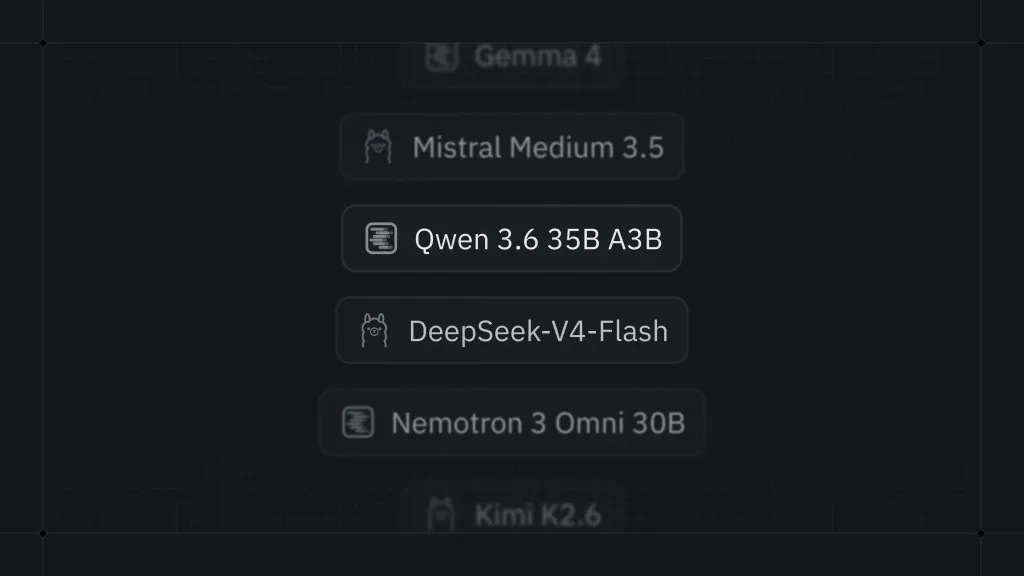
Local models offer several advantages over cloud-hosted options, including privacy and cost-effectiveness. They allow users to maintain control over their data and avoid unexpected pricing changes. However, local models may not match the capabilities of frontier models available from top AI labs.
- ▪Local models provide absolute data privacy as they operate on the user's hardware.
- ▪The usage of local models in Zed has grown threefold in the last ten weeks.
- ▪While local models can be cheaper and more controllable, they may not perform as well as cloud-hosted frontier models.
2 outlets in our directory ran this story, first to last over 16 hours. All of the coverage we found sits in one bucket: centre. That one-sidedness is itself worth noticing.
Hacker News (Newest) files mainly under programming. We currently carry 5,305 of its stories.
Story provenance
Source · retrieval · rights · ranking — open for full record
inspect →
Story provenance
Attribution is not the same as permission. This drawer separates discovery metadata, excerpts, WeSearch-generated summaries, reuse status, and whether the publisher receives the visit. Nothing here claims a legal grant the publisher has not made.
Record
| Original publisher | Hacker News (Newest) |
| Canonical URL | https://zed.dev/blog/local-ai-in-zed |
| Publication time | Tue, 26 May 2026 05:24:05 +0000 |
| Retrieval time | 2026-05-26T05:37:43.722Z |
| Last seen | 2026-05-26T05:37:43.722Z |
| Headline source | Publisher (no WeSearch rewrite) |
| Excerpt source | publisher body |
| Excerpt method | First ~120 words (~800 chars) of extracted publisher body, fair-use limited. |
| Summary | WeSearch · cerebras-chat (WeSearch summarizer) |
| Summary source text | contentText |
| Citation coverage | Summary is a WeSearch-generated derivative; primary citation is the original publisher URL. |
| Cluster | wOxwUqbAfSu0 · 2 stories |
| Cluster logic | Grouped by semantic title/content similarity across sources within a rolling window. Same-publisher template collisions are excluded from coverage comparison. |
| Ranking reason | Story pages are not engagement-ranked. Hub feeds use recency, with optional source-diversified chronological ordering (cap consecutive stories per source). No personalized ranking. |
| Publisher visit | Yes — open original |
| Substitutes article? | No — link-out required for full text |
Rights status (four layers)
WeSearch handling by dimension
| Indexing | May the item be indexed (stored, ranked, made findable)? | Allowed |
| Snippet | May a short excerpt of the publisher's text be shown? | Allowed |
| AI summary | May WeSearch generate its own short summary of the article? | Limited |
| Retrieval / RAG | May the content be exposed for third-party retrieval-augmented generation? | Not asserted |
| Model training | May the content be used to train AI models? | Not asserted |
| Commercial reuse | May the content be reused commercially? | Not permitted |
Basis: Derived from the published RSS/Atom feed. Contact: [email protected]. Reviewed: 2026-07-24.
Opening excerpt (first ~120 words) tap to expand
For many tasks, I prefer to use local models. When I need the best possible model, I still reach for frontier options, but a lot of the time I don't need that. I prefer something that runs on my machine, keeps my data on hardware I control, and won't disappear because a provider changed their pricing or limits. Open-weight models are getting better, too. Tools like LM Studio, Ollama, and llama.cpp keep getting easier to use, and in the last 10 weeks, local model usage has grown 3x in Zed's agent. At Zed, we're not building AI features for the money, and we're not in the business of locking devs into one way of using AI. We make it easy to use whatever provider you prefer, whether that's Codex over ACP, your own API key, or a direct subscription to Zed Pro.
…
Excerpt limited to ~120 words for fair-use compliance. The full article is at Hacker News (Newest).
Discussion
0 commentsMore from Hacker News (Newest)