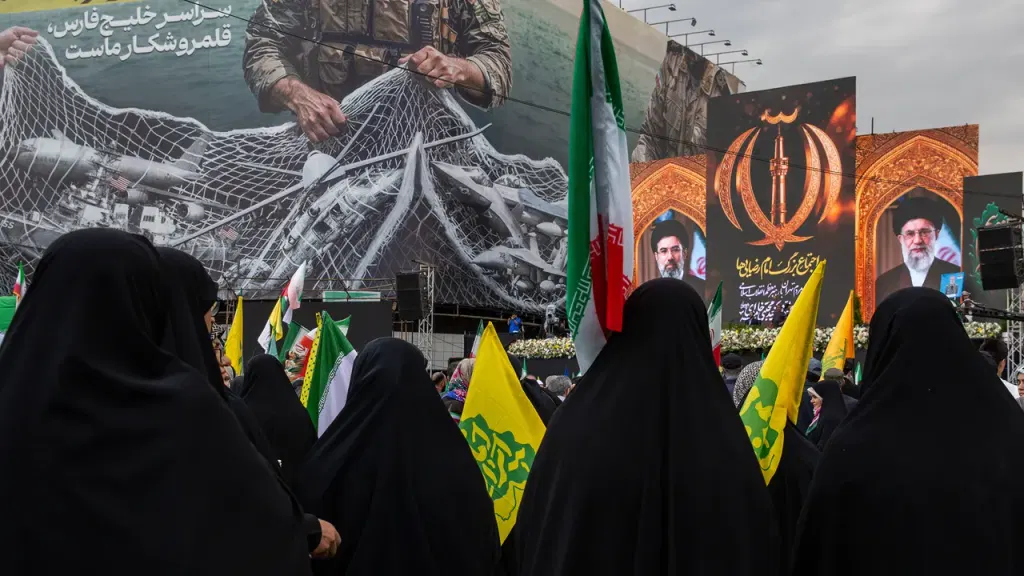
Why Any Plausible Iran Deal Is a Humiliation for Trump
The U.S. is reportedly close to a deal with Iran to end the ongoing conflict, which has resulted in significant casualties. The potential agreement may involve Iran reopening the Strait of Hormuz in exchange for sanctions relief and the U.S. ending its blockade. Analysts suggest that this deal could be seen as a strategic failure for the Trump administration, as it may strengthen Iranian hard-liners rather than weaken them.
- ▪President Trump announced that the U.S. and Iran are nearing a deal to end the conflict that began in February.
- ▪The deal may involve Iran giving up its stockpile of highly enriched uranium in exchange for sanctions relief.
- ▪Experts believe that the war has inadvertently strengthened the Iranian regime and hard-liners.
2 outlets in our directory ran this story, first to last over 17 hours. All of the coverage we found sits in one bucket: centre. That one-sidedness is itself worth noticing.
- ▪ Why Trump Lost to Iran — The Atlantic
The New Yorker files mainly under culture. We currently carry 76 of its stories.
Story provenance
Source · retrieval · rights · ranking — open for full record
inspect →
Story provenance
Attribution is not the same as permission. This drawer separates discovery metadata, excerpts, WeSearch-generated summaries, reuse status, and whether the publisher receives the visit. Nothing here claims a legal grant the publisher has not made.
Record
| Original publisher | The New Yorker |
| Canonical URL | https://www.newyorker.com/news/q-and-a/why-any-plausible-iran-deal-is-a-humiliation-for-trump |
| Publication time | Mon, 25 May 2026 15:48:35 +0000 |
| Retrieval time | 2026-05-25T16:07:38.273Z |
| Last seen | 2026-05-25T16:07:38.273Z |
| Headline source | Publisher (no WeSearch rewrite) |
| Excerpt source | publisher body |
| Excerpt method | First ~120 words (~800 chars) of extracted publisher body, fair-use limited. |
| Summary | WeSearch · cerebras-chat (WeSearch summarizer) |
| Summary source text | contentText |
| Citation coverage | Summary is a WeSearch-generated derivative; primary citation is the original publisher URL. |
| Cluster | Df-UI1RoyTiR · 4 stories |
| Cluster logic | Grouped by semantic title/content similarity across sources within a rolling window. Same-publisher template collisions are excluded from coverage comparison. |
| Ranking reason | Story pages are not engagement-ranked. Hub feeds use recency, with optional source-diversified chronological ordering (cap consecutive stories per source). No personalized ranking. |
| Publisher visit | Yes — open original |
| Substitutes article? | No — link-out required for full text |
Rights status (four layers)
WeSearch handling by dimension
| Indexing | May the item be indexed (stored, ranked, made findable)? | Allowed |
| Snippet | May a short excerpt of the publisher's text be shown? | Allowed |
| AI summary | May WeSearch generate its own short summary of the article? | Limited |
| Retrieval / RAG | May the content be exposed for third-party retrieval-augmented generation? | Not asserted |
| Model training | May the content be used to train AI models? | Not asserted |
| Commercial reuse | May the content be reused commercially? | Not permitted |
Basis: Derived from the published RSS/Atom feed. Contact: [email protected]. Reviewed: 2026-07-24.
Opening excerpt (first ~120 words) tap to expand
Q. & A.Why Any Plausible Iran Deal Is a Humiliation for TrumpEven as the U.S. claims to be nearing an agreement to end the conflict, Tehran’s ability to close the Strait of Hormuz and hold the global economy hostage has reinforced the power of regime hard-liners.By Isaac ChotinerMay 25, 2026Photograph by Arash Khamooshi / Polaris / NYT / ReduxSave this storySave this storySave this storySave this storyOver the weekend, President Donald Trump announced that the United States and Iran were close to a deal that would end the war that the U.S. and Israel launched against Iran in late February, and which has killed thousands of people in Iran.
…
Excerpt limited to ~120 words for fair-use compliance. The full article is at The New Yorker.
Discussion
0 commentsMore from The New Yorker