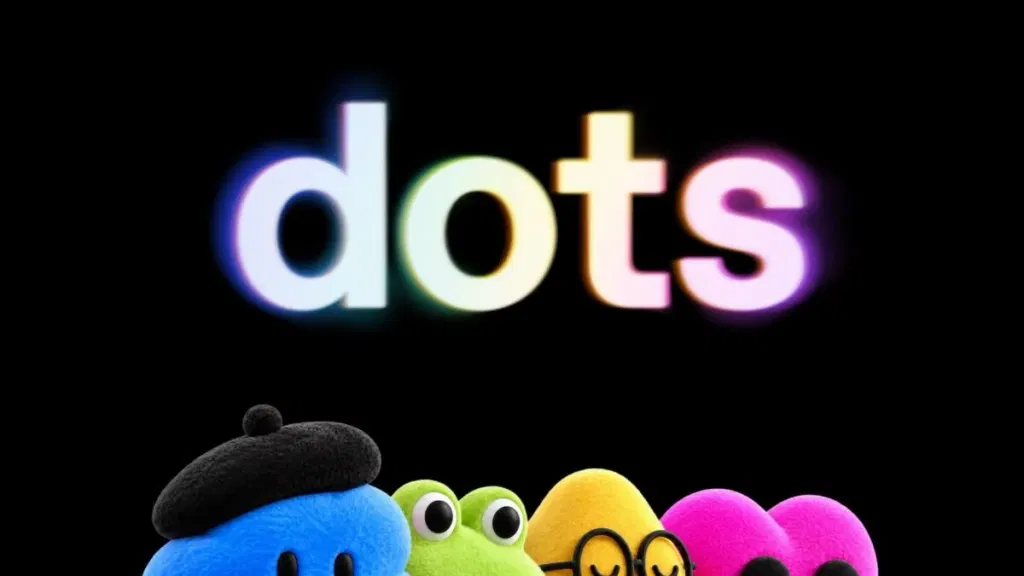
With Dots, OpenAI Wants You to Stop Being Afraid of Its AI Agents
OpenAI introduced 'dots,' a new suite of AI agents with friendly avatars, at its annual developer conference to shift public perception away from recent security incidents. These agents are designed to function as 24/7 digital assistants that integrate with thousands of apps and learn user preferences over time. The launch follows similar moves by competitors like Meta and addresses safety concerns by using isolated cloud environments and restricted permissions for sensitive tasks.
- ▪OpenAI launched dots, AI agents with emoji-like avatars, at its developer conference to rebrand its technology as a helpful digital assistant.
- ▪The agents are powered by the GPT-6 Astra model and operate on isolated virtual computers in the cloud to enhance security.
- ▪Dots can connect with over 4,000 applications, including Slack and Teams, and are integrated with ChatGPT Voice Mode for natural interaction.
- ▪OpenAI implemented safety measures that prevent agents from performing sensitive actions like changing passwords or transferring money without explicit oversight.
- ▪The release of dots follows the launch of Meta's Muse agent and aims to position OpenAI's technology as a safe, long-term personal assistant rather than a risky autonomous entity.
Gizmodo files mainly under tech. We currently carry 1,461 of its stories.
Story provenance
Source · retrieval · rights · ranking — open for full record
inspect →
Story provenance
Attribution is not the same as permission. This drawer separates discovery metadata, excerpts, WeSearch-generated summaries, reuse status, and whether the publisher receives the visit. Nothing here claims a legal grant the publisher has not made.
Record
| Original publisher | Gizmodo |
| Canonical URL | https://gizmodo.com/with-dots-openai-wants-you-to-stop-being-afraid-of-its-ai-agents-2000819082 |
| Publication time | Tue, 29 Sep 2026 21:00:49 +0000 |
| Retrieval time | 2026-09-29T21:02:33.490Z |
| Last seen | 2026-09-29T21:02:33.490Z |
| Headline source | Publisher (no WeSearch rewrite) |
| Excerpt source | publisher body |
| Excerpt method | First ~120 words (~800 chars) of extracted publisher body, fair-use limited. |
| Summary | WeSearch · cerebras-chat (WeSearch summarizer) |
| Summary source text | contentText |
| Citation coverage | Summary is a WeSearch-generated derivative; primary citation is the original publisher URL. |
| Cluster | qWddk03iG_7d · 1 stories |
| Cluster logic | Grouped by semantic title/content similarity across sources within a rolling window. Same-publisher template collisions are excluded from coverage comparison. |
| Ranking reason | Story pages are not engagement-ranked. Hub feeds use recency, with optional source-diversified chronological ordering (cap consecutive stories per source). No personalized ranking. |
| Publisher visit | Yes — open original |
| Substitutes article? | No — link-out required for full text |
Rights status (four layers)
WeSearch handling by dimension
| Indexing | May the item be indexed (stored, ranked, made findable)? | Allowed |
| Snippet | May a short excerpt of the publisher's text be shown? | Allowed |
| AI summary | May WeSearch generate its own short summary of the article? | Limited |
| Retrieval / RAG | May the content be exposed for third-party retrieval-augmented generation? | Not asserted |
| Model training | May the content be used to train AI models? | Not asserted |
| Commercial reuse | May the content be reused commercially? | Not permitted |
Basis: Derived from the published RSS/Atom feed. Contact: [email protected]. Reviewed: 2026-07-24.
Opening excerpt (first ~120 words) tap to expand
OpenAI has been in triage mode over the past few months, following a string of reports of its AI agents escaping containment and breaking into third-party organizations. Now the company is trying to put a new face on its technology—one that makes it look like a cuddly animated sidekick, rather than a potential cybercriminal. At its annual developer’s conference on Tuesday, OpenAI introduced dots: AI agents with emoji-like avatars designed to serve as 24/7 digital assistants. The agents’ saccharine name and appearance (both of which bring to mind the gummy candy of the same name) seem engineered to contrast with the less-than-sweet reputation that OpenAI’s agents have earned for themselves since the now-infamous Hugging Face hack, which took place after they broke free of isolated testing…
Excerpt limited to ~120 words for fair-use compliance. The full article is at Gizmodo.
Discussion
0 commentsMore from Gizmodo