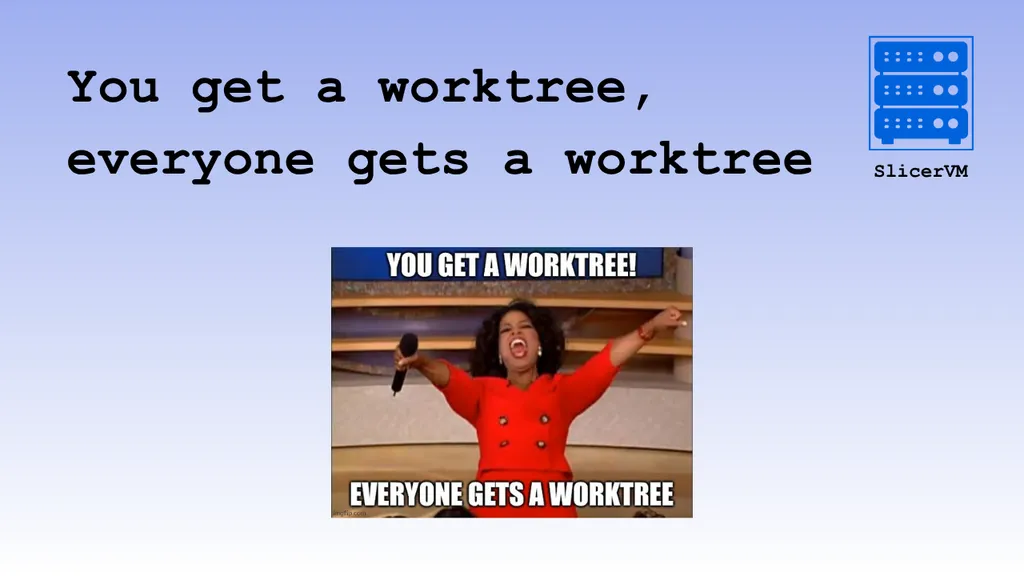
You get a worktree, everyone gets a worktree
The article discusses the rising popularity of git worktrees among developers since 2026. It explores their benefits, such as facilitating parallel work and minimizing disk space usage. Additionally, it provides examples of how to use worktrees effectively in various scenarios.
- ▪Prior to 2026, git worktrees were not widely recognized for their benefits.
- ▪Worktrees allow developers to manage multiple branches and changes without cluttering their main repository.
- ▪They are convenient, trackable, and use less disk space compared to traditional methods.
Opening excerpt (first ~120 words) tap to expand
agentsworktreesgitsandboxesYou get a worktree, everyone gets a worktreePrior to 2026, few people were espousing the benefits of git worktrees. Now the Internet cannot keep quiet, but do we need them? Alex EllisMay 21, 2026Prior to 2026, few people were espousing the benefits of git worktrees. Now the Internet cannot keep quiet, but do we need them? If we ask why git's worktree feature got placed front of mind amongst developers, we're presented with a chicken and egg question. Did worktrees gain popularity because agents saw them as the solution to parallel work, or was it cargo culting - or a mixture of the two? The answer is not clear. We look at how to use them, why agents may like them, and how we built support for them in Slicer's new slicer worktree command.
…
Excerpt limited to ~120 words for fair-use compliance. The full article is at SlicerVM.
Discussion
0 commentsMore from SlicerVM