Search results for “since” in Science
Search publisher headline and short source-description metadata, not paywalled article text.
Indexed headlines
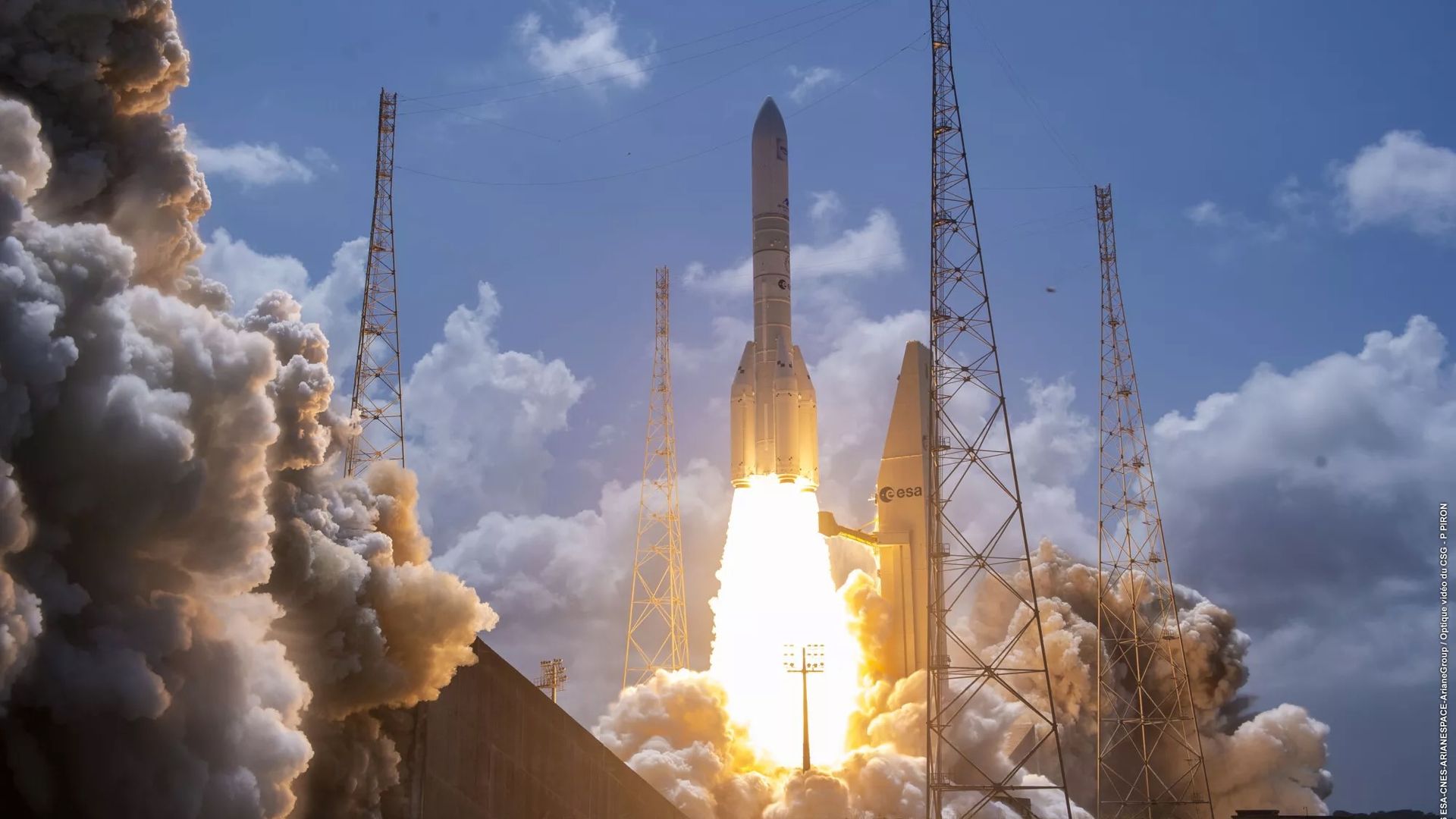
1–24 of 31 resultsWatch live on Nov. 23: Amazon launching 1st batch of internet satellites since Vulcan Centaur failure
An Ariane 6 rocket will launch 36 Amazon broadband satellites to orbit early on Nov. 23, just eight days after a ULA Vulcan Centaur failed during its mission for Amazon. Watch it live here.
New EU Bureaucracy Index: EU law has more than doubled since 2010
The new EU Bureaucracy Index measures the volume of EU law in force, and it shows a record high: At the end of 2025, the EU regulations and directives in force comprised around 47,600 standard pages, 118% more than in 2010. The volume of EU law has thus more than d
Georgia’s Pecan Belt
Since an early-1900s planting boom, orchards along the Flint River in southwest Georgia have become a center of U.S. pecan production.
Our favourite reader questions of the past three decades
Since the Last Word launched in 1994, readers have been asking and answering what can only be described as an eclectic mix of questions.
US and Iran once practiced diplomacy through archaeology – that legacy need not lie in ruins
Damage to heritage sites across Iran has been reported since the onset of war with Israel and the US in February.
Timeline: The biggest breakthroughs of the past 70 years
For the 70th anniversary of New Scientist, explore our immersive timeline of the biggest moments in science since 1956, from Sputnik 1 to the proliferation of AI chatbots
The U.S. just lost its measles elimination status. What now?
Data collected since January 2025 show that the measles virus has been circulating for more than a year, a sign that the virus is now endemic.
Q&A: Schools that ban cellphones see uptick in test scores
We're nearing two milestones in the smartphone era. January will mark 20 years since Steve Jobs first unveiled the iPhone from a stage in San Francisco.
Policy changes in Canada had little effect on sales of antibiotics for animals, study finds
Sales of antibiotics for use in food-producing animals have fallen by 11% in Canada since 2018, but not because of federal policy changes.
'Avengers: Doomsday' gets final trailer, explaining why Steve Rogers is back and showing an epic battle with the X-Men
Marvel Studios’ first Avengers film since 2019 is less than a month away, and it might be the big-screen team-up event we thought impossible only ten years ago.
Six ways teens can better protect themselves from online harms
It's been nearly a year since Australia's under-16 social media ban came into effect. The restrictions were touted as a measure to protect young people from harmful design features that keep them online longer, while shielding them from risks that come with using s
Be ready to get a better view of the night sky in your backyard with 25% off the Celestron Cometron 7x50 binoculars in this Black Friday deal
For Black Friday week, Amazon has slashed the price of these budget family binoculars down to $36, their lowest price since April. They are great for viewing the moon and constellations.
Study shows path to more resilient future for Canada's forests
Mountain pine beetles have killed millions of lodgepole pines across western North America since the 1990s, but some trees have proved more resilient than others. New research suggests part of the difference is genetic and that the resistance can be passed from one
Low-viscosity lavas reveal a key to Mars's past
Since 2021, the Mars Perseverance rover has been roaming Jezero Crater, gathering details about the red planet's geology and hints about its past. On its journey, the rover took close-up images of the Séítah formation, a nearly 4-billion-year-old layer of rock at t
Amateur Astronomer? Be a Kilonova Catcher!
Neutron stars are the ultra-dense, city-sized leftovers of dead stars. When they collide, they can release a brief flash of light called a kilonova. These immensely powerful events forge much of the universe’s gold, platinum and other heavy elements. Since a kilono
Mapping the uncharted plate tectonic cycle: The hidden path from plate destruction to new oceanic crust
Since the discovery of plate tectonics, the ultimate fate of the massive plates that sink into Earth's interior mantle at subduction zones has remained a major geological quest. Meanwhile, magma continuously rises from the deep mantle to form new oceanic crust, eru
Facing extinction, the world’s largest sea turtle is making a surprising move
The world’s largest sea turtle may be adapting to climate change by establishing new nesting grounds along Ecuador’s cooler coastline, where researchers have recorded unprecedented nesting activity and promising hatching rates. The discovery offers a rare glimmer o
Immersive shopping survived the demise of the metaverse—but its appeal depends on how it's designed and who is using it
In 2021 and 2022, major retailers and fashion brands were racing into the metaverse, opening virtual stores, creating digital products and inviting consumers to explore branded worlds through avatars. Much of that excitement has since faded. But the technologies be
Uranus and Neptune’s bizarre magnetic fields may finally be explained
The strange, wildly tilted magnetic fields of Uranus and Neptune have puzzled scientists since NASA's Voyager 2 spacecraft explored the planets in the 1980s. New simulations suggest that extreme conditions deep inside these icy giants create unusual electrical prop
Sex in Britain has changed significantly, especially among young people
The sex lives of people in Britain have shifted markedly since 1990, and their sexual and reproductive health needs are substantial and varied, according to the fourth National Survey of Sexual Attitudes and Lifestyles (Natsal-4). The first five papers from the sur
No magnets needed: Extreme voltage drives completely new kind of Hall effect
The Hall effect, a physical phenomenon in which a current arises perpendicular to a voltage applied across a material, has been of particular interest to physicists since it was discovered more than a century ago. Over time, physicists have broadened their understa
A unified framework for carbon dioxide removal—with an ocean view
When it comes to reducing atmospheric carbon, most roads lead to the sea. That's only natural, since the ocean is Earth's largest accessible repository for CO₂. Even without interventions to enhance its ability to capture carbon, the ocean holds about 50 times more
Ozone hole one of the largest in decades
In contrast to the 2025 seasonal ozone hole above Antarctica, which was the fifth smallest since 1992, this year's ozone hole ranks as one of the largest in 48 years, based on long-term atmospheric observations, including data from the Copernicus Sentinel-5P satell
Artificial photosynthesis uses waste CO₂ to grow protein-rich edible fungus in seven days
While many people think first of meat when they think about dietary protein, most protein ultimately depends on plants, since livestock feed on grass, hay and other plants. Meeting the demand for protein is taxing on the environment, requiring massive amounts of la