A Good DIY Solder Stencil Begins With a Cleanly-Sliced Soda Can
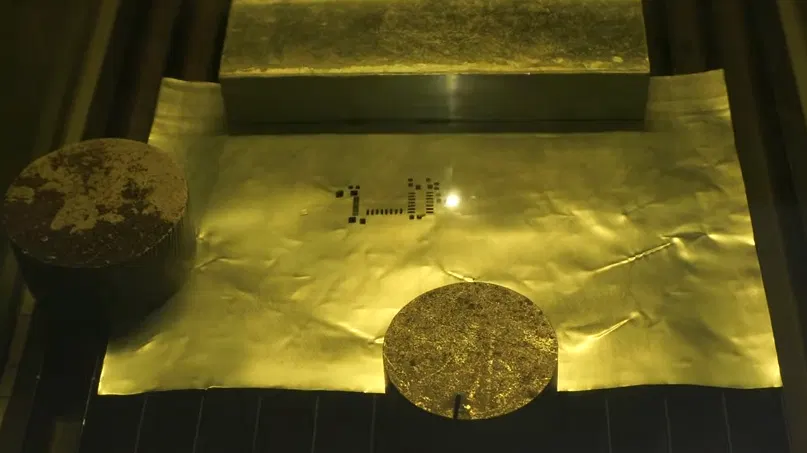
A DIY method for creating solder stencils from soda cans is demonstrated using a 3D-printed cutting tool and a fiber laser. The process involves cleanly slicing the aluminum can into a flat sheet without kinking the metal. A fiber laser is then used to rapidly engrave the precise hole patterns required for the PCB design.
- ▪A 3D-printed tool functions like a pipe cutter to slice soda cans cleanly without bending the thin metal.
- ▪Fiber lasers are effective for cutting metal and are now available as prosumer-level tools for home use.
- ▪The specific laser used in the demonstration is the xTool F1 Ultra.
- ▪The hole patterns for the stencil are derived directly from the user's PCB design software.
Hackaday files mainly under tech. We currently carry 522 of its stories.
Story provenance
Source · retrieval · rights · ranking — open for full record
inspect →
Story provenance
Attribution is not the same as permission. This drawer separates discovery metadata, excerpts, WeSearch-generated summaries, reuse status, and whether the publisher receives the visit. Nothing here claims a legal grant the publisher has not made.
Record
| Original publisher | Hackaday |
| Canonical URL | https://hackaday.com/2026/10/03/a-good-diy-solder-stencil-begins-with-a-cleanly-sliced-soda-can/ |
| Publication time | Sat, 03 Oct 2026 23:00:29 +0000 |
| Retrieval time | 2026-10-03T23:04:28.432Z |
| Last seen | 2026-10-03T23:04:28.432Z |
| Headline source | Publisher (no WeSearch rewrite) |
| Excerpt source | publisher body |
| Excerpt method | First ~120 words (~800 chars) of extracted publisher body, fair-use limited. |
| Summary | WeSearch · cerebras-chat (WeSearch summarizer) |
| Summary source text | contentText |
| Citation coverage | Summary is a WeSearch-generated derivative; primary citation is the original publisher URL. |
| Cluster | wZJoZhNpEBEi · 1 stories |
| Cluster logic | Grouped by semantic title/content similarity across sources within a rolling window. Same-publisher template collisions are excluded from coverage comparison. |
| Ranking reason | Story pages are not engagement-ranked. Hub feeds use recency, with optional source-diversified chronological ordering (cap consecutive stories per source). No personalized ranking. |
| Publisher visit | Yes — open original |
| Substitutes article? | No — link-out required for full text |
Rights status (four layers)
WeSearch handling by dimension
| Indexing | May the item be indexed (stored, ranked, made findable)? | Allowed |
| Snippet | May a short excerpt of the publisher's text be shown? | Allowed |
| AI summary | May WeSearch generate its own short summary of the article? | Limited |
| Retrieval / RAG | May the content be exposed for third-party retrieval-augmented generation? | Not asserted |
| Model training | May the content be used to train AI models? | Not asserted |
| Commercial reuse | May the content be reused commercially? | Not permitted |
Basis: Derived from the published RSS/Atom feed. Contact: [email protected]. Reviewed: 2026-07-24.
Opening excerpt (first ~120 words) tap to expand
A Good DIY Solder Stencil Begins With A Cleanly-Sliced Soda Can No comments by: Donald Papp October 3, 2026 Title: Copy Short Link: Copy Solder stencils are a fantastic way to accurately apply solder paste to a PCB. Professionally-made stencils are cut from steel, but for the home hacker, soda cans continue to be the alternative of choice. The only trick is how to actually get those little holes made, and [Saheen Palayi] shows off both his method of laser-engraving the holes, as well as a tool for cutting the can in the first place. A good result starts with cutting a can cleanly, thanks to a 3D-printed tool. To turn a soda can into a flat-ish aluminum sheet means cutting off the ends and slicing it open. Ideally, one achieves this without kinking or bending the thin metal.
…
Excerpt limited to ~120 words for fair-use compliance. The full article is at Hackaday.
Discussion
0 commentsMore from Hackaday