Addressing Technical Debt
Technical debt arises when software solutions are built with a limited understanding of business needs, often leading to complications later. It can stem from deliberate decisions, outdated designs, and deteriorating components. While technical debt is not inherently negative, it can become problematic if not managed properly, potentially hindering future development.
- ▪Technical debt occurs when software problems are solved with limited understanding of business requirements.
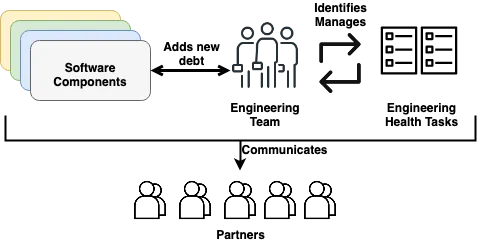
- ▪It can lead to increased time and effort needed for future changes, as new features accumulate additional debt.
- ▪Three main sources of technical debt include deliberate decisions, outdated design, and rotten components.
Hacker News (Newest) files mainly under programming. We currently carry 5,306 of its stories.
Story provenance
Source · retrieval · rights · ranking — open for full record
inspect →
Attribution is not the same as permission. This drawer separates discovery metadata, excerpts, WeSearch-generated summaries, reuse status, and whether the publisher receives the visit. Nothing here claims a legal grant the publisher has not made.
Record
| Original publisher | Yusuf Aytas |
| Canonical URL | https://yusufaytas.com/addressing-technical-debt |
| Publication time | Mon, 25 May 2026 15:48:47 +0000 |
| Retrieval time | 2026-05-25T16:07:38.273Z |
| Last seen | 2026-05-25T16:07:38.273Z |
| Headline source | Publisher (no WeSearch rewrite) |
| Excerpt source | publisher body |
| Excerpt method | First ~120 words (~800 chars) of extracted publisher body, fair-use limited. |
| Summary | WeSearch · cerebras-chat (WeSearch summarizer) |
| Summary source text | contentText |
| Citation coverage | Summary is a WeSearch-generated derivative; primary citation is the original publisher URL. |
| Cluster | OMIv_m3mrAUb |
| Cluster logic | Grouped by semantic title/content similarity across sources within a rolling window. Same-publisher template collisions are excluded from coverage comparison. |
| Ranking reason | Story pages are not engagement-ranked. Hub feeds use recency, with optional source-diversified chronological ordering (cap consecutive stories per source). No personalized ranking. |
| Publisher visit | Yes — open original |
| Substitutes article? | No — link-out required for full text |
Rights status (four layers)
WeSearch handling by dimension
| Indexing | May the item be indexed (stored, ranked, made findable)? | Allowed |
| Snippet | May a short excerpt of the publisher's text be shown? | Allowed |
| AI summary | May WeSearch generate its own short summary of the article? | Limited |
| Retrieval / RAG | May the content be exposed for third-party retrieval-augmented generation? | Not asserted |
| Model training | May the content be used to train AI models? | Not asserted |
| Commercial reuse | May the content be reused commercially? | Not permitted |
Basis: Derived from the published RSS/Atom feed. Contact: [email protected]. Reviewed: 2026-07-24.
Opening excerpt (first ~120 words) tap to expand
PostSpaciousEditorialAddressing Technical DebtPublished February 13, 2022 · 10 min readA field needs to be added, a rule needs to change, or a customer bug needs a quick fix, and on paper the work looks small enough to finish in a day. Then someone points out that the old service is involved, the tests are unreliable, and the only person who still remembers why the workflow behaves that way is on holiday, which is usually when technical debt becomes visible. Technical debt occurs when we solve a software problem with our limited understanding of the business at the time. We start building a solution to get feedback as early as possible. Instead of spending additional time on business requirements, we prefer to deliver software early. Therefore, we borrow some time from the future.
…
Excerpt limited to ~120 words for fair-use compliance. The full article is at Yusuf Aytas.