After 16 years and $8B the military's new GPS software still doesn't work
The military's new GPS software, developed over 16 years at a cost of $8 billion, remains nonoperational despite its official handover to the Space Force. The OCX system, intended to control the military's GPS satellites, has encountered numerous technical challenges and unresolved issues. As a result, the Pentagon is considering abandoning the program after years of delays and cost overruns.
- ▪The GPS Next-Generation Operational Control System, or OCX, was handed over to the Space Force last year but remains nonoperational.
- ▪The program was initially expected to cost $3.7 billion and be completed by 2016, but costs have ballooned to $8 billion.
- ▪Extensive testing has revealed significant issues across all subsystems, leading to concerns about future GPS satellite capabilities.
Story provenance
Source · retrieval · rights · ranking — open for full record
inspect →
Story provenance
Attribution is not the same as permission. This drawer separates discovery metadata, excerpts, WeSearch-generated summaries, reuse status, and whether the publisher receives the visit. Nothing here claims a legal grant the publisher has not made.
Record
| Original publisher | Ars Technica |
| Canonical URL | https://arstechnica.com/space/2026/03/after-16-years-and-8-billion-the-militarys-new-gps-software-still-doesnt-work/ |
| Publication time | Tue, 28 Apr 2026 13:08:06 +0000 |
| Retrieval time | 2026-04-28T13:24:31.953Z |
| Last seen | 2026-04-28T13:24:31.953Z |
| Headline source | Publisher (no WeSearch rewrite) |
| Excerpt source | publisher body |
| Excerpt method | First ~120 words (~800 chars) of extracted publisher body, fair-use limited. |
| Summary | WeSearch · cerebras-chat (WeSearch summarizer) |
| Summary source text | contentText |
| Citation coverage | Summary is a WeSearch-generated derivative; primary citation is the original publisher URL. |
| Cluster | WJsq2uKxd7oV |
| Cluster logic | Grouped by semantic title/content similarity across sources within a rolling window. Same-publisher template collisions are excluded from coverage comparison. |
| Ranking reason | Story pages are not engagement-ranked. Hub feeds use recency, with optional source-diversified chronological ordering (cap consecutive stories per source). No personalized ranking. |
| Publisher visit | Yes — open original |
| Substitutes article? | No — link-out required for full text |
Rights status (four layers)
WeSearch handling by dimension
| Indexing | May the item be indexed (stored, ranked, made findable)? | Allowed |
| Snippet | May a short excerpt of the publisher's text be shown? | Allowed |
| AI summary | May WeSearch generate its own short summary of the article? | Limited |
| Retrieval / RAG | May the content be exposed for third-party retrieval-augmented generation? | Not asserted |
| Model training | May the content be used to train AI models? | Not asserted |
| Commercial reuse | May the content be reused commercially? | Not permitted |
Basis: Derived from the published RSS/Atom feed. Contact: [email protected]. Reviewed: 2026-07-24.
Opening excerpt (first ~120 words) tap to expand
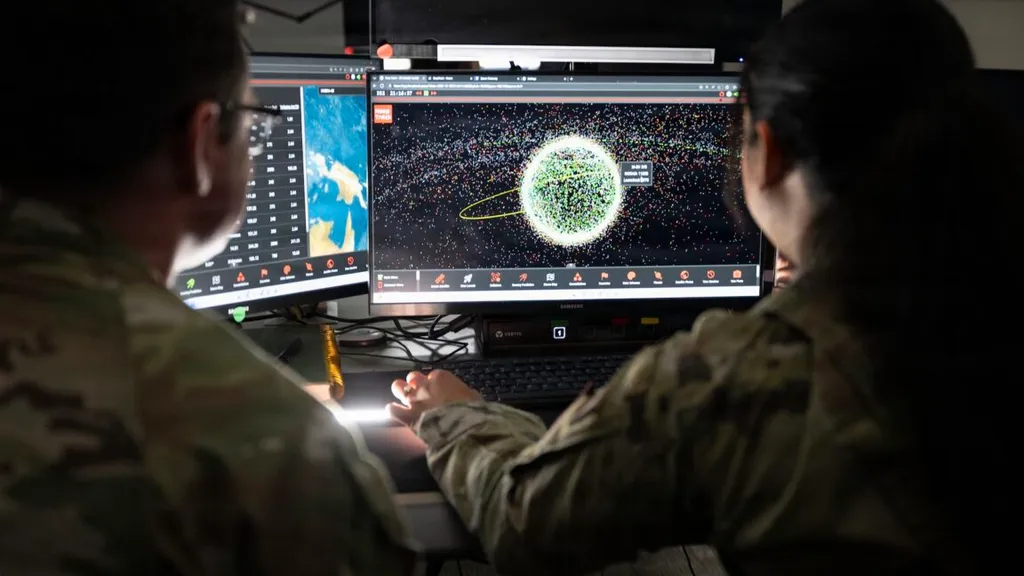
Problem child After 16 years and $8 billion, the military’s new GPS software still doesn’t work “It’s a very stressing program. We are still considering how to ensure we move forward.” Stephen Clark – Mar 30, 2026 1:11 pm | 157 US Space Force Guardians assigned to Space Delta 5 monitor computer workstations at Vandenberg Space Force Base, California. Credit: US Space Force/David Dozoretz US Space Force Guardians assigned to Space Delta 5 monitor computer workstations at Vandenberg Space Force Base, California.
…
Excerpt limited to ~120 words for fair-use compliance. The full article is at Ars Technica.
Discussion
0 commentsMore from Ars Technica