AMOC and the Planet-Wide Impact of Ocean Currents
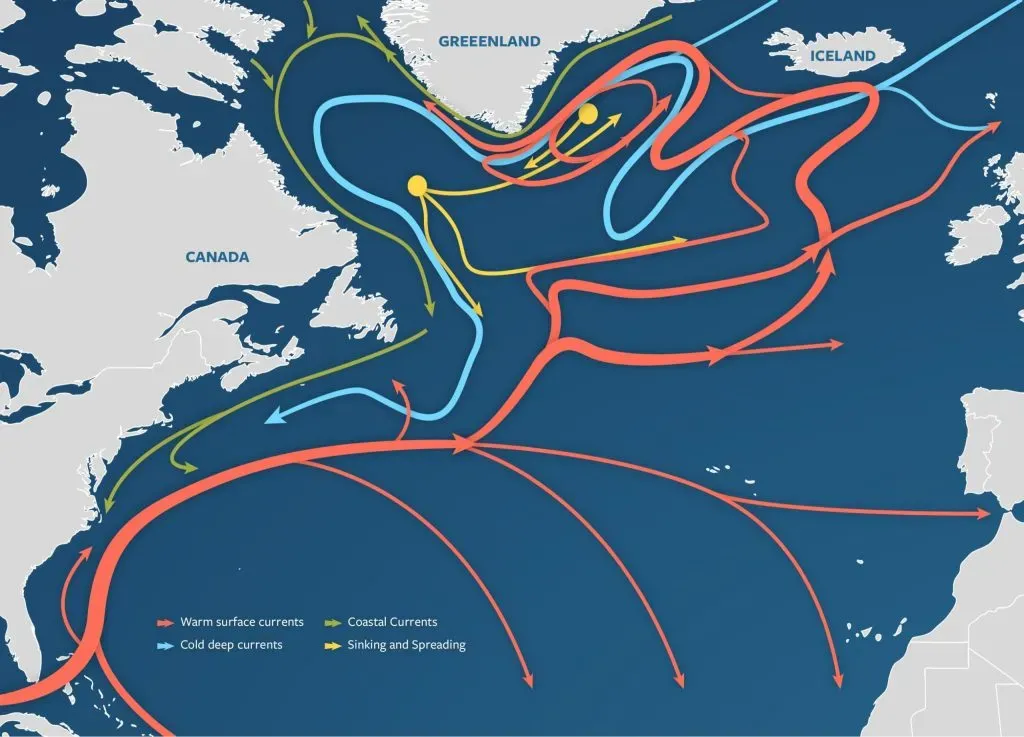
The Atlantic meridional overturning circulation (AMOC) plays a crucial role in regulating the climate, particularly in Europe. Recent studies indicate that the AMOC is weakening, with potential consequences for global weather patterns. Researchers are investigating the factors contributing to this decline, including freshwater input that disrupts the circulation process.
- ▪The AMOC is essential for maintaining Europe's mild climate by transporting warm water from the equator.
- ▪Current models predict that the AMOC could weaken by about half by the end of this century.
- ▪Research indicates that freshwater input may disrupt the AMOC, leading to potential collapse.
Hackaday files mainly under tech. We currently carry 211 of its stories.
Story provenance
Source · retrieval · rights · ranking — open for full record
inspect →
Story provenance
Attribution is not the same as permission. This drawer separates discovery metadata, excerpts, WeSearch-generated summaries, reuse status, and whether the publisher receives the visit. Nothing here claims a legal grant the publisher has not made.
Record
| Original publisher | Hackaday |
| Canonical URL | https://hackaday.com/2026/05/27/amoc-and-the-planet-wide-impact-of-ocean-currents/ |
| Publication time | Wed, 27 May 2026 17:00:37 +0000 |
| Retrieval time | 2026-05-27T17:03:01.940Z |
| Last seen | 2026-05-27T17:03:01.940Z |
| Headline source | Publisher (no WeSearch rewrite) |
| Excerpt source | publisher body |
| Excerpt method | First ~120 words (~800 chars) of extracted publisher body, fair-use limited. |
| Summary | WeSearch · cerebras-chat (WeSearch summarizer) |
| Summary source text | contentText |
| Citation coverage | Summary is a WeSearch-generated derivative; primary citation is the original publisher URL. |
| Cluster | MSE8em4NYfht |
| Cluster logic | Grouped by semantic title/content similarity across sources within a rolling window. Same-publisher template collisions are excluded from coverage comparison. |
| Ranking reason | Story pages are not engagement-ranked. Hub feeds use recency, with optional source-diversified chronological ordering (cap consecutive stories per source). No personalized ranking. |
| Publisher visit | Yes — open original |
| Substitutes article? | No — link-out required for full text |
Rights status (four layers)
WeSearch handling by dimension
| Indexing | May the item be indexed (stored, ranked, made findable)? | Allowed |
| Snippet | May a short excerpt of the publisher's text be shown? | Allowed |
| AI summary | May WeSearch generate its own short summary of the article? | Limited |
| Retrieval / RAG | May the content be exposed for third-party retrieval-augmented generation? | Not asserted |
| Model training | May the content be used to train AI models? | Not asserted |
| Commercial reuse | May the content be reused commercially? | Not permitted |
Basis: Derived from the published RSS/Atom feed. Contact: [email protected]. Reviewed: 2026-07-24.
Opening excerpt (first ~120 words) tap to expand
AMOC And The Planet-Wide Impact Of Ocean Currents No comments by: Maya Posch May 27, 2026 Title: Copy Short Link: Copy Although it can be hard to tell from looking at the often placid waters of the Earth’s oceans, their currents carry immense amounts of water around the globe on a daily basis, underlying a dynamic system that – much like the Earth’s atmosphere – plays a major role in everything from weather systems to local climates and ecosystems. Of all these ocean currents the Atlantic meridional overturning circulation (AMOC) is perhaps the most famous, as it is basically the sole reason why Europe has the mild climate that it does today, courtesy of it carrying thermal energy from the equator all the way to the coast off Scandinavia.
…
Excerpt limited to ~120 words for fair-use compliance. The full article is at Hackaday.
Discussion
0 commentsMore from Hackaday