An Extreme Solar Storm May Be Even More Devastating Than Previously Imagined
Javier CarbajalScienceJul 28, 2026 5:00 AMAn Extreme Solar Storm May Be Even More Devastating Than Previously ImaginedScientists have long assumed that there’s an upper limit to the intensity of the solar winds that reach Earth. The problem is that it's unclear what would happen today if the intensity of a storm reached levels like those of the so-called Carrington Event in 1859, one of those extraordinarily rare phenomena that occur only once every thousand years. New research, though, suggests the impact might be even worse than scientists had thought.Solar storms occur when the solar wind—a continuous stream of charged particles emitted by the sun—interacts with Earth's magnetosphere.
- ▪Javier CarbajalScienceJul 28, 2026 5:00 AMAn Extreme Solar Storm May Be Even More Devastating Than Previously ImaginedScientists have long assumed that there’s an upper limit to the intensity of the solar winds that reach Earth.
- ▪The problem is that it's unclear what would happen today if the intensity of a storm reached levels like those of the so-called Carrington Event in 1859, one of those extraordinarily rare phenomena that occur only once every thousand years.
- ▪New research, though, suggests the impact might be even worse than scientists had thought.Solar storms occur when the solar wind—a continuous stream of charged particles emitted by the sun—interacts with Earth's magnetosphere.
WIRED files mainly under tech. We currently carry 541 of its stories.
Story provenance
Source · retrieval · rights · ranking — open for full record
inspect →
Story provenance
Attribution is not the same as permission. This drawer separates discovery metadata, excerpts, WeSearch-generated summaries, reuse status, and whether the publisher receives the visit. Nothing here claims a legal grant the publisher has not made.
Record
| Original publisher | WIRED |
| Canonical URL | https://www.wired.com/story/an-extreme-solar-storm-may-be-even-more-devastating-than-previously-imagined/ |
| Publication time | Tue, 28 Jul 2026 09:00:00 +0000 |
| Retrieval time | 2026-07-28T09:09:20.771Z |
| Last seen | 2026-07-28T09:09:29.706Z |
| Headline source | Publisher (no WeSearch rewrite) |
| Excerpt source | publisher body |
| Excerpt method | First ~120 words (~800 chars) of extracted publisher body, fair-use limited. |
| Summary | WeSearch · cerebras-chat (WeSearch summarizer) |
| Summary source text | contentText |
| Citation coverage | Summary is a WeSearch-generated derivative; primary citation is the original publisher URL. |
| Cluster | C-XQQL3lq90J · 1 stories |
| Cluster logic | Grouped by semantic title/content similarity across sources within a rolling window. Same-publisher template collisions are excluded from coverage comparison. |
| Ranking reason | Story pages are not engagement-ranked. Hub feeds use recency, with optional source-diversified chronological ordering (cap consecutive stories per source). No personalized ranking. |
| Publisher visit | Yes — open original |
| Substitutes article? | No — link-out required for full text |
Rights status (four layers)
WeSearch handling by dimension
| Indexing | May the item be indexed (stored, ranked, made findable)? | Allowed |
| Snippet | May a short excerpt of the publisher's text be shown? | Allowed |
| AI summary | May WeSearch generate its own short summary of the article? | Limited |
| Retrieval / RAG | May the content be exposed for third-party retrieval-augmented generation? | Not asserted |
| Model training | May the content be used to train AI models? | Not asserted |
| Commercial reuse | May the content be reused commercially? | Not permitted |
Basis: Derived from the published RSS/Atom feed. Contact: [email protected]. Reviewed: 2026-07-24.
Opening excerpt (first ~120 words) tap to expand
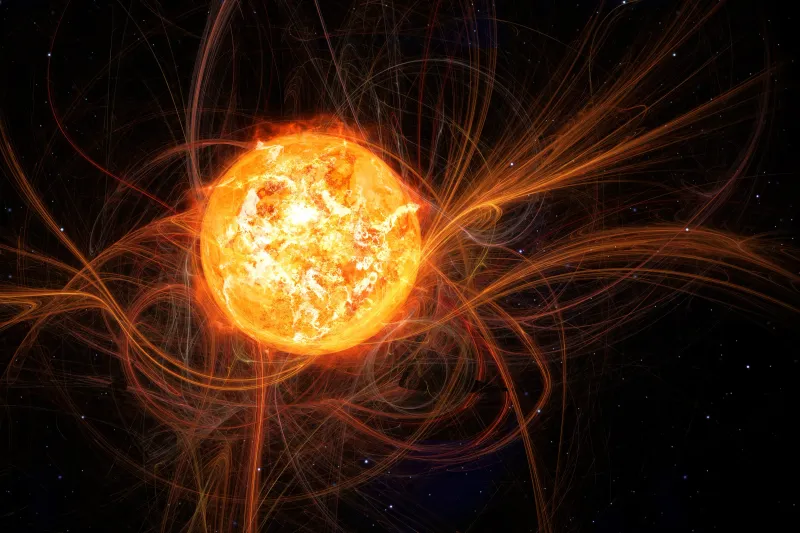
Javier CarbajalScienceJul 28, 2026 5:00 AMAn Extreme Solar Storm May Be Even More Devastating Than Previously ImaginedScientists have long assumed that there’s an upper limit to the intensity of the solar winds that reach Earth. New research suggests there’s not—and the implications are alarming.Illustration of an extreme solar storm.Illustration: magann/Getty ImagesCommentLoaderSave StorySave this storyCommentLoaderSave StorySave this storyIt's well known that a solar storm, depending on its level of intensity, can affect the functioning of electrical grids, navigation systems, or satellite communications.
…
Excerpt limited to ~120 words for fair-use compliance. The full article is at WIRED.
Discussion
0 commentsMore from WIRED