Blue Origin certainly has ambitious launch targets for New Glenn
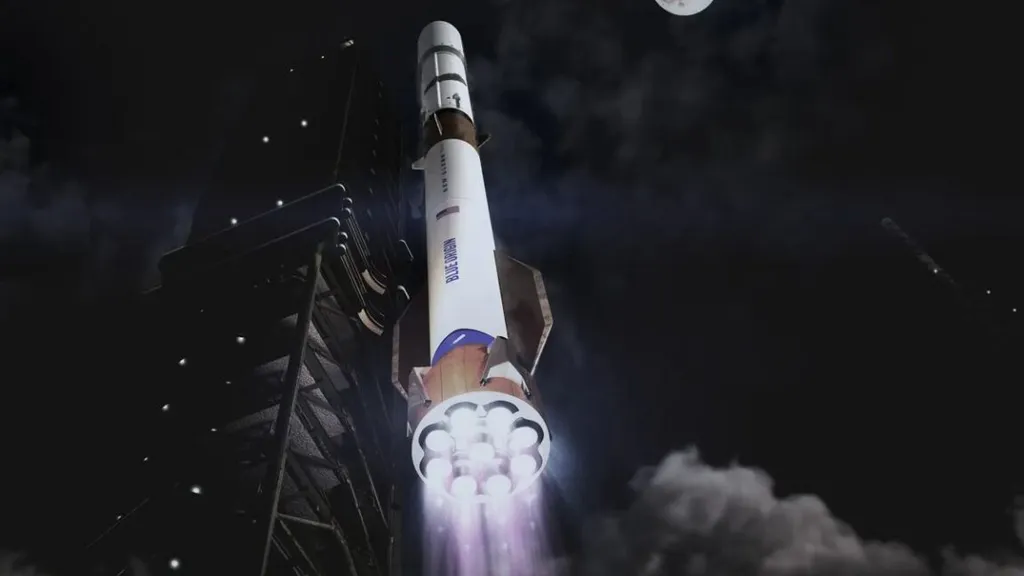
Blue Origin has revealed ambitious plans to increase production of its New Glenn rocket, targeting 60 launches per year by 2028 and 100 upper stages annually by 2029. The company is developing a more powerful 9×4 variant, known as Quattro, with four BE-3U engines on the upper stage to support NASA's Artemis program. While past launch rates have fallen short of internal targets, Blue Origin continues to invest heavily in infrastructure to support these goals.
- ▪Blue Origin plans to ramp up New Glenn production to 60 rockets per year by 2028 and 100 upper stages annually by 2029.
- ▪The 9×4 variant of New Glenn, featuring four BE-3U engines on the upper stage, is intended for more demanding missions including lunar flights under NASA's Artemis program.
- ▪The company is building an 800,000-square-foot manufacturing facility in Florida, known as 'Project Horizon,' potentially to support increased production.
- ▪Blue Origin has launched New Glenn three times since its debut in January 2025, with two flights in 2025 falling short of an initial target of eight launches.
- ▪A recent job posting confirms the company's production targets, though reuse of the upper stage remains under study, meaning each launch requires a new upper stage.
Opening excerpt (first ~120 words) tap to expand
9x4x100 Blue Origin certainly has ambitious launch targets for New Glenn If Blue Origin wants to launch New Glenn 100 times a year, we’re here for it. Eric Berger – Apr 30, 2026 3:12 pm | 7 A rendering of the 9x4 variant of a New Glenn rocket taking off. Credit: Blue Origin A rendering of the 9x4 variant of a New Glenn rocket taking off. Credit: Blue Origin Text settings Story text Size Small Standard Large Width * Standard Wide Links Standard Orange * Subscribers only Learn more Minimize to nav Earlier this week, Blue Origin posted a job opportunity for a “senior manager” to oversee tank fabrication for “Quattro,” and the description contained some intriguing information.
…
Excerpt limited to ~120 words for fair-use compliance. The full article is at Ars Technica - All content.
Discussion
0 commentsMore from Ars Technica - All content