
Can agents replace the search stack?
The article discusses the potential of using agents to replace traditional search APIs. It highlights initial findings that show agents can achieve better search results with simple tools and models. The author suggests that encouraging exploration and diverse queries can further improve the performance of these agents in search tasks.
- ▪Agents can understand user requests and evaluate relevance independently, potentially replacing traditional search backends.
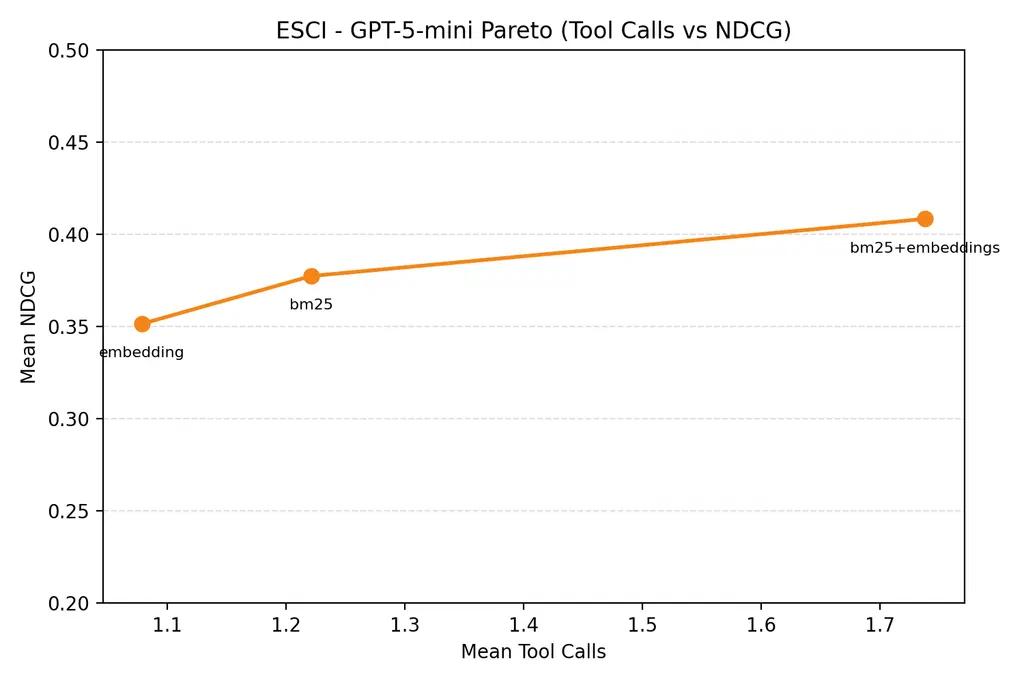
- ▪Initial experiments showed significant improvements in search quality when using agents with basic search tools.
- ▪Encouraging agents to explore diverse queries and make multiple tool calls can lead to better search outcomes.
Hacker News (Newest) files mainly under programming. We currently carry 5,306 of its stories.
Story provenance
Source · retrieval · rights · ranking — open for full record
inspect →
Story provenance
Attribution is not the same as permission. This drawer separates discovery metadata, excerpts, WeSearch-generated summaries, reuse status, and whether the publisher receives the visit. Nothing here claims a legal grant the publisher has not made.
Record
| Original publisher | Doug Turnbull's Blog |
| Canonical URL | https://softwaredoug.com/blog/2026/04/28/search-apis-replaced-by-agents.html |
| Publication time | Tue, 28 Apr 2026 20:01:39 +0000 |
| Retrieval time | 2026-04-28T20:14:39.778Z |
| Last seen | 2026-04-28T20:14:39.778Z |
| Headline source | Publisher (no WeSearch rewrite) |
| Excerpt source | publisher body |
| Excerpt method | First ~120 words (~800 chars) of extracted publisher body, fair-use limited. |
| Summary | WeSearch · cerebras-chat (WeSearch summarizer) |
| Summary source text | contentText |
| Citation coverage | Summary is a WeSearch-generated derivative; primary citation is the original publisher URL. |
| Cluster | m4ioBoPpJiQV |
| Cluster logic | Grouped by semantic title/content similarity across sources within a rolling window. Same-publisher template collisions are excluded from coverage comparison. |
| Ranking reason | Story pages are not engagement-ranked. Hub feeds use recency, with optional source-diversified chronological ordering (cap consecutive stories per source). No personalized ranking. |
| Publisher visit | Yes — open original |
| Substitutes article? | No — link-out required for full text |
Rights status (four layers)
WeSearch handling by dimension
| Indexing | May the item be indexed (stored, ranked, made findable)? | Allowed |
| Snippet | May a short excerpt of the publisher's text be shown? | Allowed |
| AI summary | May WeSearch generate its own short summary of the article? | Limited |
| Retrieval / RAG | May the content be exposed for third-party retrieval-augmented generation? | Not asserted |
| Model training | May the content be used to train AI models? | Not asserted |
| Commercial reuse | May the content be reused commercially? | Not permitted |
Basis: Derived from the published RSS/Atom feed. Contact: [email protected]. Reviewed: 2026-07-24.
Opening excerpt (first ~120 words) tap to expand
How is search implemented where you work? Probably as a complex set of capabilities on top of retrieval. Our search APIs understand queries, call backend search systems, and finally rerank results. But if we had an agent in the loop, would we need all that? Could we replace search backends with an agent? After all, an agent understands user requests, calls retrieval tools, and evaluates relevance on its own. We see ChatGPT do this all the time, why can’t our search bar? In other words, if you give a basic BM25 backend to an agent, could it take the Search API’s job? Surprisingly good results with simple tool usage Well I’ve measured initial findings (a bit deeper than in the past). I gave agents basic search tools and got the popcorn out to watch.
…
Excerpt limited to ~120 words for fair-use compliance. The full article is at Doug Turnbull's Blog.
Discussion
0 commentsMore from Doug Turnbull's Blog


