Can We Make Events Like the White House Correspondents’ Dinner Safer?
Yes, but some level of risk is inevitable in a free society.
Full article excerpt tap to expand
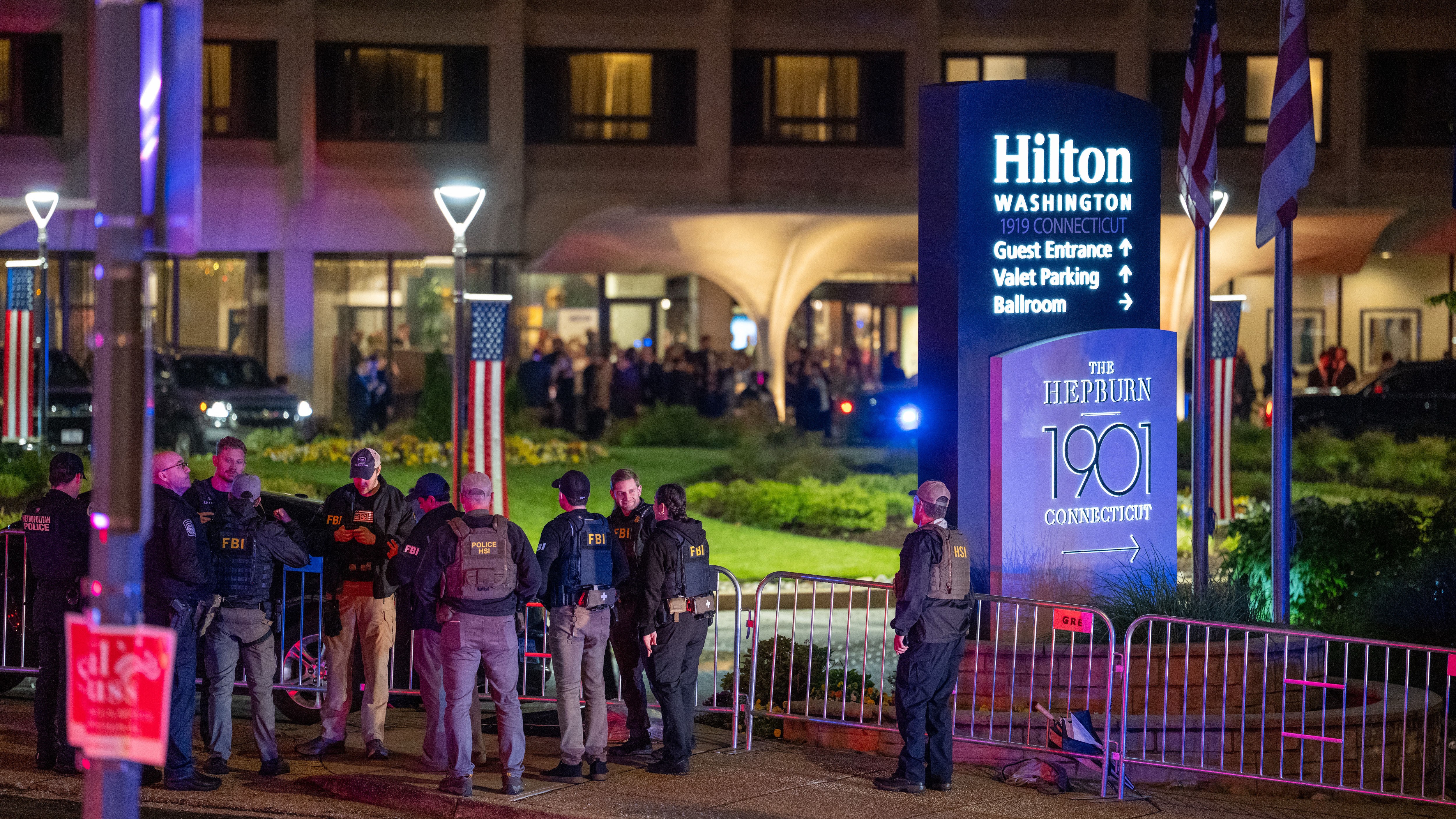
IdeasCan We Make Events Like the White House Correspondents’ Dinner Safer?Yes, but some level of risk is inevitable in a free society.By Juliette KayyemAndrew Leyden / GettyApril 27, 2026, 3:40 PM ET ShareSave On Saturday night, a heavily armed shooter was able to easily access areas close to the ballroom where the White House Correspondents’ Dinner was being held, leading to a rushed evacuation of the president and senior officials and a hectic, scary evening for attendees. Why wasn’t the event safe from this kind of a situation? It’s a fair question, but perhaps the wrong one. The more realistic inquiry is whether this kind of event can be made safer.This coming summer, the United States will host two major multicity events: celebrations for the 250th anniversary of America’s founding and the World Cup. Both are highly complex efforts, attracting large domestic and international audiences, including political leaders. In two years, Los Angeles will host the Summer Olympics. White House Chief of Staff Susie Wiles is convening a meeting this week with various officials to discuss security at events that the president attends. How should we think about safety at these kinds of large gatherings going forward?Shane Harris: The Correspondents’ Dinner was a security success*For the past several years, I have worked with the public and private sectors to support what the safety industry calls mega-event planning—for big sporting events such as the Olympics, for example, but also smaller gatherings such as industry conventions or local concerts. I run a program at Harvard that does the same kind of work. I’ll let you in on a secret: In this kind of event planning, the realistic guiding principle is not to eliminate risk but to reduce it as much as possible.Each event is different and complex in its own way, not merely because of variation in scope and scale but because the standard of success is tied to the purpose of the event. A world with no risk whatsoever would be nice to live in, but that isn’t achievable. Success, instead, should be measured by whether a threat that unfolds is mitigated by the planning and the response of those who are entrusted to secure the scene.“Less bad” is hardly a rallying cry; nor is it an excuse for political violence, an overly permissive gun culture, or negligent planning. It is simply an acknowledgment that vulnerability is a natural consequence of the freedom we crave and often demand.For security officials, building a fortress is relatively easy. Planners deploy what are often called “the three g’s”—guns, guards, and gates—to make a place hard to target. Our society often accepts such burdens because we have calculated that the friction caused by them is worth it. Nobody visiting a nuclear facility complains about the onerous security features. But even a hard target will bump up against soft areas—think of the roads leading to the nuclear facility or dangers from the sky—that can make the hard target vulnerable.Instead, free movement—of people, things, goods—presents the greatest challenge to event planners. Access, connection, and community are what we pay for, what we dress up for, what our democracy deserves.Mega-event organizers must balance and constantly assess many different kinds of plans, including site logistics, risk assessment, emergency response, community engagement, crisis communications, weather events, crowd management, and transportation. To bring some order to these efforts, organizers…
This excerpt is published under fair use for community discussion. Read the full article at The Atlantic.
Discussion
0 commentsMore from The Atlantic