CGA As You Have Never Seen It Before
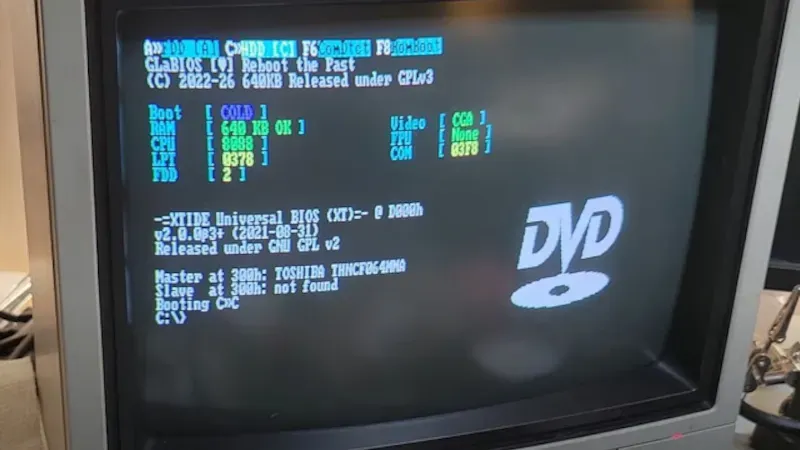
A new technique has been developed to enhance the capabilities of old CGA graphics cards. By synchronizing a CGA card with a Raspberry Pi Pico 2, users can achieve high-resolution graphics in text mode. This innovative approach allows for the display of retro graphics alongside traditional text, resulting in unique visual effects.
- ▪A CGA card has been modified to display 60 Hz high-resolution graphics in text mode.
- ▪The technique involves clocking the character ROM continuously across the screen.
- ▪This method allows for the overlay of text and graphics, creating interesting visual effects.
2 outlets in our directory ran this story, first to last over 23 hours. All of the coverage we found sits in one bucket: centre. That one-sidedness is itself worth noticing.
- ▪ Your SaaS will never make you rich — r/SaaS
Hackaday files mainly under tech. We currently carry 211 of its stories.
Story provenance
Source · retrieval · rights · ranking — open for full record
inspect →
Story provenance
Attribution is not the same as permission. This drawer separates discovery metadata, excerpts, WeSearch-generated summaries, reuse status, and whether the publisher receives the visit. Nothing here claims a legal grant the publisher has not made.
Record
| Original publisher | Hackaday |
| Canonical URL | https://hackaday.com/2026/05/17/cga-as-you-have-never-seen-it-before/ |
| Publication time | Sun, 17 May 2026 17:00:28 +0000 |
| Retrieval time | 2026-05-17T17:03:20.824Z |
| Last seen | 2026-05-17T17:03:20.824Z |
| Headline source | Publisher (no WeSearch rewrite) |
| Excerpt source | publisher body |
| Excerpt method | First ~120 words (~800 chars) of extracted publisher body, fair-use limited. |
| Summary | WeSearch · cerebras-chat (WeSearch summarizer) |
| Summary source text | contentText |
| Citation coverage | Summary is a WeSearch-generated derivative; primary citation is the original publisher URL. |
| Cluster | jcUru4VmHcEj · 2 stories |
| Cluster logic | Grouped by semantic title/content similarity across sources within a rolling window. Same-publisher template collisions are excluded from coverage comparison. |
| Ranking reason | Story pages are not engagement-ranked. Hub feeds use recency, with optional source-diversified chronological ordering (cap consecutive stories per source). No personalized ranking. |
| Publisher visit | Yes — open original |
| Substitutes article? | No — link-out required for full text |
Rights status (four layers)
WeSearch handling by dimension
| Indexing | May the item be indexed (stored, ranked, made findable)? | Allowed |
| Snippet | May a short excerpt of the publisher's text be shown? | Allowed |
| AI summary | May WeSearch generate its own short summary of the article? | Limited |
| Retrieval / RAG | May the content be exposed for third-party retrieval-augmented generation? | Not asserted |
| Model training | May the content be used to train AI models? | Not asserted |
| Commercial reuse | May the content be reused commercially? | Not permitted |
Basis: Derived from the published RSS/Atom feed. Contact: [email protected]. Reviewed: 2026-07-24.
Opening excerpt (first ~120 words) tap to expand
CGA As You Have Never Seen It Before No comments by: Jenny List May 17, 2026 Title: Copy Short Link: Copy An old-style graphics system as found on many 8-bit computers and on early PC graphics cards drew its characters by retrieving their bitmaps from a ROM. With a little sideways thinking, [GloriousCow] has exploited this process to make a CGA card perform graphical tricks it was never designed to do. The CGA card clocks its character ROM continuously across the whole screen, even at the edges where nothing would normally be displayed. By placing the ROM in tandem with a Raspberry Pi Pico 2 they were able to use this ROM clocking as a synchronization signal, and inject whatever pixel data they chose.
…
Excerpt limited to ~120 words for fair-use compliance. The full article is at Hackaday.
Discussion
0 commentsMore from Hackaday