Dolphins Create Invisible Vortices With Their Tails, Helping Them Power Ahead Underwater
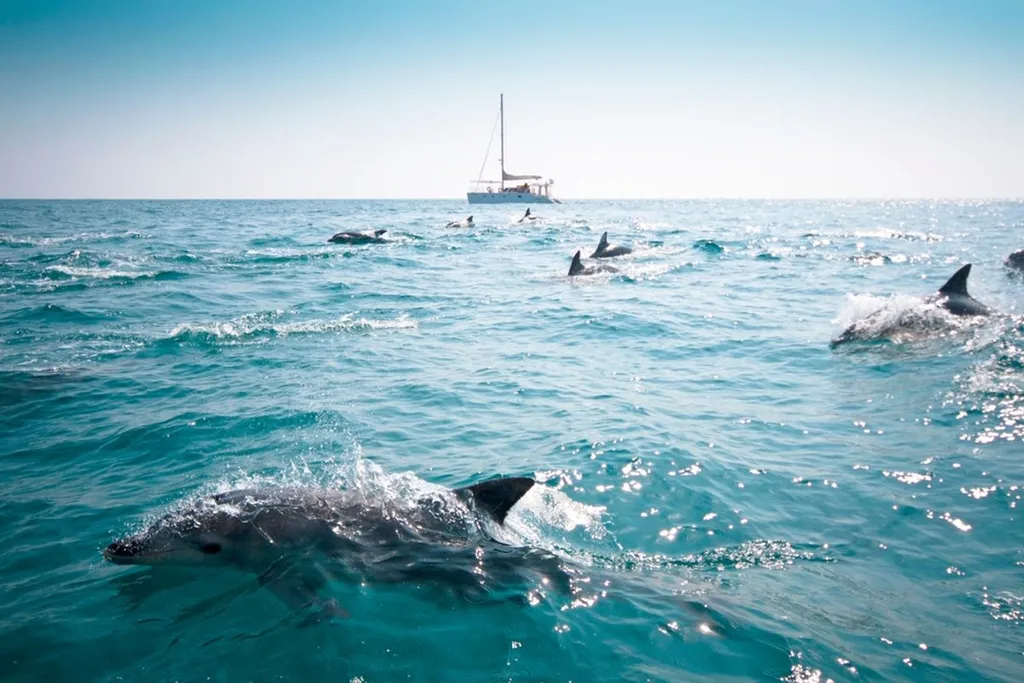
Researchers from the University of Osaka have studied how dolphins achieve their impressive swimming speeds by generating vortices with their tails. Their findings reveal that larger vortices are primarily responsible for propulsion, while smaller vortices are by-products of turbulence. This research could have implications for improving the design of underwater robots and other fluid-based technologies.
- ▪Dolphins can reach speeds of up to 37 mph, surpassing other marine mammals like orcas and porpoises.
- ▪The study found that large-scale vortices created by dolphins' tails generate thrust, while smaller vortices do not significantly contribute to forward motion.
- ▪Using supercomputing simulations, researchers were able to analyze fluid motion in detail, leading to insights that could enhance underwater technology.
Opening excerpt (first ~120 words) tap to expand
Dolphins are among the fastest marine mammals, with some species reaching speeds of up to 37 miles per hour (mph). But what exactly makes these agile swimmers so fast hasn’t been fully understood. Understanding the physics of animals’ speed, especially underwater, may help improve propulsion in fluid-based human-made technologies, such as submarine robots.By running large-scale simulations of dolphins rushing through the waves under a variety of conditions, researchers from the University of Osaka, Japan, have uncovered new insights involving differently sized vortices generated by the dolphins’ tails.In summary, the study, published in Physical Review Fluids, highlights that understanding how vortices behave within turbulence is crucial to explaining how dolphins reach these top…
Excerpt limited to ~120 words for fair-use compliance. The full article is at Discover Magazine.
Discussion
0 commentsMore from Discover Magazine