Figuring Out What James Webb’s Mysterious Little Red Dots Are
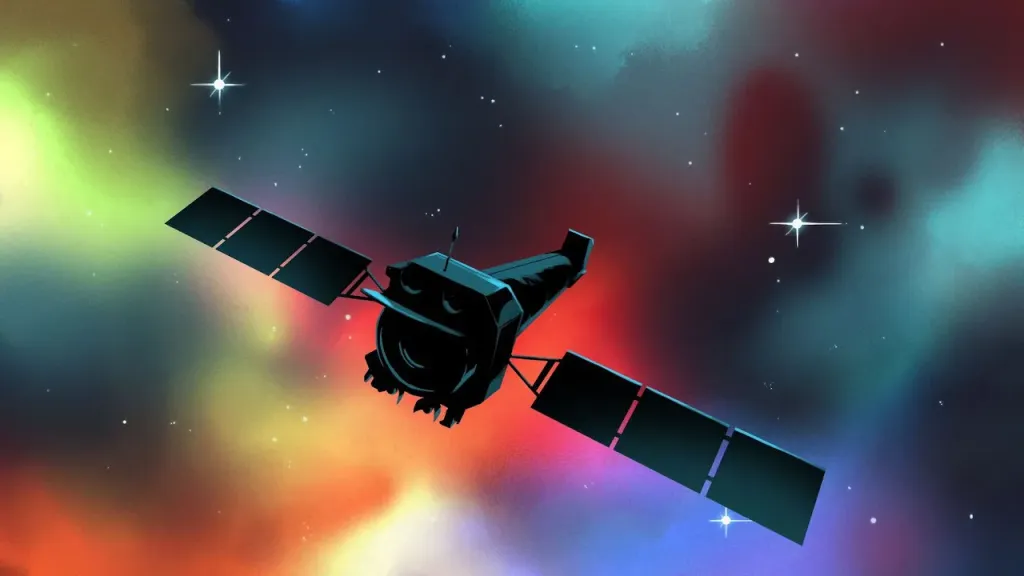
The James Webb Space Telescope has discovered over 300 mysterious red dots of unknown origin. Recent findings from the Chandra X-ray Observatory suggest these dots may be linked to supermassive black holes consuming gas clouds. Ongoing research aims to confirm these theories and understand the fate of these red dots.
- ▪The James Webb Space Telescope identified over 300 mysterious red dots since its operations began in 2022.
- ▪The Chandra X-ray Observatory provided new insights into the nature of these red dots.
- ▪One specific red dot, designated 3DHST-AEGIS-12014, emits X-rays, supporting theories about supermassive black holes.
2 outlets in our directory ran this story, first to last over 31 hours. All of the coverage we found sits in one bucket: centre. That one-sidedness is itself worth noticing.
Hackaday files mainly under tech. We currently carry 211 of its stories.
Story provenance
Source · retrieval · rights · ranking — open for full record
inspect →
Story provenance
Attribution is not the same as permission. This drawer separates discovery metadata, excerpts, WeSearch-generated summaries, reuse status, and whether the publisher receives the visit. Nothing here claims a legal grant the publisher has not made.
Record
| Original publisher | Hackaday |
| Canonical URL | https://hackaday.com/2026/05/26/figuring-out-what-james-webbs-mysterious-little-red-dots-are/ |
| Publication time | Tue, 26 May 2026 11:00:27 +0000 |
| Retrieval time | 2026-05-26T11:02:48.463Z |
| Last seen | 2026-05-26T11:02:48.463Z |
| Headline source | Publisher (no WeSearch rewrite) |
| Excerpt source | publisher body |
| Excerpt method | First ~120 words (~800 chars) of extracted publisher body, fair-use limited. |
| Summary | WeSearch · cerebras-chat (WeSearch summarizer) |
| Summary source text | contentText |
| Citation coverage | Summary is a WeSearch-generated derivative; primary citation is the original publisher URL. |
| Cluster | MmXOHTbBgUo1 · 2 stories |
| Cluster logic | Grouped by semantic title/content similarity across sources within a rolling window. Same-publisher template collisions are excluded from coverage comparison. |
| Ranking reason | Story pages are not engagement-ranked. Hub feeds use recency, with optional source-diversified chronological ordering (cap consecutive stories per source). No personalized ranking. |
| Publisher visit | Yes — open original |
| Substitutes article? | No — link-out required for full text |
Rights status (four layers)
WeSearch handling by dimension
| Indexing | May the item be indexed (stored, ranked, made findable)? | Allowed |
| Snippet | May a short excerpt of the publisher's text be shown? | Allowed |
| AI summary | May WeSearch generate its own short summary of the article? | Limited |
| Retrieval / RAG | May the content be exposed for third-party retrieval-augmented generation? | Not asserted |
| Model training | May the content be used to train AI models? | Not asserted |
| Commercial reuse | May the content be reused commercially? | Not permitted |
Basis: Derived from the published RSS/Atom feed. Contact: [email protected]. Reviewed: 2026-07-24.
Opening excerpt (first ~120 words) tap to expand
Figuring Out What James Webb’s Mysterious Little Red Dots Are No comments by: Maya Posch May 26, 2026 Title: Copy Short Link: Copy After the James Webb Space Telescope (JWST) began operations in 2022, it soon made a tantalizing discovery in the form of mysterious red dots: small, red-tinted astronomical objects of unknown origin and composition. So far well over 300 of such little red dots (LRDs) have been identified, with many theories on what they are. Fortunately the Chandra X-ray Observatory recently added some more clues as detailed in an accompanying paper. Current theories include them being a form of primordial galaxy, or a supermassive black holes embedded in a dense gas cloud.
…
Excerpt limited to ~120 words for fair-use compliance. The full article is at Hackaday.
Discussion
0 commentsMore from Hackaday