Google Tells Sites to Fact-Check AI Content Before Publishing
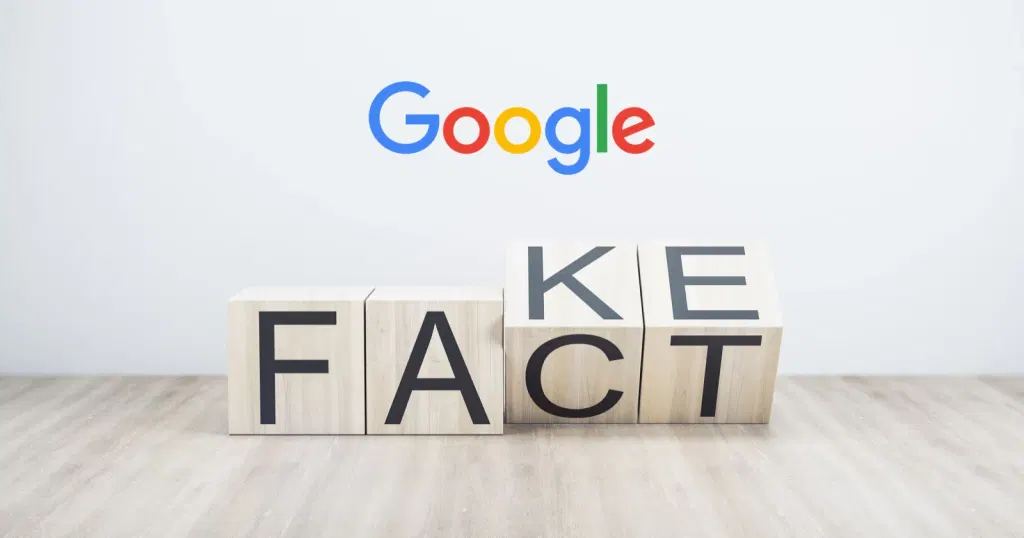
Google has updated its guidance for websites using generative AI to explicitly require manual fact-checking of all AI-generated content before publication. This new directive addresses the risk of hallucinations by mandating human review of both article text and metadata elements like titles and alt text. The update aligns with previous statements from Google employees and reinforces the company's stance on maintaining content accuracy and trustworthiness.
- ▪Google revised its AI content guidance on October 1, 2026, to warn that generative models may produce inaccuracies known as hallucinations.
- ▪The new instructions require manual fact-checking of all AI-generated content, including titles, meta descriptions, structured data, and image alt text.
- ▪Google stated that the update brings its documentation in line with information from the Search Quality Raters guidelines and previous developer event talks.
- ▪The guidance continues to warn that using AI to create many pages without adding user value may violate the company's spam policy on scaled content abuse.
Hacker News (AI / LLM) files mainly under ai. We currently carry 7,588 of its stories.
Story provenance
Source · retrieval · rights · ranking — open for full record
inspect →
Story provenance
Attribution is not the same as permission. This drawer separates discovery metadata, excerpts, WeSearch-generated summaries, reuse status, and whether the publisher receives the visit. Nothing here claims a legal grant the publisher has not made.
Record
| Original publisher | Search Engine Journal |
| Canonical URL | https://www.searchenginejournal.com/google-fact-check-ai-content-before-publishing/591782/ |
| Publication time | Sun, 04 Oct 2026 20:19:38 +0000 |
| Retrieval time | 2026-10-04T22:41:00.843Z |
| Last seen | 2026-10-04T22:41:00.843Z |
| Headline source | Publisher (no WeSearch rewrite) |
| Excerpt source | publisher body |
| Excerpt method | First ~120 words (~800 chars) of extracted publisher body, fair-use limited. |
| Summary | WeSearch · cerebras-chat (WeSearch summarizer) |
| Summary source text | contentText |
| Citation coverage | Summary is a WeSearch-generated derivative; primary citation is the original publisher URL. |
| Cluster | Cjc73mjT2gCc · 1 stories |
| Cluster logic | Grouped by semantic title/content similarity across sources within a rolling window. Same-publisher template collisions are excluded from coverage comparison. |
| Ranking reason | Story pages are not engagement-ranked. Hub feeds use recency, with optional source-diversified chronological ordering (cap consecutive stories per source). No personalized ranking. |
| Publisher visit | Yes — open original |
| Substitutes article? | No — link-out required for full text |
Rights status (four layers)
WeSearch handling by dimension
| Indexing | May the item be indexed (stored, ranked, made findable)? | Allowed |
| Snippet | May a short excerpt of the publisher's text be shown? | Allowed |
| AI summary | May WeSearch generate its own short summary of the article? | Limited |
| Retrieval / RAG | May the content be exposed for third-party retrieval-augmented generation? | Not asserted |
| Model training | May the content be used to train AI models? | Not asserted |
| Commercial reuse | May the content be reused commercially? | Not permitted |
Basis: Derived from the published RSS/Atom feed. Contact: [email protected]. Reviewed: 2026-07-24.
Opening excerpt (first ~120 words) tap to expand
Google Tells Sites To Fact-Check AI Content Before Publishing Google updated its AI content guidance with a warning about hallucinations. It says manually fact-checking all AI-generated content before publishing is critical. The review step also applies to titles, meta descriptions, structured data, and alt text. Google's guidance on AI-generated content now says to fact-check it by hand before publishing, and the review extends to titles, alt text, and other metadata. SEJ STAFF Matt G. Southern October 1, 2026 ⋅ 3 min read SEJ STAFF Matt G.
…
Excerpt limited to ~120 words for fair-use compliance. The full article is at Search Engine Journal.
Discussion
0 commentsMore from Search Engine Journal