Hallucinated citations are polluting the scientific literature. What can be done
A growing number of scientific publications from 2025 may contain fabricated or hallucinated citations generated by artificial intelligence, according to a Nature analysis. Researchers and publishers are increasingly concerned about the integrity of academic literature as AI tools produce non-existent references in manuscripts. Efforts are underway to detect and prevent such citations, with some publishers adopting screening tools and researchers warning of a potential crisis in scientific reproducibility.
- ▪A Nature analysis in collaboration with Grounded AI suggests tens of thousands of 2025 publications may contain AI-generated invalid references.
- ▪One study found that 2.6% of papers in 2025 computer-science conferences had at least one potentially hallucinated citation, up from 0.3% in 2024.
- ▪Computer scientist Guillaume Cabanac discovered a citation to his work that falsely listed a Nature publication and an invalid DOI, indicating AI hallucination.
- ▪Publishers are exploring tools to detect hallucinated citations, while researchers like Alison Johnston warn of an impending flood of fake references.
- ▪Mohammad Hosseini notes that while citation inaccuracies existed before AI, the current issue involves entirely fabricated references, posing a new challenge to research integrity.
Opening excerpt (first ~120 words) tap to expand
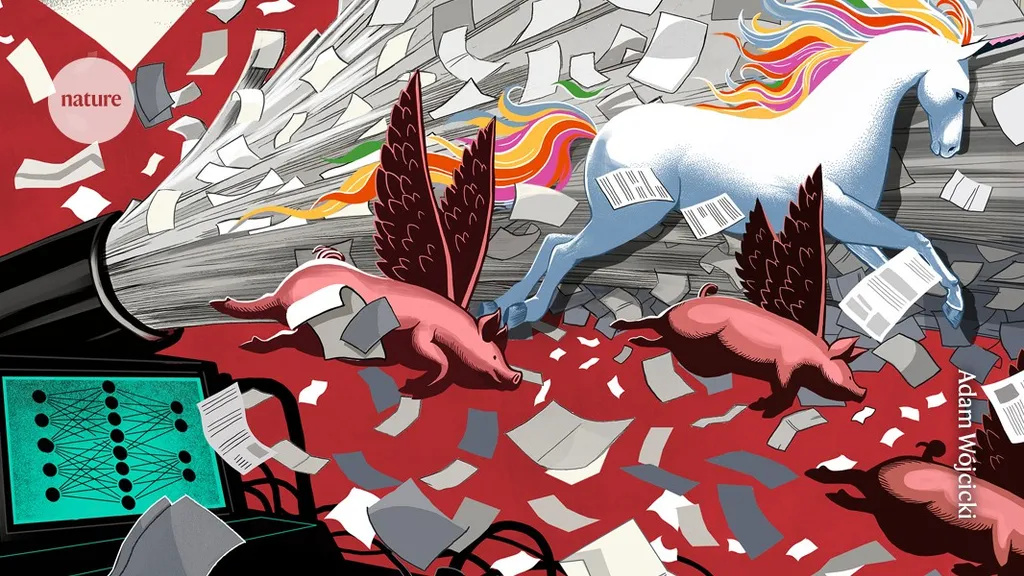
NEWS FEATURE 01 April 2026 Hallucinated citations are polluting the scientific literature. What can be done? Tens of thousands of publications from 2025 might include invalid references generated by AI, a Nature analysis suggests. By Miryam Naddaf & Elizabeth Quill1 Miryam Naddaf View author publications Search author on: PubMed Google Scholar Elizabeth Quill Elizabeth Quill is a freelance editor in Washington DC. View author publications Search author on: PubMed Google Scholar Email Bluesky Facebook LinkedIn Reddit Whatsapp X Illustration: Adam Wójcicki Earlier this year, computer scientist Guillaume Cabanac received a notification from Google Scholar that one of his publications had been cited in a paper published in the International Dental Journal1.
…
Excerpt limited to ~120 words for fair-use compliance. The full article is at Nature.
Discussion
0 commentsMore from Nature