How a Two-Cent Item Threatens U.S. National Security
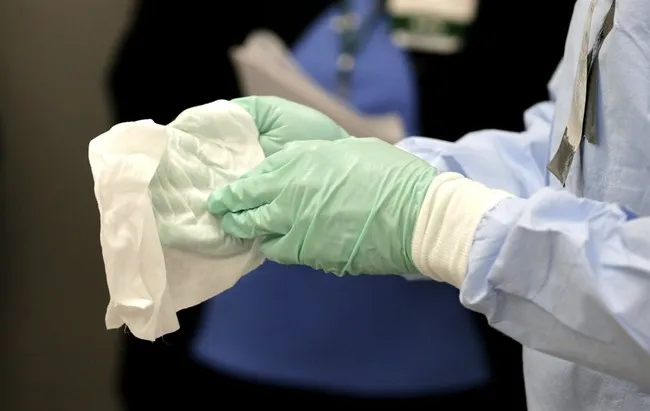
Nitrile gloves, a two-cent item, are critical to U.S. national security due to their widespread use in healthcare, defense, and manufacturing. The United States imports over 99% of its nitrile gloves, primarily from China and Southeast Asia, creating significant supply chain vulnerabilities. Dependence on foreign producers, especially those linked to the Chinese Communist Party, raises concerns about geopolitical leverage and potential disruptions.
- ▪The U.S. uses 100 to 120 billion nitrile gloves annually, with less than one percent produced domestically.
- ▪China and Southeast Asian nations produce nearly all nitrile gloves used in the U.S., often through trans-shipment and shell companies to evade tariffs.
- ▪Nitrile gloves are essential not only in healthcare but also in military operations, semiconductor fabrication, and advanced manufacturing.
- ▪The Trump administration issued an Executive Order in August 2025 identifying nitrile gloves as a critical medical countermeasure.
- ▪Congress passed the 'Make PPE in America Act' in 2021, but loopholes have limited its effectiveness in boosting domestic production.
Opening excerpt (first ~120 words) tap to expand
How a Two-Cent Item Threatens U.S. National Security By RedState Guest Editorial | 6:15 AM on May 05, 2026 The opinions expressed by contributors are their own and do not necessarily represent the views of RedState.com. AP Photo/Charles Rex Arbogast There’s seemingly nothing smaller in a modern economy than a two-cent nitrile glove. However, these rubber gloves have become a foundational part of personal safety and hand protection. They’re now deeply important for medical professionals, America’s armed forces, and U.S. manufacturing. Advertisement googletag.cmd.push(function () { googletag.display("div-gpt-300x250_2"); //googletag.pubads().refresh([gptAdSlot["div-gpt-300x250_2"]]) }); Consider that the United States uses 100 to 120 billion nitrile gloves each year.
…
Excerpt limited to ~120 words for fair-use compliance. The full article is at RedState.
Discussion
0 commentsMore from RedState