
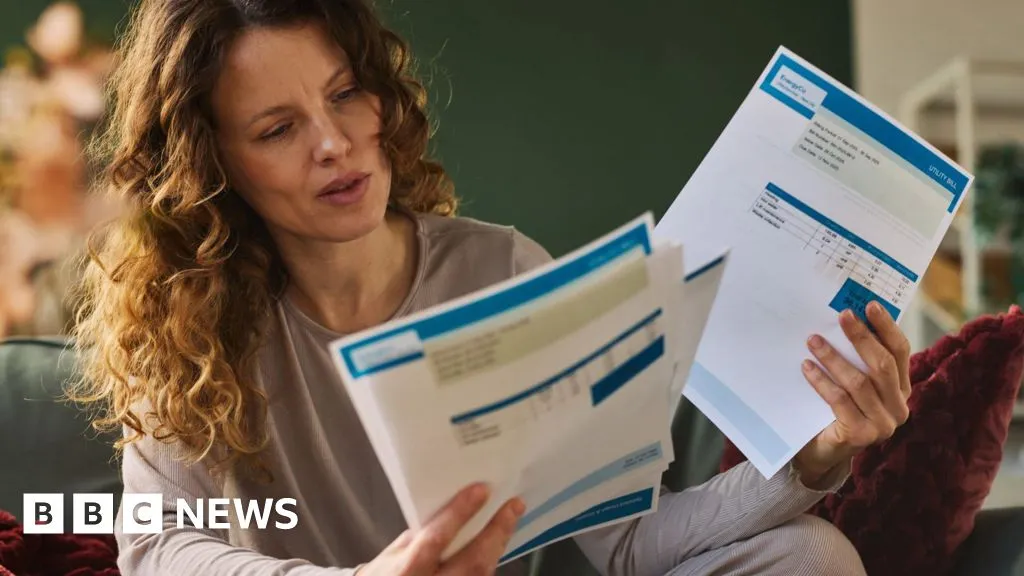
Iran war impact to hit household energy bills for the first time
Household energy prices in the UK are set to rise significantly in July due to increased wholesale costs linked to the ongoing conflict in Iran. The regulator Ofgem is expected to announce a 13% increase in the price cap, resulting in an average annual bill of £1,850. The government is working on support plans for those most affected as energy prices are anticipated to rise further in the autumn and winter months.
- ▪The price cap will increase by 13%, adding £209 to the average household energy bill.
- ▪The rise is attributed to a 25% increase in global gas prices due to the Iran war.
- ▪The government is planning targeted support for those in need as energy costs continue to rise.
2 outlets in our directory ran this story, first to last over 11 hours.
BBC News — Business publishes from United Kingdom and files mainly under business. We currently carry 222 of its stories.
Story provenance
Source · retrieval · rights · ranking — open for full record
inspect →
Story provenance
Attribution is not the same as permission. This drawer separates discovery metadata, excerpts, WeSearch-generated summaries, reuse status, and whether the publisher receives the visit. Nothing here claims a legal grant the publisher has not made.
Record
| Original publisher | BBC News — Business |
| Canonical URL | https://www.bbc.com/news/articles/ce8pw464986o?at_medium=RSS&at_campaign=rss |
| Publication time | Tue, 26 May 2026 23:28:51 GMT |
| Retrieval time | 2026-05-26T23:32:55.082Z |
| Last seen | 2026-05-26T23:32:55.082Z |
| Headline source | Publisher (no WeSearch rewrite) |
| Excerpt source | publisher body |
| Excerpt method | First ~120 words (~800 chars) of extracted publisher body, fair-use limited. |
| Summary | WeSearch · cerebras-chat (WeSearch summarizer) |
| Summary source text | contentText |
| Citation coverage | Summary is a WeSearch-generated derivative; primary citation is the original publisher URL. |
| Cluster | FuIlW70MwVpJ · 2 stories |
| Cluster logic | Grouped by semantic title/content similarity across sources within a rolling window. Same-publisher template collisions are excluded from coverage comparison. |
| Ranking reason | Story pages are not engagement-ranked. Hub feeds use recency, with optional source-diversified chronological ordering (cap consecutive stories per source). No personalized ranking. |
| Publisher visit | Yes — open original |
| Substitutes article? | No — link-out required for full text |
Rights status (four layers)
WeSearch handling by dimension
| Indexing | May the item be indexed (stored, ranked, made findable)? | Allowed |
| Snippet | May a short excerpt of the publisher's text be shown? | Allowed |
| AI summary | May WeSearch generate its own short summary of the article? | Limited |
| Retrieval / RAG | May the content be exposed for third-party retrieval-augmented generation? | Not asserted |
| Model training | May the content be used to train AI models? | Not asserted |
| Commercial reuse | May the content be reused commercially? | Not permitted |
Basis: Derived from the published RSS/Atom feed. Contact: [email protected]. Reviewed: 2026-07-24.
Opening excerpt (first ~120 words) tap to expand
Iran war impact to hit household energy bills for the first timeJust nowShareSaveAdd as preferred on GoogleKevin PeacheyCost of living correspondentGetty ImagesHousehold energy prices will rise sharply in July, as soaring wholesale costs caused by the impact of the Iran war hit UK bills for the first time.On Wednesday, regulator Ofgem will publish details of its new price cap affecting millions of homes on variable tariffs in England, Scotland and Wales.Analysts predict a rise of 13% on the current cap, which would mean a household using a typical amount gas and electricity paying £209 a year more than now, with an annual bill of £1,850.The announcement comes during a record-breaking heatwave across much of the UK, but experts say people can act now to reduce bills later in the year.The…
Excerpt limited to ~120 words for fair-use compliance. The full article is at BBC News — Business.
Discussion
0 commentsMore from BBC News — Business


