Megawatts by Microwave
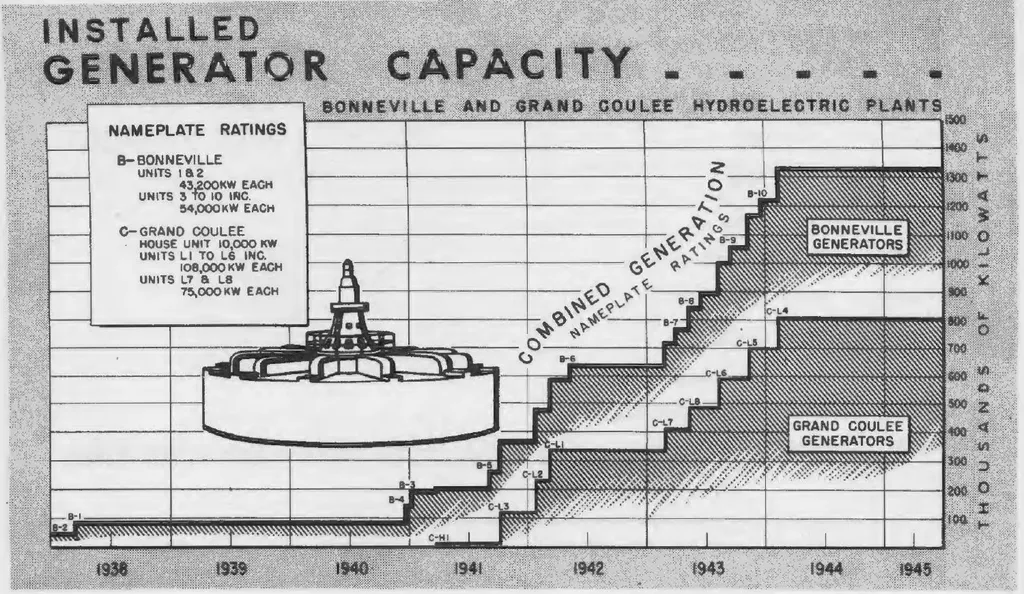
The development of the Columbia River began in 1914 with the Department of the Interior investigating its potential for irrigation and electricity generation. The construction of the Bonneville Dam was a significant project that aimed to provide flood control, irrigation, and electricity to the region. The dam's completion in 1938 marked a major milestone in the development of the Columbia River, with its powerhouses producing up to 1.2 GW of electricity.
- ▪The Department of the Interior investigated the Columbia River's potential in 1914.
- ▪The Bonneville Dam was completed in 1938 and produces up to 1.2 GW of electricity.
- ▪The dam's primary purpose is electrical production, with flood control being a secondary benefit.
Opening excerpt (first ~120 words) tap to expand
megawatts by microwave 2026-07-04 In 1914 the Department of the Interior, through the Bureau of Reclamation, investigated the possibilities of developing the Columbia River. Thousands of arid but potentially fertile acres needed only water to become the Imperial Valley of the Northwest. Locked in the mountain ranges were valuable ores awaiting electricity to turn them into needed metals. Two years later the State engineer of Oregon urged the development of the Bonneville site as a national-defense measure: he saw in the proposed power project a source of fertilizer in time of peace and nitrates in time of war. The dam also would completely drown out the Cascade Rapids and extend slack-water navigation some 40 miles eastward to The Dalles.
…
Excerpt limited to ~120 words for fair-use compliance. The full article is at Computers Are Bad.
Discussion
0 commentsMore from Computers Are Bad