Meta Portal Given New Life As Extended Display
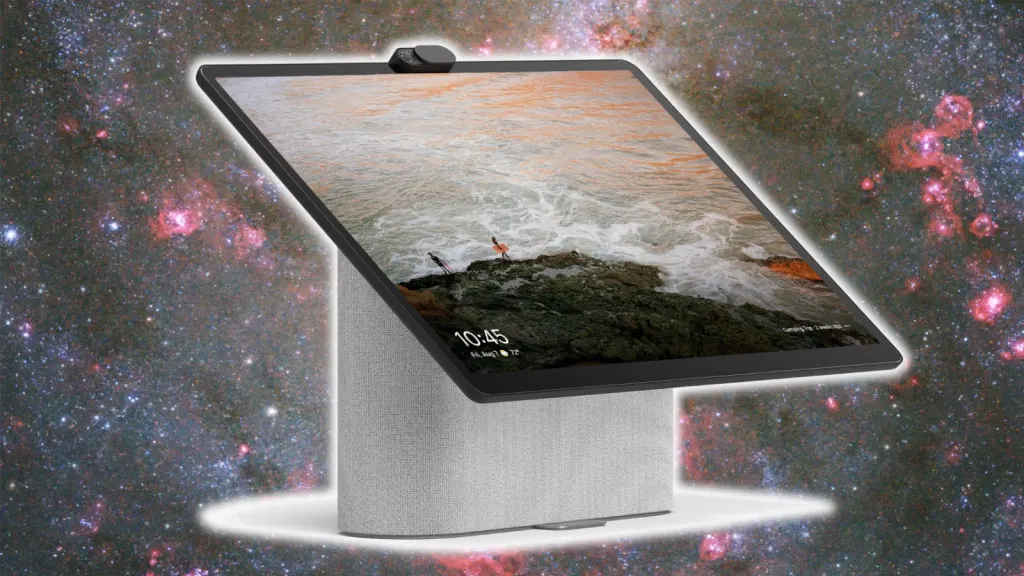
The Meta Portal, a device abandoned by Meta in 2022, can be repurposed as a wireless extended display for Apple devices. A developer created an application called Wormhole Display that enables this functionality by leveraging the device's underlying Android hardware. This solution allows users to utilize the Portal's screen and speakers for screen mirroring or extended desktop environments via AirPlay.
- ▪Meta abandoned the Portal device in 2022, leaving many units unused but still functional as Android tablets.
- ▪A developer named pgodlews created an APK called Wormhole Display to transform the Portal into an AirPlay receiver.
- ▪The application is an Android port of UxPlay that uses the device's H.264 decoder for efficient video processing.
- ▪Users can connect Mac, iPhone, or iPad devices to the Portal for either screen mirroring or extended display purposes.
Hackaday files mainly under tech. We currently carry 385 of its stories.
Story provenance
Source · retrieval · rights · ranking — open for full record
inspect →
Story provenance
Attribution is not the same as permission. This drawer separates discovery metadata, excerpts, WeSearch-generated summaries, reuse status, and whether the publisher receives the visit. Nothing here claims a legal grant the publisher has not made.
Record
| Original publisher | Hackaday |
| Canonical URL | https://hackaday.com/2026/09/18/meta-portal-given-new-life-as-extended-display/ |
| Publication time | Fri, 18 Sep 2026 11:00:03 +0000 |
| Retrieval time | 2026-09-18T11:03:46.614Z |
| Last seen | 2026-09-18T11:03:46.614Z |
| Headline source | Publisher (no WeSearch rewrite) |
| Excerpt source | publisher body |
| Excerpt method | First ~120 words (~800 chars) of extracted publisher body, fair-use limited. |
| Summary | WeSearch · cerebras-chat (WeSearch summarizer) |
| Summary source text | contentText |
| Citation coverage | Summary is a WeSearch-generated derivative; primary citation is the original publisher URL. |
| Cluster | _M9Rbj9bV7uQ · 1 stories |
| Cluster logic | Grouped by semantic title/content similarity across sources within a rolling window. Same-publisher template collisions are excluded from coverage comparison. |
| Ranking reason | Story pages are not engagement-ranked. Hub feeds use recency, with optional source-diversified chronological ordering (cap consecutive stories per source). No personalized ranking. |
| Publisher visit | Yes — open original |
| Substitutes article? | No — link-out required for full text |
Rights status (four layers)
WeSearch handling by dimension
| Indexing | May the item be indexed (stored, ranked, made findable)? | Allowed |
| Snippet | May a short excerpt of the publisher's text be shown? | Allowed |
| AI summary | May WeSearch generate its own short summary of the article? | Limited |
| Retrieval / RAG | May the content be exposed for third-party retrieval-augmented generation? | Not asserted |
| Model training | May the content be used to train AI models? | Not asserted |
| Commercial reuse | May the content be reused commercially? | Not permitted |
Basis: Derived from the published RSS/Atom feed. Contact: [email protected]. Reviewed: 2026-07-24.
Opening excerpt (first ~120 words) tap to expand
Meta Portal Given New Life As Extended Display No comments by: Zoe Skyforest September 18, 2026 Title: Copy Short Link: Copy The Meta Portal and associated devices are effectively defunct, having been abandoned by the company in 2022. If you’ve still got one at home, you might be wondering what to do with it. That’s where Wormhole Display from [pgodlews] comes in handy. The thing about the Meta Portal, and much of the rest of the related lineup, is that they were effectively just heavily branded Android tablets. The screens and speakers were good, and the basic functionality was all there — albeit locked down somewhat to prevent users from easily repurposing them at will. However, it’s possible to enable Android Debug Bridge (ADB) and turn the device to doing your own bidding.
…
Excerpt limited to ~120 words for fair-use compliance. The full article is at Hackaday.
Discussion
0 commentsMore from Hackaday