On Humanity’s Earliest Attempts to Make a Home
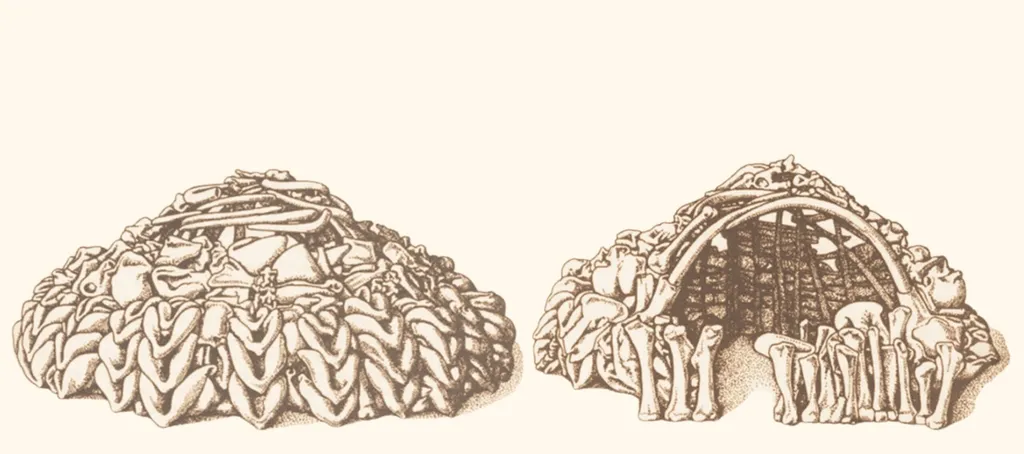
The article explores humanity's earliest attempts at creating shelter, beginning with Jesuit priest Marc-Antoine Laugier’s 18th-century myth of the 'primitive hut' as a symbol of architectural origin. However, it emphasizes that real human habitation evolved gradually over millions of years, starting with tree-based sleeping platforms built by great ape ancestors. The shift to permanent, shared spaces by early hominins marked a pivotal development in social cooperation, tool-making, and cognitive evolution.
- ▪Laugier imagined a 'primitive hut' as the origin of architecture, but this was a philosophical myth, not historical fact.
- ▪Great ape ancestors built temporary sleeping platforms in trees 14–18 million years ago, a practice still seen in modern apes.
- ▪Early hominins began creating reusable base camps around two million years ago, fostering food sharing, social learning, and cognitive development.
Opening excerpt (first ~120 words) tap to expand
In 1753, the Jesuit priest Marc-Antoine Laugier described the origin of dwelling by imagining a lone “savage” troubled by nature’s extremes. This “primitive man,” seeking refuge from scorching heat and torrential rain, initially fled to a cave but found it too dark and filled with “foul air.” Upon leaving the cave, he embarks on a mission. “Resolved to make good by his ingenuity the careless neglect of nature,” Laugier writes, “he wants to make himself a dwelling.”Article continues after advertisement As Laugier’s story continues, the man wanders through a forest, stumbles upon fallen branches, and has an epiphany.
…
Excerpt limited to ~120 words for fair-use compliance. The full article is at Literary Hub.
Discussion
0 commentsMore from Literary Hub