Once Upon a Time in (New) Math
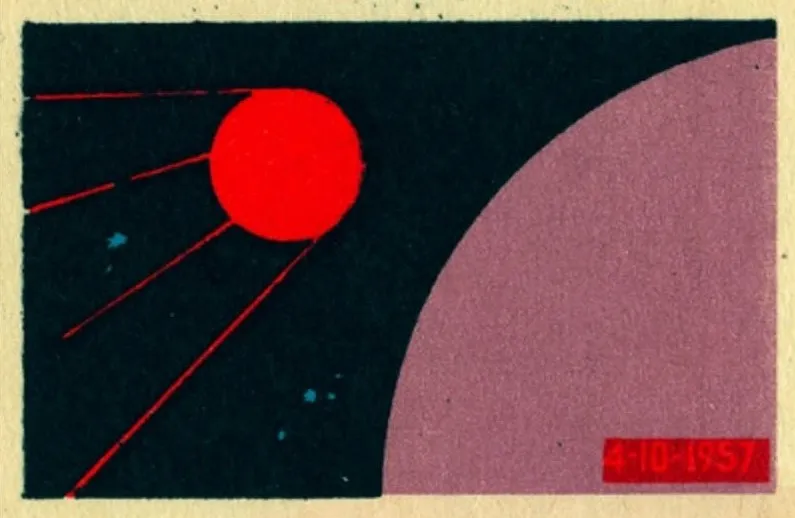
The article discusses the evolution of math education in the United States during the Cold War era, particularly following the launch of Sputnik. It highlights the establishment of initiatives aimed at reforming math curricula to better prepare students for higher education. The New Math movement, while ultimately viewed as a failure, initially garnered significant enthusiasm and cultural interest in mathematics.
- ▪The launch of Sputnik in 1957 prompted the U.S. to reassess its math education system.
- ▪The National Science Foundation was established to improve science research and education, including math.
- ▪The New Math movement aimed to modernize math curricula but is often remembered as a failed experiment.
Hacker News (Newest) files mainly under programming. We currently carry 5,306 of its stories.
Story provenance
Source · retrieval · rights · ranking — open for full record
inspect →
Story provenance
Attribution is not the same as permission. This drawer separates discovery metadata, excerpts, WeSearch-generated summaries, reuse status, and whether the publisher receives the visit. Nothing here claims a legal grant the publisher has not made.
Record
| Original publisher | Github |
| Canonical URL | https://ssmcis-columbia.github.io/ |
| Publication time | Sun, 17 May 2026 19:51:28 +0000 |
| Retrieval time | 2026-05-17T20:03:21.009Z |
| Last seen | 2026-05-17T20:03:21.009Z |
| Headline source | Publisher (no WeSearch rewrite) |
| Excerpt source | publisher body |
| Excerpt method | First ~120 words (~800 chars) of extracted publisher body, fair-use limited. |
| Summary | WeSearch · cerebras-chat (WeSearch summarizer) |
| Summary source text | contentText |
| Citation coverage | Summary is a WeSearch-generated derivative; primary citation is the original publisher URL. |
| Cluster | N7emnyqqlti8 |
| Cluster logic | Grouped by semantic title/content similarity across sources within a rolling window. Same-publisher template collisions are excluded from coverage comparison. |
| Ranking reason | Story pages are not engagement-ranked. Hub feeds use recency, with optional source-diversified chronological ordering (cap consecutive stories per source). No personalized ranking. |
| Publisher visit | Yes — open original |
| Substitutes article? | No — link-out required for full text |
Rights status (four layers)
WeSearch handling by dimension
| Indexing | May the item be indexed (stored, ranked, made findable)? | Allowed |
| Snippet | May a short excerpt of the publisher's text be shown? | Allowed |
| AI summary | May WeSearch generate its own short summary of the article? | Limited |
| Retrieval / RAG | May the content be exposed for third-party retrieval-augmented generation? | Not asserted |
| Model training | May the content be used to train AI models? | Not asserted |
| Commercial reuse | May the content be reused commercially? | Not permitted |
Basis: Derived from the published RSS/Atom feed. Contact: [email protected]. Reviewed: 2026-07-24.
Opening excerpt (first ~120 words) tap to expand
ONCE UPON A TIME IN MATH A Sputnik-era plan to teach kids advanced mathematics quietly lives on Vered Zimmerman February 2026 1. The Russians placed Sputnik 1 in orbit on October 4, 1957, making sure everyone could hear it. The rocket sending it up there had the range to reach America, but this was almost an aside. What mattered more was that the Soviets had made space theirs, and the Americans did not. Invisible in the night’s sky, the United States could nonetheless feel it, looking down, mocking. 2. I used to go back and stop time, right before math class on the first week of middle school. In the hall, young children are frozen in motion, scrambling to get into rooms. I would lean against a wall and gaze at twelve-year-old me. To her, this new school seems huge.
…
Excerpt limited to ~120 words for fair-use compliance. The full article is at Github.
Discussion
0 commentsMore from Github