Pitting a CFD-Optimized Toroidal Propeller Against a Conventional One
A project by Neuronautics compared the efficiency of a conventional propeller against a CFD-optimized toroidal propeller to evaluate the latter's practical viability. The study utilized computational fluid dynamics and artificial neural networks to determine the optimal shape for the toroidal design, which ultimately achieved a simulated efficiency of 62.9%. Despite the lower performance compared to the conventional baseline, the results suggest that toroidal propellers are unlikely to replace standard designs in mainstream applications.
- ▪A conventional optimized propeller achieved an efficiency baseline of approximately 73% in CFD simulations.
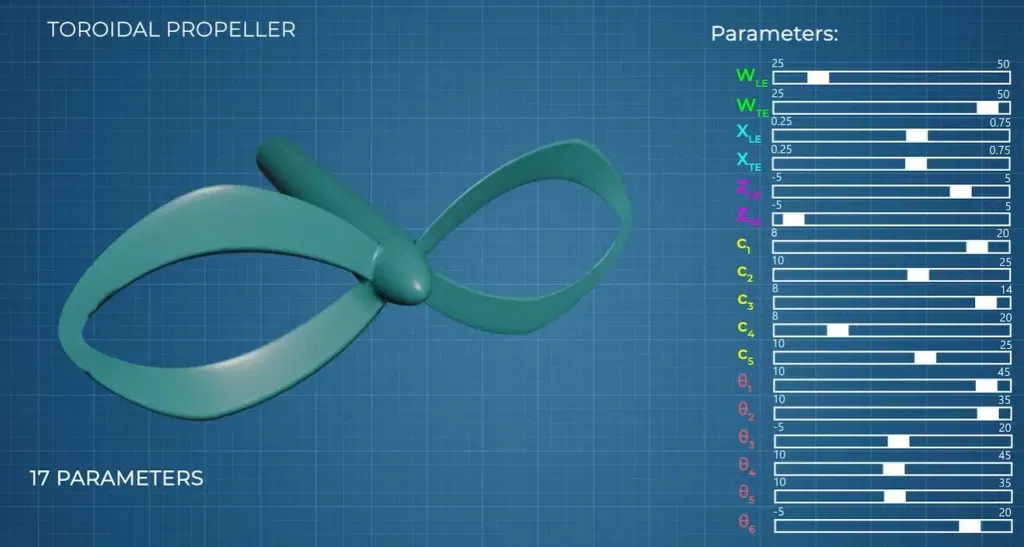
- ▪The toroidal propeller design was optimized using multiple reference frame techniques and an artificial neural network to filter shape parameters.
- ▪The final 3D-printed toroidal propeller demonstrated an efficiency of less than 62% in physical testing.
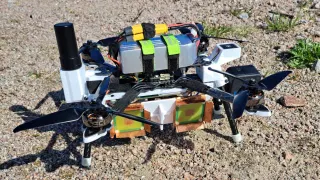
- ▪The comparison was complicated by the fact that the toroidal propeller was a DIY resin print, whereas the conventional one was commercially made.
Hackaday files mainly under tech. We currently carry 479 of its stories.
Story provenance
Source · retrieval · rights · ranking — open for full record
inspect →
Story provenance
Attribution is not the same as permission. This drawer separates discovery metadata, excerpts, WeSearch-generated summaries, reuse status, and whether the publisher receives the visit. Nothing here claims a legal grant the publisher has not made.
Record
| Original publisher | Hackaday |
| Canonical URL | https://hackaday.com/2026/09/28/pitting-a-cfd-optimized-toroidal-propeller-against-a-conventional-one/ |
| Publication time | Tue, 29 Sep 2026 05:00:43 +0000 |
| Retrieval time | 2026-09-29T05:04:54.775Z |
| Last seen | 2026-09-29T05:04:54.775Z |
| Headline source | Publisher (no WeSearch rewrite) |
| Excerpt source | publisher body |
| Excerpt method | First ~120 words (~800 chars) of extracted publisher body, fair-use limited. |
| Summary | WeSearch · cerebras-chat (WeSearch summarizer) |
| Summary source text | contentText |
| Citation coverage | Summary is a WeSearch-generated derivative; primary citation is the original publisher URL. |
| Cluster | xUwxEu10VAzn · 1 stories |
| Cluster logic | Grouped by semantic title/content similarity across sources within a rolling window. Same-publisher template collisions are excluded from coverage comparison. |
| Ranking reason | Story pages are not engagement-ranked. Hub feeds use recency, with optional source-diversified chronological ordering (cap consecutive stories per source). No personalized ranking. |
| Publisher visit | Yes — open original |
| Substitutes article? | No — link-out required for full text |
Rights status (four layers)
WeSearch handling by dimension
| Indexing | May the item be indexed (stored, ranked, made findable)? | Allowed |
| Snippet | May a short excerpt of the publisher's text be shown? | Allowed |
| AI summary | May WeSearch generate its own short summary of the article? | Limited |
| Retrieval / RAG | May the content be exposed for third-party retrieval-augmented generation? | Not asserted |
| Model training | May the content be used to train AI models? | Not asserted |
| Commercial reuse | May the content be reused commercially? | Not permitted |
Basis: Derived from the published RSS/Atom feed. Contact: [email protected]. Reviewed: 2026-07-24.
Opening excerpt (first ~120 words) tap to expand
Pitting A CFD-Optimized Toroidal Propeller Against A Conventional One No comments by: Maya Posch September 28, 2026 Title: Copy Short Link: Copy Although we often think that we got certain aspects of aerodynamics pretty much licked at this point, details like the optimal shape of a propeller remains hotly debated, both in- and outside of academics. This also includes wilder designs like toroidal propellers that even after more than a hundred years are still mostly just being evaluated. Recently [Neuronautics] took a shot at figuring out whether toroidal propellers even make sense. In order to do this, first an efficiency baseline was established using a conventional and highly optimized propeller.
…
Excerpt limited to ~120 words for fair-use compliance. The full article is at Hackaday.
Discussion
0 commentsMore from Hackaday