Power from Gravity
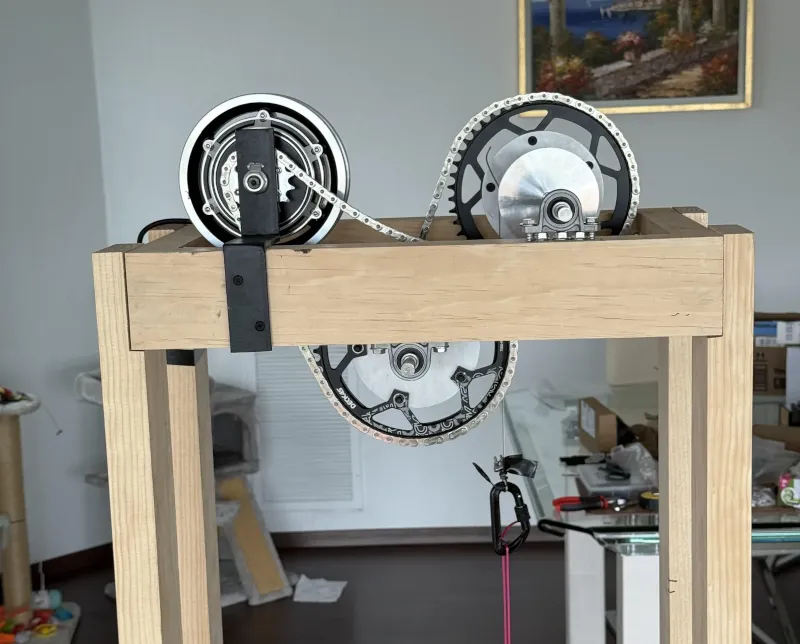
Gravity batteries utilize the principle of converting kinetic energy into potential energy for energy storage. A demonstration model has been created that achieves a peak output of 13 W with 58% efficiency, although it is not practical for everyday use. The system is built using a bicycle chain and sprockets, and costs about $400 to construct.
- ▪Gravity batteries store energy by lifting a heavy mass and converting it back to electricity when it falls.
- ▪The demonstration model has a height of 1.8 meters and a mass of 15.65 kg.
- ▪It takes 394 drops of the weight to fully charge an iPhone 16, indicating limited practicality.
Hackaday files mainly under tech. We currently carry 211 of its stories.
Story provenance
Source · retrieval · rights · ranking — open for full record
inspect →
Story provenance
Attribution is not the same as permission. This drawer separates discovery metadata, excerpts, WeSearch-generated summaries, reuse status, and whether the publisher receives the visit. Nothing here claims a legal grant the publisher has not made.
Record
| Original publisher | Hackaday |
| Canonical URL | https://hackaday.com/2026/05/26/power-from-gravity/ |
| Publication time | Tue, 26 May 2026 08:00:17 +0000 |
| Retrieval time | 2026-05-26T08:02:47.240Z |
| Last seen | 2026-05-26T08:02:47.240Z |
| Headline source | Publisher (no WeSearch rewrite) |
| Excerpt source | publisher body |
| Excerpt method | First ~120 words (~800 chars) of extracted publisher body, fair-use limited. |
| Summary | WeSearch · cerebras-chat (WeSearch summarizer) |
| Summary source text | contentText |
| Citation coverage | Summary is a WeSearch-generated derivative; primary citation is the original publisher URL. |
| Cluster | None |
| Cluster logic | Not yet clustered, or no peer story found in the clustering window. |
| Ranking reason | Story pages are not engagement-ranked. Hub feeds use recency, with optional source-diversified chronological ordering (cap consecutive stories per source). No personalized ranking. |
| Publisher visit | Yes — open original |
| Substitutes article? | No — link-out required for full text |
Rights status (four layers)
WeSearch handling by dimension
| Indexing | May the item be indexed (stored, ranked, made findable)? | Allowed |
| Snippet | May a short excerpt of the publisher's text be shown? | Allowed |
| AI summary | May WeSearch generate its own short summary of the article? | Limited |
| Retrieval / RAG | May the content be exposed for third-party retrieval-augmented generation? | Not asserted |
| Model training | May the content be used to train AI models? | Not asserted |
| Commercial reuse | May the content be reused commercially? | Not permitted |
Basis: Derived from the published RSS/Atom feed. Contact: [email protected]. Reviewed: 2026-07-24.
Opening excerpt (first ~120 words) tap to expand
Power From Gravity No comments by: Al Williams May 26, 2026 Title: Copy Short Link: Copy Gravity batteries aren’t exactly a new idea. You can store energy by lifting something heavy, converting kinetic energy into potential energy. To get it back, you let the mass fall and convert that motion to electricity. [Valeriamayara22] shows how to build a working demonstration model of such a system. This isn’t free energy. Something has to lift the weight. In this case, the height is 1.8 meters, and the mass is 15.65 kg. Even so, the model achieves 13 W peak output and 58% efficiency, according to the post. Reportedly, it takes 394 drops of the weight to fully charge an iPhone 16, so this isn’t a practical project, but it does show how a gravity battery works.
…
Excerpt limited to ~120 words for fair-use compliance. The full article is at Hackaday.
Discussion
0 commentsMore from Hackaday