Scientists Extracted DNA From Medieval Parchment—and Found a Hidden Disease
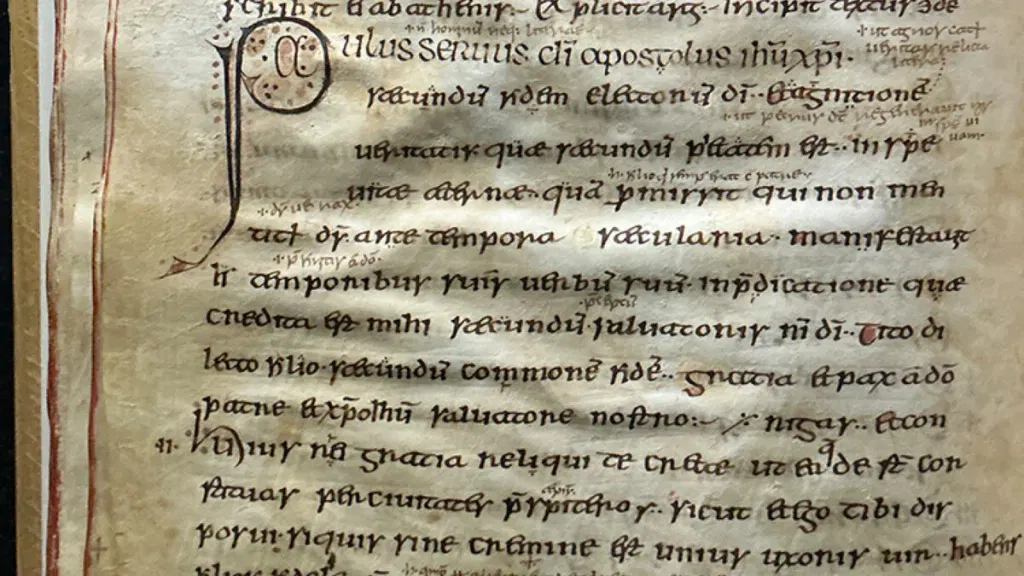
Even for modern farmers, sheeppox is a huge nuisance. The quick-spreading disease kills off young cattle and impairs the wool, meat, and milk yields of the precious animals that do survive. Needless to say, medieval farms were far more vulnerable to sheeppox—so much so that the pathogen was burnt into ancient manuscripts.
- ▪Even for modern farmers, sheeppox is a huge nuisance.
- ▪The quick-spreading disease kills off young cattle and impairs the wool, meat, and milk yields of the precious animals that do survive.
- ▪Needless to say, medieval farms were far more vulnerable to sheeppox—so much so that the pathogen was burnt into ancient manuscripts.
Gizmodo files mainly under tech. We currently carry 1,203 of its stories.
Story provenance
Source · retrieval · rights · ranking — open for full record
inspect →
Story provenance
Attribution is not the same as permission. This drawer separates discovery metadata, excerpts, WeSearch-generated summaries, reuse status, and whether the publisher receives the visit. Nothing here claims a legal grant the publisher has not made.
Record
| Original publisher | Gizmodo |
| Canonical URL | https://gizmodo.com/scientists-extracted-dna-from-medieval-parchment-and-found-a-hidden-disease-2000814851 |
| Publication time | Mon, 21 Sep 2026 16:05:13 +0000 |
| Retrieval time | 2026-09-21T16:08:49.130Z |
| Last seen | 2026-09-21T16:08:49.130Z |
| Headline source | Publisher (no WeSearch rewrite) |
| Excerpt source | publisher body |
| Excerpt method | First ~120 words (~800 chars) of extracted publisher body, fair-use limited. |
| Summary | WeSearch · cerebras-chat (WeSearch summarizer) |
| Summary source text | contentText |
| Citation coverage | Summary is a WeSearch-generated derivative; primary citation is the original publisher URL. |
| Cluster | mVH3T_oWuZ_X · 1 stories |
| Cluster logic | Grouped by semantic title/content similarity across sources within a rolling window. Same-publisher template collisions are excluded from coverage comparison. |
| Ranking reason | Story pages are not engagement-ranked. Hub feeds use recency, with optional source-diversified chronological ordering (cap consecutive stories per source). No personalized ranking. |
| Publisher visit | Yes — open original |
| Substitutes article? | No — link-out required for full text |
Rights status (four layers)
WeSearch handling by dimension
| Indexing | May the item be indexed (stored, ranked, made findable)? | Allowed |
| Snippet | May a short excerpt of the publisher's text be shown? | Allowed |
| AI summary | May WeSearch generate its own short summary of the article? | Limited |
| Retrieval / RAG | May the content be exposed for third-party retrieval-augmented generation? | Not asserted |
| Model training | May the content be used to train AI models? | Not asserted |
| Commercial reuse | May the content be reused commercially? | Not permitted |
Basis: Derived from the published RSS/Atom feed. Contact: [email protected]. Reviewed: 2026-07-24.
Opening excerpt (first ~120 words) tap to expand
Even for modern farmers, sheeppox is a huge nuisance. The quick-spreading disease kills off young cattle and impairs the wool, meat, and milk yields of the precious animals that do survive. Needless to say, medieval farms were far more vulnerable to sheeppox—so much so that the pathogen was burnt into ancient manuscripts. Literally. In a recently published study in Science Advances, a team of geneticists, historians, virologists, and more extracted and analyzed DNA from animal skins used to make books between the 8th and 14th centuries CE. Shockingly, the DNA belonged to 21 sheeppox virus genomes that dated from between 1700 BCE and 1917 CE. These manuscripts also varied in material, including calfskin, goatskin, and sheepskin.
…
Excerpt limited to ~120 words for fair-use compliance. The full article is at Gizmodo.
Discussion
0 commentsMore from Gizmodo