Scientists finally cracked how bacteria's spinning motor actually works
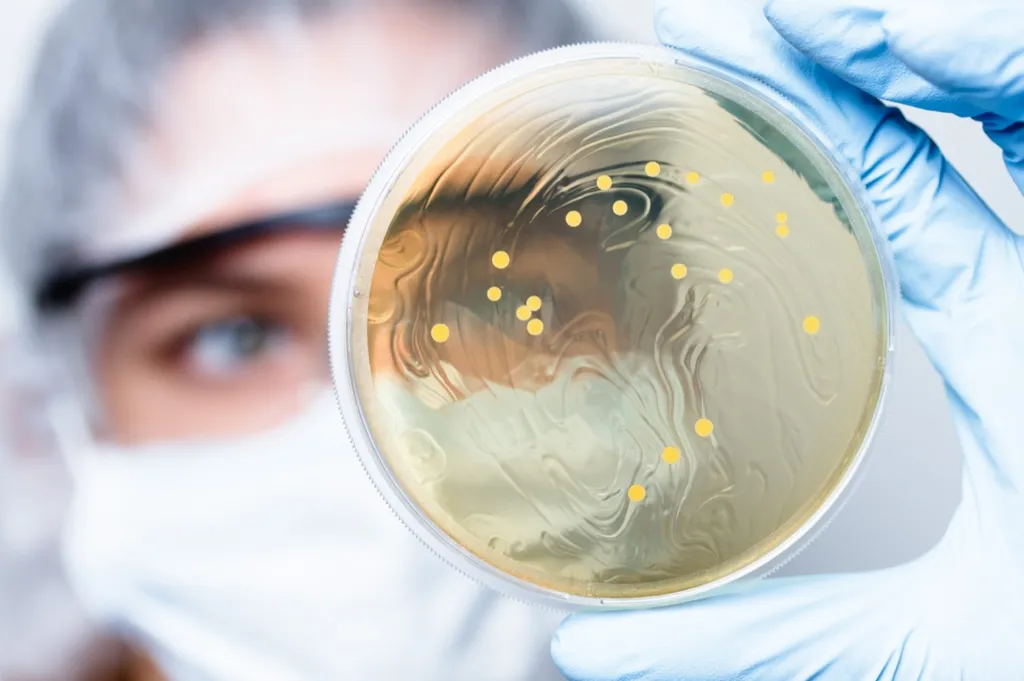
Scientists have made significant progress in understanding how bacteria's flagellar motor operates. This molecular machine, which allows bacteria to move through water, relies on the proton motive force, a concept proposed by Peter Mitchell in 1961. After decades of research, Mike Manson has finally elucidated the motor's structure and function, confirming its evolutionary significance.
- ▪Mike Manson has studied the bacterial flagellar motor for 50 years.
- ▪The motor operates using the proton motive force, which creates a gradient of protons inside and outside the bacterial cell.
- ▪Cryo-EM studies have revealed the motor's structure, including stator rings that drive the flagellum's rotation.
Boing Boing files mainly under tech. We currently carry 298 of its stories.
Story provenance
Source · retrieval · rights · ranking — open for full record
inspect →
Story provenance
Attribution is not the same as permission. This drawer separates discovery metadata, excerpts, WeSearch-generated summaries, reuse status, and whether the publisher receives the visit. Nothing here claims a legal grant the publisher has not made.
Record
| Original publisher | Boing Boing |
| Canonical URL | https://boingboing.net/2026/04/28/scientists-finally-cracked-how-bacterias-spinning-motor-actually-works.html |
| Publication time | Tue, 28 Apr 2026 17:29:23 +0000 |
| Retrieval time | 2026-04-28T17:59:40.768Z |
| Last seen | 2026-04-28T17:59:40.768Z |
| Headline source | Publisher (no WeSearch rewrite) |
| Excerpt source | publisher body |
| Excerpt method | First ~120 words (~800 chars) of extracted publisher body, fair-use limited. |
| Summary | WeSearch · cerebras-chat (WeSearch summarizer) |
| Summary source text | contentText |
| Citation coverage | Summary is a WeSearch-generated derivative; primary citation is the original publisher URL. |
| Cluster | wbxn2d1fmFMs |
| Cluster logic | Grouped by semantic title/content similarity across sources within a rolling window. Same-publisher template collisions are excluded from coverage comparison. |
| Ranking reason | Story pages are not engagement-ranked. Hub feeds use recency, with optional source-diversified chronological ordering (cap consecutive stories per source). No personalized ranking. |
| Publisher visit | Yes — open original |
| Substitutes article? | No — link-out required for full text |
Rights status (four layers)
WeSearch handling by dimension
| Indexing | May the item be indexed (stored, ranked, made findable)? | Allowed |
| Snippet | May a short excerpt of the publisher's text be shown? | Allowed |
| AI summary | May WeSearch generate its own short summary of the article? | Limited |
| Retrieval / RAG | May the content be exposed for third-party retrieval-augmented generation? | Not asserted |
| Model training | May the content be used to train AI models? | Not asserted |
| Commercial reuse | May the content be reused commercially? | Not permitted |
Basis: Derived from the published RSS/Atom feed. Contact: [email protected]. Reviewed: 2026-07-24.
Opening excerpt (first ~120 words) tap to expand
Scientists finally cracked how bacteria's spinning motor actually works Ellsworth Toohey 10:29 am Tue Apr 28, 2026 NatalieIme/shutterstock.com Mike Manson has spent 50 years at Texas A&M studying the bacterial flagellar motor — a molecular machine that spins hundreds of times per second, outpacing a race car's spinning crankshaft, to drive bacteria through water. He finally understands it. "My lifelong quest is now fulfilled," he told Quanta Magazine. "I finally understand how this thing I've been studying for 50 years actually works." The mechanism hinges on an idea that Peter Mitchell published in 1961 and spent years defending against ridicule.
…
Excerpt limited to ~120 words for fair-use compliance. The full article is at Boing Boing.
Discussion
0 commentsMore from Boing Boing