Scorpions go terminator mode and reinforce their weapons with metal
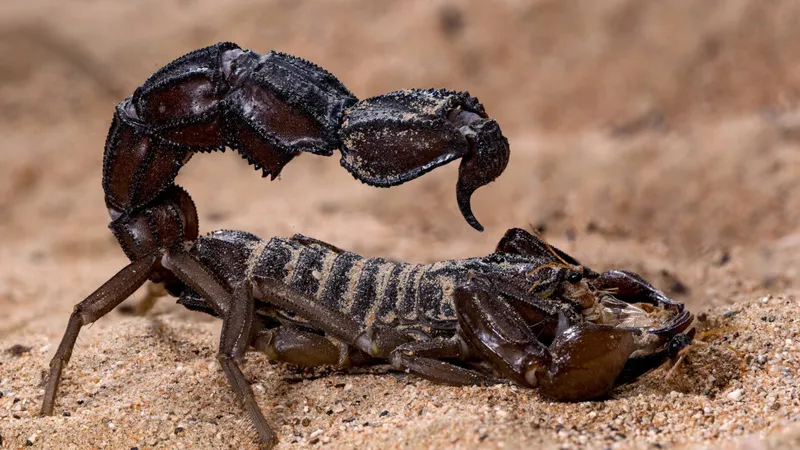
Scorpions reinforce their stingers and pincers with metals like zinc, manganese, and iron, which are strategically distributed to enhance durability and functionality. The arrangement of these metals varies by species and corresponds to different hunting behaviors and physical demands. A study using advanced imaging techniques revealed that metal enrichment in scorpion weaponry is an evolved trait, not accidental environmental absorption.
- ▪Scorpion stingers and pincers contain metals such as zinc, manganese, and iron that enhance their structural performance.
- ▪Zinc is concentrated at the tip of the stinger to increase hardness, while manganese below the tip may improve flexibility and vibration absorption.
- ▪Metal distribution in scorpion weapons varies by species and aligns with their specific hunting strategies and physical adaptations.
- ▪Researchers used high-resolution scanning electron microscopy and micro-X-ray fluorescence imaging to map metal distribution in 18 scorpion taxa.
- ▪The study was published in the Journal of The Royal Society Interface and conducted by Sam Campbell and colleagues from the University of Queensland.
Opening excerpt (first ~120 words) tap to expand
It is actually very metal Scorpions go terminator mode and reinforce their weapons with metal Different hunting patterns seem to dictate different distributions of metal. Jacek Krywko – May 1, 2026 12:24 pm | 3 Credit: Nimit Virdi Credit: Nimit Virdi Text settings Story text Size Small Standard Large Width * Standard Wide Links Standard Orange * Subscribers only Learn more Minimize to nav Scorpions are armed with dual front pincers (technically known as chelae or pedipalp appendages) and a venom-injecting telson, or stinger, on the posterior of their tail. These things look dangerous enough on their own, but a chemical examination showed they contain metals like zinc, manganese, and iron.
…
Excerpt limited to ~120 words for fair-use compliance. The full article is at Ars Technica - All content.
Discussion
0 commentsMore from Ars Technica - All content